

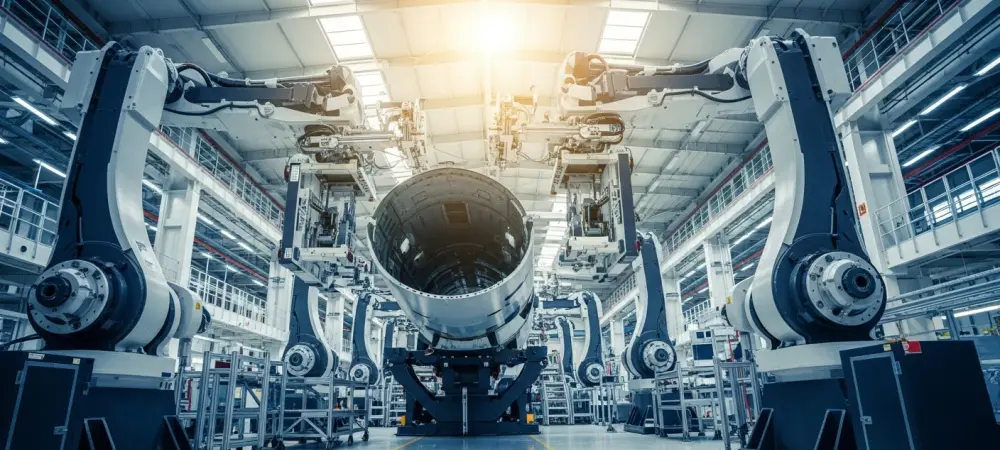
The rapid convergence of machine learning and heavy machinery has pushed industrial automation far beyond the limitations of pre-programmed mechanical arms and toward a future defined by cognitive flexibility. This paradigm shift, recently accelerated by a strategic investment in General Robotics, signals a critical transition toward an intelligence-first approach to physical work. Rather than focusing on better hardware, the industry is prioritizing a unified software layer that can manage diverse fleets across global networks. This transition is not merely an incremental improvement; it is a fundamental reconfiguration of how asset-intensive industries operate.
Evolution of Unified Intelligence in Industrial Robotics
Historically, robots were siloed assets requiring painstaking, task-specific coding for every new maneuver. This rigidity created a bottleneck that prevented companies from scaling their automation efforts across different facilities. Software-defined robotics changes the equation by decoupling the intelligence from the physical frame, allowing a single AI “brain” to command a variety of mechanical bodies. This evolution reflects a broader trend where the value proposition moves from the machine itself to the orchestration layer that governs it.
By moving away from static programming, enterprises can now implement a more fluid operational model. The shift toward software-defined, adaptable fleets allows for a level of agility that was previously impossible. This context is essential for understanding why modern industrial players are moving toward platforms that offer a standardized way to deploy, manage, and update robotic assets regardless of their manufacturer.
Core Pillars of the GRID Platform and Physical AI
Unified Orchestration and Modular AI Skills
The GRID platform introduces a unified intelligence layer that utilizes modular, reusable AI skills. This architectural choice is significant because it replaces traditional static scripts with dynamic behaviors that can be shared across different robots. When a robot learns a skill like precision picking or obstacle avoidance, that skill becomes a digital asset that can be deployed across the entire fleet, drastically improving system performance and reducing the time required for new deployments.
High-Fidelity Simulation and Digital Twins
A core technical strength of this approach is its integration with NVIDIA’s Isaac Sim and Omniverse. By utilizing high-fidelity simulations, companies can create digital twins of their facilities to train robots in virtual environments that perfectly mirror real-world physics. This simulation-first strategy allows for the testing of complex workflows without risking expensive hardware or interrupting live production lines, which effectively lowers the barrier to entry for large-scale automation.
Recent Innovations in Agentic Workforce Integration
The emergence of a hybrid agentic workforce represents a departure from traditional human-robot interaction. Instead of robots being isolated tools, they are becoming autonomous agents that collaborate with their human counterparts in real-time. This requires sophisticated fleet management that operates in the cloud, ensuring that every unit in a global network is updated with the latest operational protocols simultaneously. The transition toward enterprise-wide orchestration means that a facility in one part of the world can instantly benefit from optimizations discovered in another.
Real-World Applications Across Asset-Intensive Industries
In sectors like aerospace and energy, where environments are unpredictable, the ability to deploy multi-vendor fleets through a single interface is revolutionary. A logistics hub can now manage various types of robots using the same orchestration logic, reducing the complexity of vendor lock-in. This interoperability enables businesses to choose the best hardware for specific tasks without having to reinvent their entire software stack or manage fragmented control systems.
Critical Challenges and Implementation Barriers
Despite these leaps, high costs and data sovereignty remain significant hurdles. Scaling diverse hardware requires massive capital, and keeping proprietary data secure while using cloud-based orchestration is a delicate balance. Current efforts focus on creating standardized infrastructures that act as a bridge between rapidly advancing AI software and the slower lifecycle of industrial hardware, ensuring that the software does not outpace the physical reality of the factory floor.
The Future of Software-Defined Autonomous Operations
The long-term goal is the fully software-defined factory, where every movement is optimized by physical AI. This level of autonomy will likely redefine global supply chains, making them more resilient to labor shortages and sudden market shifts. Breakthroughs in physical AI will soon allow robots to handle increasingly complex, non-repetitive tasks that were once thought to be exclusively human domains, leading to a massive surge in overall industrial productivity.
Summary of Findings and Strategic Outlook
The partnership between AI-native platforms and global orchestrators established a new benchmark for how enterprises approached physical automation. It demonstrated that the path to scalability lay not in the individual capability of a single robot, but in the collective intelligence of the entire fleet. Organizations that prioritized modularity and simulation-first development models effectively bypassed the traditional barriers of high operational risk and rigid infrastructure. The review indicated that the transition to software-defined operations became the primary driver for productivity in asset-intensive sectors. Strategic leaders recognized that data sovereignty and cross-platform interoperability were no longer optional features but essential requirements for a modern industrial stack. Ultimately, the integration of physical AI transformed the factory floor into a dynamic, learning environment that paved the way for a more resilient and adaptable global manufacturing landscape.