

Predicting how flexible objects deform during manipulation remains one of the most significant technical hurdles for modern roboticists to overcome. This specific difficulty illustrates why the industrial sector is currently locked in a debate between the versatility of humanoid machines and the focused power of purpose-built automation. While venture capital continues to flood into startups promising bipedal workers that can navigate stairs and open doors, seasoned plant managers often remain skeptical of any technology that prioritizes form over functional output. The romanticized image of a humanoid coworker often masks the underlying complexity of maintaining such a machine in a high-intensity environment. In contrast, purpose-built systems offer a predictable, if less exciting, path toward higher throughput. As global supply chains face increasing pressure, the choice between these two robotic philosophies will determine which manufacturers can maintain a competitive edge in an era defined by labor shortages and rising costs.
Evaluating the Hype and Practical Utility
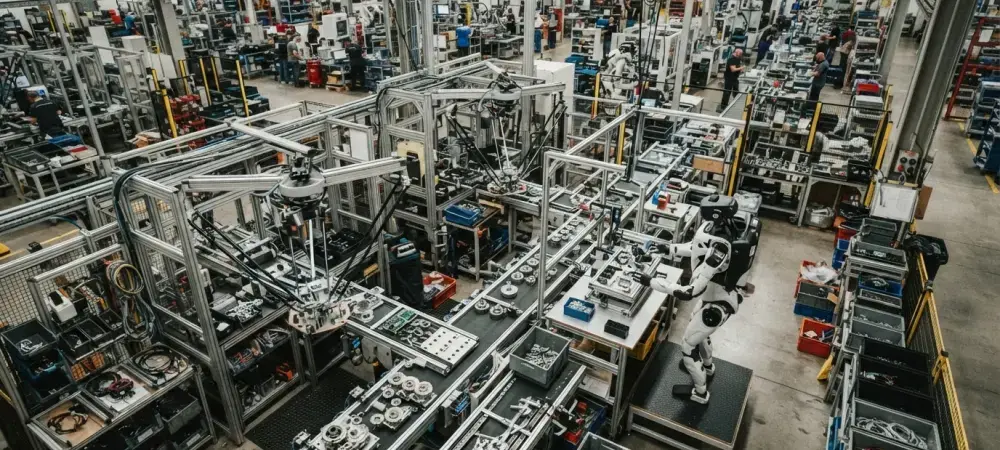
A fundamental tension exists between the desire for a universal robotic worker and the reality of industrial optimization where every fraction of a second is scrutinized. Humanoid robots are frequently marketed as a drop-in solution for facilities designed for human workers, theoretically removing the need for expensive structural renovations. However, the mechanical constraints of the human skeleton—two legs, two arms, and a limited range of motion—often represent a liability rather than an asset in a factory. Specialized machines, such as high-speed pick-and-place delta robots, can operate at velocities and precision levels that would cause a humanoid to collapse under the stress of inertia. The dishwasher analogy remains a potent tool for understanding this dynamic: while one could build a complex robot to stand at a sink and scrub plates, a dedicated box with internal sprayers is faster, cheaper, and more reliable precisely because it ignores human anatomy.
The economic viability of these competing technologies depends heavily on the scale and nature of the production run. For high-volume manufacturing, the efficiency gains provided by purpose-built automation are nearly impossible for a general-purpose humanoid to overcome. These specialized tools are designed to perform one task millions of times with zero deviation, a requirement that humanoids struggle to meet due to the inherent complexity of their many joints and sensors. Conversely, the humanoid form factor finds its greatest utility in low-volume, high-variety environments where a single machine must perform multiple disparate tasks throughout a shift. In these specific use cases, the ability to walk between stations and use various hand tools provides a level of agility that fixed automation lacks. The challenge for today’s industry leaders is identifying the tipping point where the flexibility of a humanoid justifies its significantly higher maintenance costs and slower cycle times.
The Process-First Methodology in Automation
Adopting a process-first mindset has become the hallmark of successful modern automation strategies, shifting the focus away from the hardware itself and toward the desired outcome. Instead of asking which robot can perform a human’s job, engineers are increasingly breaking down complex manual tasks into their most basic mechanical components. This methodology frequently reveals that the most difficult part of a process is not the physical labor, but the cognitive load required to handle variability. By redesigning the assembly environment to minimize this variability, manufacturers can often use simpler, more robust machines that provide higher reliability than a sophisticated humanoid. This approach recognizes that automation is not merely about replacing muscles; it is about creating a deterministic environment where machines can thrive. This paradigm shift requires a deep collaboration between product designers and manufacturing engineers to ensure that products are built to be automated.
One of the most persistent bottlenecks in this space involves the handling of non-rigid materials like wiring harnesses and textile components, which rarely remain in a fixed state. In a traditional setup, a human worker uses tactile feedback and visual cues to route a flexible wire through a complex housing, a task that has long eluded robotic automation. To solve this, two distinct schools of thought have emerged: one that uses massive AI datasets to teach robots how to react to unpredictable deformations, and another that seeks to eliminate the flexibility altogether. Companies like Q5D have pioneered systems that integrate wiring directly into the structural components of a product, effectively removing the need for a robot to manipulate loose cables. This strategic move highlights a broader trend where the solution to a robotic challenge is found in the redesign of the manufacturing process rather than in the creation of a more dexterous, human-like hand.
Artificial Intelligence as a Catalyst for Growth
Artificial Intelligence has moved beyond a buzzword to become the operational backbone of both specialist and humanoid robotic systems, particularly in the realm of rapid deployment. Historically, the cost of programming a robot often exceeded the cost of the hardware itself, requiring weeks of manual coding by highly specialized engineers. Today, generative AI and imitation learning have slashed these timelines, allowing robots to learn tasks by observing a human operator or by translating natural language instructions into machine code. This democratization of programming means that even smaller manufacturing outfits can now justify the cost of automation for shorter production runs. However, the quality of training data remains a critical factor; for a robot to safely handle a new part, it must have access to high-fidelity simulations that account for the physical realities of the shop floor, including lighting changes and mechanical wear.
The integration of advanced vision systems and real-time processing has further enabled robots to operate with a degree of autonomy that was previously impossible. Modern industrial robots are no longer just blind executors of pre-programmed paths; they are sophisticated observers capable of performing quality inspections and predictive maintenance on the fly. This shift is particularly important for safety, as AI-driven sensors allow machines to slow down or stop instantly when a human coworker enters their workspace. This collaborative environment requires a high degree of predictability, which is often easier to achieve with specialized machinery than with complex, multi-jointed humanoids. While AI can simulate human-like decision-making, the industrial sector prioritizes deterministic behavior where the outcome is guaranteed every time. As the technology matures, the value of AI will be measured by its ability to enhance machine reliability rather than just its ability to mimic human intuition.
Global Competition and Productivity Strategies
The geopolitical landscape of industrial production is being reshaped by the speed at which different regions adopt and integrate robotic solutions. China has emerged as a dominant force in this sector by leveraging its massive manufacturing base as a living laboratory for automation. This close proximity between the factory floor and robot developers creates a rapid feedback loop, where innovations are tested and refined in real-time, leading to immediate productivity gains. This test-and-iterate approach has allowed Chinese firms to deploy robots at a scale that often outpaces Western counterparts, who may focus more on the theoretical sophistication of the technology. For high-wage economies, the lesson is clear: the ability to automate is no longer an optional luxury but a vital necessity for survival. To remain competitive, manufacturers must prioritize the pragmatic deployment of tools that solve specific labor bottlenecks over the pursuit of high-profile, experimental machines.
As demographic shifts lead to a shrinking global workforce, the move toward near-shoring and localized production has intensified the need for highly efficient automation. Building resilient supply chains requires a shift away from low-cost labor markets and toward regional hubs that use technology to offset higher wages. In this context, the ROI of a robotic system is the primary metric of success, and purpose-built automation often provides the fastest path to recouping investment costs. While the sight of a humanoid robot on a production line may boost a company’s image as a tech leader, it is the specialized systems working behind the scenes that typically drive the actual output. The strategic objective for Western firms is to harness the flexibility of modern software while maintaining the mechanical advantages of purpose-built hardware. This balanced approach allows for the creation of agile manufacturing networks that can pivot quickly to meet changing market demands without sacrificing the core efficiency of their operations.
The Evolution Toward System-Wide Flexibility
Looking ahead, the industry is transitioning away from a focus on the individual robot toward a more holistic view of the entire manufacturing ecosystem. This shift is driven by the digital integration of design and production, where 3D CAD models are directly linked to the instructions that govern physical machinery. When a software system can automatically adjust a machine’s path based on a minor change in a product’s design, the need for a robot to possess human-like adaptability is greatly diminished. This software-defined manufacturing allows specialized machines to become nearly as versatile as humanoids without the associated mechanical complexity and high failure rates. The democratization of this flexibility means that automation is no longer the exclusive domain of automotive giants; it is becoming accessible to any company that can leverage digital twins to simulate and optimize their production lines before a single piece of hardware is even installed on the floor.
The progression of the robotics industry throughout this decade demonstrated that the debate between humanoid and specialized forms was never about choosing a single winner. Instead, it was found that the most resilient manufacturing strategies integrated both approaches into a unified, intelligent system. Success was achieved by those who prioritized the requirements of the process over the novelty of the form factor, ensuring that every machine served a specific, measurable purpose. AI proved to be the essential bridge that allowed purpose-built automation to handle the variability once reserved for human hands, while humanoids found their niche in highly dynamic environments that required mobility. Industry leaders recognized that the ultimate goal of automation was not to replicate the human worker, but to build a more robust and adaptable framework for production. By focusing on system-level flexibility and digital integration, manufacturers turned potential labor crises into opportunities for unprecedented growth and localized innovation.