

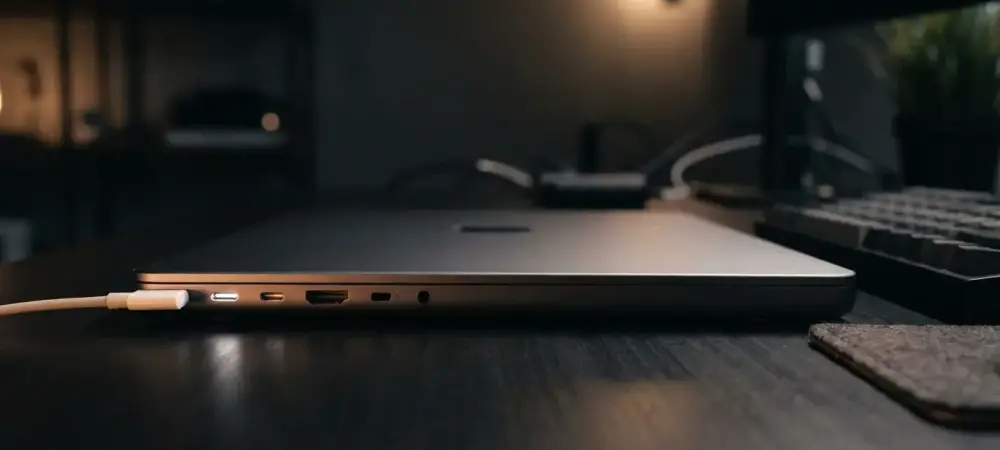
The introduction of the Microsoft Surface Laptop Ultra, powered by NVIDIA’s groundbreaking RTX Spark platform, marks a transformative shift in the landscape of high-performance Windows computing. While the premium laptop market has historically been a contest between x86 incumbents and Apple’s integrated silicon, this new architecture introduces a data center-derived philosophy to the portable form factor. By merging the efficiency of the Arm architecture with the sheer graphical and computational power of the Blackwell series, the platform establishes a new baseline for professional mobile workstations. This development is not merely a hardware refresh but a response to the increasing demand for local generative AI capabilities and autonomous workflows that require massive memory bandwidth and neural processing power. Consequently, the industry is witnessing the birth of a category where the boundary between a traditional personal computer and an AI development server becomes increasingly blurred.
The relevance of this technology extends far beyond simple performance benchmarks, influencing the very way software is developed and deployed in 2026. As organizations move away from costly, cloud-dependent AI models due to privacy and latency concerns, the ability to run high-parameter models locally becomes a competitive necessity. The platform integrates a high-performance system-on-a-chip that prioritizes large-scale inference and multi-threaded creative tasks, moving the needle for developers who previously felt tethered to their desktop rigs. In this broader technological landscape, the emergence of a viable Windows-on-Arm ecosystem backed by NVIDIA’s mature software stack provides a formidable alternative to long-standing industry norms.
The Dawn of NVIDIA RTX Spark: A New Computing Paradigm
The emergence of the NVIDIA RTX Spark platform represents the culmination of years of architectural pivoting toward a more specialized, efficiency-first approach to high-performance computing. At its core, the technology is designed to decouple the operating system from its reliance on legacy instruction sets, favoring a modern Arm-based execution model that excels in performance-per-watt metrics. This transition is essential because modern workloads, particularly those involving real-time ray tracing and neural network training, have outpaced the thermal and power limitations of traditional mobile hardware. By re-engineering the motherboard around a unified silicon die, the platform minimizes the physical and electrical distance between the central processor and the graphics engine.
This paradigm shift matters because it addresses the “thermal wall” that has plagued high-end Windows laptops for years. In the past, users had to choose between extreme performance that led to heavy, loud machines and portability that sacrificed computational depth. The platform navigates this compromise by leveraging advanced fabrication techniques and a leaner architectural overhead, allowing professional-grade tools to run on a device that remains remarkably slim. Moreover, the context of this evolution is tied to the rise of “agentic” computing, where the laptop is no longer just a display for web apps but a local engine capable of hosting complex, autonomous software agents that interact with the user’s data in real-time.
The Technological Architecture: The Spark N1X SoC
The Synergy of Grace CPU and Blackwell GPU
The heart of the system is the Spark N1X SoC, which utilizes a specialized version of the Grace CPU architecture specifically tuned for a mobile power envelope. Featuring up to 20 Arm-based cores, this processor offers a level of multi-threaded performance that rivaled desktop workstations in recent years. What makes this implementation unique is the NvLink-C2C interconnect, which provides a high-bandwidth, low-latency bridge between the CPU and the GPU. This allows for a level of data sharing that is simply impossible on traditional systems where the two components are separated by the much slower PCIe bus.
On the graphics side, the Blackwell GPU architecture provides up to 6,144 CUDA cores, bringing high-fidelity rendering and tensor-accelerated computation to the mobile space. This GPU is not just a secondary processor for gaming but a primary engine for heavy mathematical modeling and creative rendering. Its ability to maintain high clock speeds without aggressive thermal throttling is a testament to the platform’s sophisticated power management. By integrating these two powerhouses onto a single package, the N1X SoC achieves a level of synergy that allows for instantaneous context switching between general computing and heavy-duty graphical processing, which is vital for the modern creative professional.
Unified Memory Architecture and AI Scalability
Perhaps the most significant technical breakthrough of the platform is its unified memory architecture, which supports up to 128GB of LPDDR5X RAM. Unlike traditional laptops that limit a discrete GPU to a small pool of dedicated video memory, this system allows the Blackwell GPU to access the entire system memory at high speeds. This is a game-changer for AI development, as it enables the local execution of large language models with parameter counts that previously required a server rack. By eliminating the bottleneck of memory swapping, the platform allows for a fluid interaction with high-resolution video files and massive datasets that would typically crash a standard mobile device.
The scalability of this memory system is what truly differentiates it from its competitors. While other manufacturers offer integrated solutions, they often suffer from limited bandwidth that chokes the GPU under heavy AI workloads. In contrast, the RTX Spark platform utilizes a wide memory bus that provides the throughput necessary for real-time inference and training. This allows a user to run a 70-billion parameter model locally while simultaneously editing a 4K video stream without a noticeable drop in responsiveness. The impact on local AI productivity is profound, as it provides a secure environment for processing sensitive information without the need for data to ever leave the machine.
Evolutionary Trends: Software Optimization and the Arm Ecosystem
A major trend driving the success of this platform is the maturation of the Windows on Arm ecosystem, which has undergone a radical transformation. Microsoft and NVIDIA have collaborated to optimize the Windows 11 kernel, ensuring that the Spark N1X SoC can handle legacy x86 applications through the sophisticated Prism translation layer without significant performance penalties. This optimization ensures that while the hardware is cutting-edge, the user’s existing software library remains functional. However, the real evolution lies in the native support for the CUDA toolkit on Arm, which allows developers to port their existing AI and scientific workloads directly to the laptop form factor with minimal code changes.
Furthermore, the industry is seeing a shift toward “native-first” development, where major software suites are being re-written specifically for the Arm instruction set to take full advantage of the Spark’s efficiency. This shift in developer behavior indicates that the industry is no longer viewing Arm as a secondary platform for lightweight devices, but as the preferred architecture for the most demanding professional workflows. The synergy between optimized software and specialized hardware is creating a feedback loop that continues to enhance the platform’s value proposition.
Real-World Applications: Creative Workflows and Local AI
In the realm of practical applications, the platform has proven to be a powerhouse for local agentic AI, specifically through frameworks like Hermes. These autonomous agents can operate across the file system, performing complex tasks such as data extraction, report generation, and automated coding. For instance, a researcher can deploy an agent to read hundreds of documents and synthesize a summary locally, ensuring that proprietary data is never exposed to cloud-based vulnerabilities. This capability is a direct result of the massive unified memory pool, which allows these agents to keep a large amount of context in active memory, leading to more accurate and reliable outputs.
Creative professionals are also seeing a major impact, particularly in sectors like architectural visualization and high-end video production. The ability to perform real-time ray tracing on a laptop that lasts for a full workday on battery was unthinkable just a few years ago. In professional video editing, the platform’s ability to handle multiple streams of raw 8K footage without proxy files significantly accelerates the post-production timeline. These use cases highlight that the technology is not just for enthusiasts but is a legitimate tool for industries where time is the most valuable commodity. By providing desktop-class performance in a mobile package, the platform enables a truly flexible work environment for top-tier talent.
Navigating the Challenges: Compatibility and Market Barriers
Despite its impressive technical specifications, the platform faces several hurdles that could impact its wider adoption. The most immediate challenge is the price point, as the sophisticated components and high memory configurations push the cost well beyond the reach of the average consumer. This creates a market barrier where only high-end enterprises or successful freelancers can justify the investment. Additionally, while the Prism translation layer is excellent, it is not a perfect solution for every scenario. Highly specialized legacy drivers or kernel-level security software may still encounter compatibility issues, requiring a dedicated effort from software vendors to provide native updates.
Moreover, there is a lingering perception challenge regarding the Arm architecture in a Windows-dominated world. Many IT departments are hesitant to transition their fleets to a new architecture due to concerns over long-term support and the complexity of managing a heterogeneous hardware environment. NVIDIA must continue to prove that the performance gains outweigh the administrative friction of the transition. There is also the matter of thermal management under extreme, sustained loads; while the platform is efficient, pushing 6,000 CUDA cores to their limit will always generate heat that must be moved. Ensuring that the fan noise and chassis temperatures remain acceptable for a professional setting is an ongoing engineering struggle that requires constant refinement of the cooling systems.
The Future: Mobile Workstations and Autonomous Agents
Looking ahead, the trajectory of the platform points toward a future where the concept of a “workstation” is no longer tied to a desk. Potential breakthroughs in stacked-die memory and even more efficient neural processing units could see the next iterations of the Spark platform handling even larger models with less power. We can expect to see a more profound integration of AI at the hardware level, where the SoC can predict user needs and pre-allocate resources for expected tasks, further smoothing the user experience. The long-term impact on society will likely be a democratization of AI development, as the tools needed to build and train sophisticated models become available to anyone with a high-end laptop.
Between 2026 and 2029, the evolution of autonomous agents will likely become the primary driver for hardware upgrades. As these agents become more capable, the demand for local compute will only increase, making the unified memory architecture of the Spark platform even more critical. We may see the emergence of “personal clouds,” where a user’s laptop acts as the central hub for all their smart devices, processing data locally and only communicating with the wider internet when absolutely necessary. This move toward decentralized, local computing represents a significant shift in the digital landscape, prioritizing privacy and individual agency over centralized cloud control.
Final Assessment: Redefining Professional Computing
The NVIDIA RTX Spark platform successfully established a new hierarchy in the professional computing market by merging the Grace CPU and Blackwell GPU into a cohesive, unified memory architecture. The platform demonstrated that the Arm architecture on Windows was not only viable but superior for the specific needs of the AI-driven era. Early adopters found that the ability to run high-parameter models locally provided a tangible competitive advantage, particularly in industries where data security was paramount. The integration of high-speed memory and advanced tensor cores transformed the laptop from a consumption device into a true production engine.
The platform proved that the future of computing resides in the synergy of specialized hardware and deeply optimized software. While the high cost and minor compatibility hurdles remained a factor, the overall impact on creative and developmental workflows was undeniably positive. The transition away from traditional x86 dominance toward a more efficient, AI-centric architecture appeared inevitable as the technology matured. Ultimately, the RTX Spark platform did not just improve the Windows laptop; it redefined what a professional should expect from their primary computing tool, setting a benchmark that will influence hardware design for years to come. The era of the cloud-tethered workstation began to fade as local, autonomous performance became the new standard for excellence.