

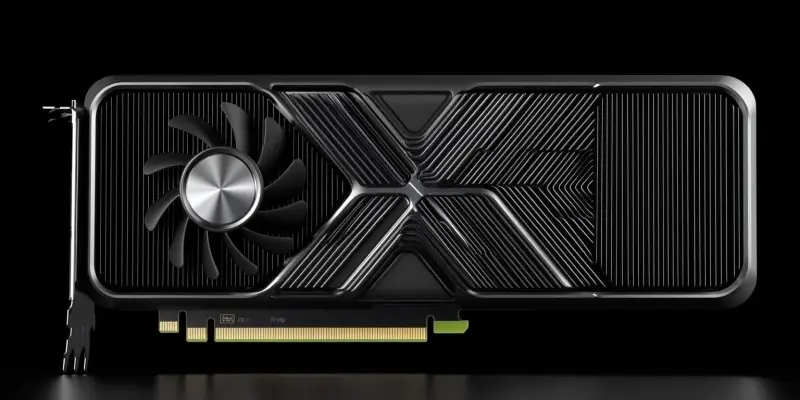
Anticipation was running high for Nvidia’s RTX 5050 GPU at CES 2025, but enthusiasts found themselves in suspense as the eagerly awaited graphics card was notably absent from the major tech showcase. Though promotional materials for laptops like the LG Gram 2025 prominently featured the RTX 5050, these endorsement efforts seem to contrast with the reality that the product wasn’t ready for unveiling. Most tech aficionados expected the RTX 5050 to join the new lineup of Nvidia’s Blackwell laptop GPUs alongside their fresh RTX 5000 series desktop graphics cards. However, only models from the RTX 5070 and above saw the light of day. Promotional images for the LG Gram unveiled contrasting details; they showcased an RTX 5050 but described specifications more in line with the older RTX 4050, hinting at potential internal delays.
This discrepancy led to speculation that there might have been a last-minute decision by Nvidia’s product development team to hold back the RTX 5050. Perhaps unforeseen technical complications or supplier issues necessitated this delay. Historically, Nvidia has occasionally adjusted its launch timelines, and this instance appears consistent with such strategic shifts. Industry insiders had widely anticipated a full reveal of the RTX 5000 series GPUs at CES 2025, reflecting the launch patterns observed with the previous Lovelace series. Despite the no-show, there remains a sense of optimism around the RTX 5050, with much of the discussion centered on what this budget-oriented GPU could bring to the table.
Strategic Delays and Market Implications
The absence of the RTX 5050 has sparked conversations among tech enthusiasts and market analysts alike. There’s a broad consensus that the delay is not a cancellation, but rather a calculated move by Nvidia to ensure the product meets its high standards. With a formidable reputation in the industry, Nvidia likely decided that any product launched must epitomize excellence and reliability, especially given the competitive nature of the GPU market. Delays, while frustrating for consumers, often lead to more refined products upon release, which ultimately benefits the end-users.
Nvidia’s history of product refinement suggests that when the RTX 5050 does debut, it will do so with robust performance features, aimed squarely at the budget gaming sector. Equipped with 8GB of VRAM and innovative technologies such as DLSS 4, the RTX 5050 is designed to boost frame rates and enhance the overall gaming experience. The delay also allows time for Nvidia to incorporate potential last-minute enhancements that could make a significant difference in user satisfaction. Such technologies not only accelerate gaming performance but also promise to extend the lifespan of budget gaming laptops, making high-quality gaming accessible to a broader audience.
Enhanced Gaming Performance and Future Prospects
Upon its expected launch, the RTX 5050 is poised to revolutionize budget gaming by offering high-caliber performance at a fraction of the cost of its high-end counterparts. Nvidia’s strategic focus on the budget segment suggests a commitment to delivering solid performance without compromising affordability. This aligns with the trend of democratizing gaming, evident in recent tech advancements aimed at making higher-quality gaming experiences accessible to all. Nvidia’s neural shader enhancements for textures are a case in point, promising substantial improvements in visual quality and performance even on lower-end systems.
These enhancements are particularly significant for consumers who traditionally might have shied away from budget models due to concerns over compromised performance. By integrating advanced features into a budget-friendly model, Nvidia ensures that gamers on a budget can still experience top-tier gameplay, thereby expanding the market. The company’s strategic enhancements are not merely incremental but transformative, aiming to redefine the expectations surrounding budget gaming laptops. This strategy is likely to cultivate a loyal customer base and set a new benchmark in the segment, blending affordability with performance in a way that resonates broadly with consumers.
Conclusion
Anticipation was at an all-time high for Nvidia’s RTX 5050 GPU at CES 2025, only for enthusiasts to be left in suspense as the much-awaited graphics card did not make an appearance at the major tech event. Despite promotional materials for laptops like the LG Gram 2025 emphasizing the RTX 5050, it became apparent that the product wasn’t ready for launch. Many tech aficionados had expected the RTX 5050 to join Nvidia’s lineup of Blackwell laptop GPUs, alongside the new RTX 5000 series desktop graphics cards. Yet, only models from the RTX 5070 onwards were showcased.
Promotional images for the LG Gram showed the RTX 5050 but included specs more suited to the older RTX 4050, suggesting possible internal delays. This led to speculation that Nvidia’s product development team might have made a last-minute decision to hold back the RTX 5050 due to unforeseen technical issues or supplier complications. Nvidia has a history of adjusting launch timelines strategically, and this instance fits that pattern.
Industry insiders had widely anticipated a full reveal of the RTX 5000 series at CES 2025. Despite the RTX 5050’s absence, there’s still optimism about its potential, with much discussion about what this budget-friendly GPU could offer.