

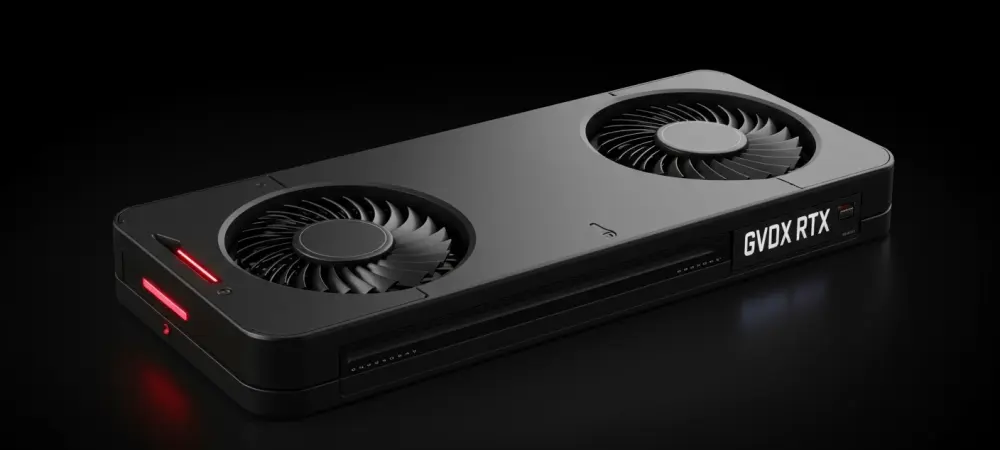
Nvidia’s GeForce RTX 5050 graphics card is making waves in the tech community with its recent appearance in a Furmark test, revealing a notably low operating temperature of 39°C. Set to launch in the second half of July, the RTX 5050 positions itself as an enticing budget choice in the RTX 50 series, emphasizing efficient cooling and its competitive pricing strategy. This analysis delves into the implications of the RTX 5050’s launch, exploring its impact on the graphics card market and Nvidia’s strategic objectives.
Understanding Market Landscape and Its Dynamics
As graphics technology evolves, manufacturers like Nvidia face growing demands for innovation that balances performance with affordability. The RTX 5050, emerging within a competitive landscape, aims to satisfy gamers and professionals needing high-performance capabilities without incurring high costs. With a price tag of $249, the RTX 5050 challenges competitors such as Intel’s Arc B570 and AMD’s Radeon RX 7600, promising exceptional ray tracing abilities and substantial VRAM capabilities. This dynamic environment requires Nvidia to carefully strategize and leverage its technological advancements.
Exploring Technological Innovations in Cooling Efficiency
Cooling efficiency remains crucial for graphics cards, particularly for those engaged in intensive processing tasks. Nvidia’s RTX 5050 stands out with its ability to maintain a low operating temperature of 39°C, a testament to its advanced cooling technology. Unlike other models in the series, such as the RTX 5060 and 5070, this efficiency could have far-reaching implications for reliability and performance. However, manufacturing such refined cooling systems presents challenges, underscoring the balancing act between innovation and practicality in production. These design elements play a pivotal role in differentiating the RTX 5050 amid competitors.
Examining Financial Feasibility and Market Competition
Strategically priced at $249, the RTX 5050 seeks to capture the budget-friendly segment among graphics cards. Its configuration, boasting 2,560 CUDA cores and 8GB of GDDR6 VRAM, emphasizes not only affordability but also performance value. Competing directly with Intel Arc B570 and AMD Radeon RX 7600, Nvidia ventures into a region beset by varied consumer requirements and market demand. This facet of the release touches on both opportunities for expansion and inherent risks associated with fluctuating economic conditions and consumer expectations.
Addressing Market-Specific Challenges Amid Regional Variations
Launching the RTX 5050 necessitates navigating complex regional market dynamics and varying consumer behaviors. Nvidia’s innovative cooling solutions may redefine consumer expectations, altering perceptions of affordability versus performance. Additionally, the global landscape requires addressing issues such as price differences, availability constraints, and unique regional demand levels. Successfully positioning the RTX 5050 involves overcoming these hurdles, with a focus on educating consumers on the features and benefits these advancements offer.
Future Implications for Graphics Technology and Market Strategy
The introduction of the RTX 5050 exemplifies Nvidia’s shift toward combining accessibility with potent graphics solutions. As the industry advances towards heightened realism, ray tracing, and AI integration could shape future developments. Regulatory changes related to component imports and energy efficiency standards may further impact the landscape. The challenges and opportunities within this segment demand careful scrutiny to predict the direction of graphics technology evolution, offering strategic insights for a balanced approach in future endeavors.
Final Observations on Nvidia’s Strategic Initiative
Reflecting on the GeForce RTX 5050, its cooling innovations and affordability signal significant strategic positioning in the competitive market. For businesses seeking efficient yet cost-effective solutions, understanding these dynamics is vital when making purchasing decisions. Monitoring usage scenarios and aligning them with card capabilities ensures optimal investment returns. Embracing advancements in cooling technology facilitates leveraging the full potential of modern graphics hardware. As Nvidia continues to innovate, its efforts with the RTX 5050 are likely to forge lasting changes in the industry, serving as a blueprint for balancing cost and performance effectively.