

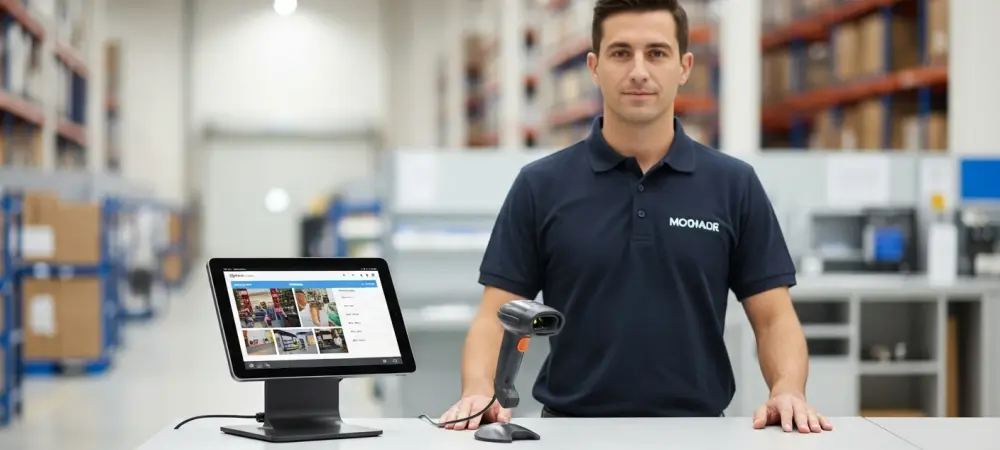
When a customer walks up to a busy trade desk with a specific part in hand, they expect a transaction that is as swift and seamless as any modern retail experience, yet many organizations still struggle with the friction caused by a disconnected back-office system. Microsoft Dynamics 365 Business Central stands as a powerhouse for managing complex financial data and global supply chains, but its standard interface was never truly designed to handle the rapid-fire nature of a front-counter sales environment. This functional gap often leaves counter staff navigating a labyrinth of administrative screens while the customer waits, creating a bottleneck that can damage professional reputations and lead to lost sales opportunities. For industrial retailers, parts distributors, and trade desks, the priority is not just recording a sale for the accounting department but facilitating a high-velocity interaction that prioritizes the customer’s time and the salesperson’s efficiency. Bridging this divide requires moving beyond the traditional constraints of the ERP interface to find a more specialized solution.
The most common approach to solving this challenge has historically been the implementation of external point-of-sale platforms that are “bolted on” to the core ERP system. However, these third-party integrations frequently act as isolated data silos, requiring complex connectors or manual interventions to synchronize information with the central ledger. When sales data and inventory records are merely connected rather than natively unified, the risk of data drift becomes a constant operational threat. Discrepancies between what the sales counter sees and what the warehouse actually holds can lead to embarrassing stock-outs and frustrated customers. A truly effective counter sales operation requires a system that is built within the Business Central framework itself, ensuring that every piece of data is shared instantly across the entire enterprise. This eliminates the need for middle-man software and ensures that the sales team and the accounting office are always operating from the same single source of truth, regardless of how many transactions are processed throughout the day.
Achieving Real-Time Inventory Synchronicity
A significant flaw in many contemporary retail setups is the heavy reliance on batch synchronization, where sales data is only uploaded to the ERP at predetermined intervals or during the quiet hours of the night. This inherent delay creates a dangerous window of inaccuracy where inventory levels visible to the salesperson do not reflect the current reality of the warehouse. In a fast-moving trade environment, a salesperson might inadvertently sell the last five units of a critical component to a walk-in customer, unaware that those same units were committed to a wholesale order just minutes prior. Such transparency issues undermine customer trust and can lead to expensive logistics hurdles as staff scramble to fulfill promised orders. Maintaining a competitive edge in 2026 requires an immediate, granular view of stock availability across all physical and digital locations, a feat that is only possible when the point-of-sale system is an organic extension of the primary inventory management database. By adopting a native point-of-sale integration, every transaction writes directly to the Business Central item ledger at the exact moment the sale is finalized. This level of immediacy ensures that the “single version of the truth” remains uncompromised, as the inventory count is updated enterprise-wide the second a barcode is scanned at the counter. When a part leaves the building, the system accounts for it instantly, preventing the accidental overselling of stock and allowing procurement teams to react to real-time depletion levels. This integration is particularly vital for organizations that manage high-volume parts or high-value equipment where even a small discrepancy can lead to significant financial leakage. Rather than relying on a snapshot of data that may be hours old, counter staff can provide customers with definitive answers regarding availability, while financial reports and stock-out alerts remain grounded in the most current data available within the entire organizational ecosystem.
Optimizing Workflows with Ergonomic Design
The standard Business Central interface is a sophisticated environment built for comprehensive data entry and detailed financial analysis, which typically necessitates the use of a keyboard, a mouse, and several navigation steps. For a salesperson standing at a busy counter, this administrative complexity acts as a significant operational hurdle that slows down service and increases the likelihood of input errors. A functional point-of-sale solution must transform this complex landscape into an ergonomic, touch-optimized experience that is specifically designed for speed and simplicity. Large, intuitive buttons and streamlined screen layouts allow counter staff to process complex orders with minimal clicks, keeping their attention focused on the customer rather than the software interface. When the technology fades into the background, the interaction becomes more professional and personal, allowing the salesperson to provide better advice and cross-sell related products without being tethered to a cumbersome data-entry process.
Modernizing the sales counter also demands a seamless synergy with specialized hardware, specifically high-speed barcode scanners and dedicated point-of-sale terminals. When staff members can scan items directly into an order line without manually searching for product codes or descriptions, the probability of entry errors virtually vanishes, and the total duration of each transaction is cut significantly. This specialized focus on the salesperson’s unique workflow ensures that new hires can be trained in a fraction of the time, as the interface mirrors the simplicity of a consumer-grade application while retaining the underlying power of the ERP. Furthermore, touch-screen compatibility allows for the use of mobile tablets, enabling staff to walk the floor with customers and finalize sales on the spot. This mobility breaks the traditional barriers of the sales counter, allowing for a more dynamic and modern service model that meets the expectations of today’s professional buyers who value speed above all else.
Strengthening Financial Controls and Auditability
Managing the physical flow of cash and the daily reconciliation of register tills is often a primary source of administrative stress and potential human error for retail managers. Without a dedicated point-of-sale module, many businesses are forced to rely on manual spreadsheets or external logs to track cash movements, making it incredibly difficult to identify patterns of loss or audit specific discrepancies. A native integration internalizes the entire cash management lifecycle, formalizing the processes for opening floats, mid-shift skims, and final end-of-day reconciliations directly within the Business Central framework. This systematic approach ensures that every penny is accounted for from the moment it enters the drawer until it is deposited in the bank. By automating these financial controls, businesses can significantly reduce the time spent on manual audits and provide their finance teams with much-needed peace of mind regarding the integrity of their physical cash assets.
Beyond the basic tracking of cash, these integrated systems empower finance teams to leverage the native “dimensions” within Business Central to gain profound insights into their retail performance. Managers can effortlessly track sales figures and cash discrepancies by specific register, geographic location, or even individual staff members, providing a level of traceability that was previously impossible. Solutions like Counter Sales from Insight Works represent a benchmark for this native approach, offering the specific tools required for professional retail management without the significant overhead associated with maintaining third-party software connections. This unified strategy ensures that every transaction is not only fast and accurate but also fully auditable and integrated into the broader corporate financial strategy. By eliminating the friction between the sales floor and the accounting office, organizations can focus their efforts on growth and customer retention rather than the tedious task of reconciling mismatched data.
Strategic Advantages of Unified Architecture
The evaluation of modern point-of-sale requirements led to the realization that successful counter operations depended entirely on the depth of the integration between the front-end interface and the back-office ERP. Organizations that prioritized a native architecture discovered that they could eliminate the costly maintenance and potential failure points associated with external sync cycles. This decision paved the way for a more resilient business model where data integrity was maintained effortlessly across all departments. Leaders recognized that by choosing tools built directly inside the Business Central environment, they were investing in a long-term solution that lowered the total cost of ownership while maximizing operational transparency. The transition toward a unified system allowed staff to spend less time troubleshooting technical issues and more time engaging with their customers. Every transaction performed at the counter became an immediate part of the enterprise’s financial history, ensuring that the ledger was always current.
Future-looking enterprises successfully implemented these strategies by focusing on the specific ergonomic needs of their sales teams and the rigorous audit requirements of their finance departments. They moved away from generic retail software and toward specialized modules like Counter Sales, which provided the necessary balance between speed and control. This shift proved that the most effective way to modernize a trade desk was to bring the power of the ERP directly to the salesperson’s fingertips in a simplified, accessible format. By doing so, businesses ensured that their counter operations were no longer a bottleneck but a driver of efficiency and profitability. The actionable next step for any organization still struggling with manual data entry or disconnected systems was to audit their current transaction times and inventory accuracy. Those who transitioned to a native, touch-optimized solution found that they could scale their operations more effectively, reduce training overhead, and provide a superior customer experience that set them apart in a competitive marketplace.