

The evolving landscape of global cyber warfare has reached a point where the distinction between state-sponsored intelligence operations and traditional digital extortion is becoming intentionally blurred to confuse defenders. In early 2026, a sophisticated campaign attributed to the Iranian threat actor MuddyWater, also known as Mango Sandstorm or Seedworm, demonstrated this tactical evolution by adopting the branding of the Chaos ransomware-as-a-service platform. This strategic move allowed the group, which operates under the direction of Iran’s Ministry of Intelligence and Security, to conduct deep-seated espionage while masquerading as a common criminal syndicate seeking financial gain. By utilizing a “false flag” approach, the attackers targeted organizations across the Middle East and the West, focusing on credential harvesting and long-term network persistence. This shift suggests that intelligence agencies are increasingly leveraging the chaotic nature of the ransomware ecosystem to mask their geopolitical objectives and bypass traditional perimeter security.
Social Engineering and Human Vulnerabilities
Exploiting Corporate Communication Platforms: The New Perimeter
As traditional email-based phishing filters have become more effective at identifying malicious links, threat actors like MuddyWater have pivoted their initial access strategies toward enterprise collaboration tools. The primary vector for this campaign involved unsolicited contact through Microsoft Teams, where attackers impersonated IT support staff or help desk personnel to build immediate rapport with employees. This method exploits the inherent trust that users place in internal communication platforms, which often lack the same level of scrutiny as external emails. Once the initial chat request was accepted, the operators initiated live screen-sharing sessions under the guise of performing routine system maintenance or troubleshooting. This high-touch interaction allowed the hackers to operate directly on the victim’s desktop, running discovery commands to map the local network and identify connected resources without triggering automated alerts.
The success of these social engineering efforts relied heavily on the psychological manipulation of employees who believed they were assisting the organization’s technical department. During these interactive sessions, the threat actors used the victim’s own environment to execute commands such as whoami and net start, gaining a clear picture of the administrative landscape. This approach represents a departure from automated malware delivery, as it requires a live operator to guide the victim through various steps of the compromise. By maintaining a professional and helpful persona, the attackers were able to bypass the skepticism that typically accompanies unexpected software downloads. This strategy highlights a significant vulnerability in modern corporate environments, where the rapid adoption of remote work and collaboration tools has outpaced the development of robust verification protocols for internal communications between different departments.
Neutralizing Modern Protocols: Direct Credential Manipulation
One of the most concerning aspects of the MuddyWater campaign was the ease with which attackers bypassed advanced security measures like multi-factor authentication through direct human interaction. Instead of attempting to crack encrypted password hashes or intercept session tokens via complex technical means, the threat actors simply instructed users to type their sensitive credentials into local text files. Victims were often told to create a file named credentials.txt on their desktop and enter their usernames and passwords while the attacker observed the screen. This manual process effectively neutralized the protections offered by modern credential guards and encryption, as the information was handed over voluntarily. Furthermore, the attackers convinced users to register unauthorized devices to their MFA profiles, ensuring that the hackers could bypass secondary authentication challenges in the future without any further interaction.
This method of “interactive credential theft” demonstrates that even the most robust technical defenses can be undermined by effective social engineering. By convincing a user to add a new device to an MFA account, the attackers secured a permanent and legitimate-looking foothold in the organization’s cloud environment. This technique allows for long-term access that is incredibly difficult to detect, as the subsequent logins appear to come from an authorized device linked to a valid user. The psychological pressure exerted during a live session often causes employees to overlook standard security training, especially when the person on the other end of the screen appears to have administrative authority. Organizations must recognize that the human element remains the most critical link in the security chain, and that technical solutions alone are insufficient against adversaries who are willing to engage in direct, real-time manipulation of their targets.
Technical Execution and Persistence
Custom Malware and Administrative Tools: The Hybrid Arsenal
To ensure continued access to compromised networks, MuddyWater deployed a sophisticated combination of custom-developed malware and legitimate administrative software. The intrusion often involved the delivery of a downloader named ms_upd.exe, which was fetched using standard system tools like curl after the initial social engineering phase. This downloader served as a staging mechanism, profiling the host environment and registering it with a command-and-control server located at moonzonet.com. Following the initial reconnaissance, the primary payload, a remote access trojan known as Game.exe, was installed. This RAT was a trojanized version of a legitimate Microsoft project, allowing it to blend in with normal system processes while providing the attackers with twelve distinct capabilities, including arbitrary command execution, file exfiltration, and advanced detection evasion techniques to bypass virtualized analysis environments.
The use of a custom-built RAT disguised as a standard application demonstrates the group’s commitment to operational security and stealth. Despite some amateurish elements in the code, such as the inclusion of plaintext command strings, the malware proved highly effective at maintaining a silent presence on the host. It utilized AES-256-GCM encryption for its configuration data and employed chunked file uploads to circumvent network-based detection systems that might flag large data transfers. By basing their malware on existing legitimate codebases, the threat actors reduced the likelihood of signature-based detection by antivirus software. This hybrid approach to tooling—combining bespoke malware with modified legitimate components—creates a complex forensic puzzle for security teams, as the malicious behavior is often buried within seemingly normal software operations that have been granted broad permissions by the operating system.
Lateral Movement and Persistence: Living off the Land
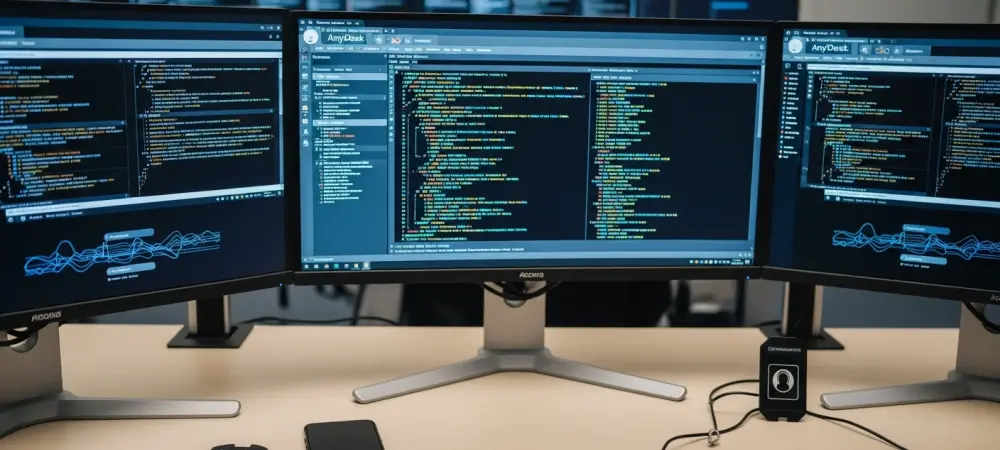
Once a foothold was established on a single workstation, the threat actors quickly shifted their focus toward lateral movement and the compromise of high-value infrastructure like Domain Controllers. To facilitate this movement without raising alarms, the group relied heavily on legitimate remote management tools such as AnyDesk and DWAgent. These tools are commonly used by IT departments for authorized maintenance, which makes their presence on a network appear benign to many monitoring systems. By using these “living-off-the-land” techniques, MuddyWater was able to navigate the internal network with the same tools that a legitimate administrator would use. This strategy provides a layer of plausible deniability, as the traffic generated by these RMM tools is often encrypted and directed toward well-known, trusted service providers, making it difficult for network defenders to distinguish between a breach and a routine update.
The deployment of multiple RMM tools simultaneously is a key indicator of state-sponsored activity, as it provides the attackers with redundant pathways into the environment. If one tool is discovered and removed, the others remain active, allowing the operators to return at their convenience. In this campaign, the move toward Domain Controllers was the ultimate goal, as it granted the attackers the ability to create new administrative accounts and access any resource within the enterprise. The reliance on legitimate software for malicious purposes underscores the need for organizations to implement strict application whitelisting and to monitor for the unusual use of administrative tools outside of standard operating hours. By blending their activities with the noise of daily operations, MuddyWater successfully navigated complex corporate networks, demonstrating a level of patience and technical proficiency that is characteristic of a highly disciplined intelligence organization.
The Strategy of Deception
Masking Espionage as Extortion: The Ransomware Distraction
The most innovative aspect of the 2026 MuddyWater campaign was the deliberate use of Chaos ransomware branding to create a diversionary “false flag” operation. By leaving behind a ransom note and adopting the persona of a financially motivated criminal group, the Iranian actors aimed to misdirect the victim’s incident response efforts. When an organization believes it is facing a ransomware attack, the immediate priority typically shifts toward containment, data recovery, and potential ransom negotiations. This created a “fog of war” that allowed the intelligence officers to continue their quiet work of data exfiltration and credential harvesting while the IT department was occupied with the loud and disruptive symptoms of a supposed ransomware infection. This tactical deception is designed to ensure that even if the intrusion is detected, the true motive of the adversary remains hidden from the investigators.
This strategy of masking state-sponsored espionage behind a criminal facade represents a significant evolution in cyber warfare tactics. It forces defenders to decide whether they are dealing with a threat to their financial stability or a threat to their national security interests, often with incomplete information. In the case of the MuddyWater campaign, the ransomware component was largely a facade; the group was not primarily interested in the ransom payment but in the confusion it generated. By forcing the victim into a reactive posture, the attackers gained additional time to entrench themselves deeper into the network. This approach highlights the importance of thorough forensic analysis that goes beyond the surface-level presentation of a threat. Incident responders must be trained to look for the subtle signs of espionage that may be occurring simultaneously with more overt and distracting malicious activities like a fake ransomware event.
Attribution and Forensic Evidence: Unmasking the Actor
Despite the group’s efforts to maintain a criminal disguise, forensic investigators identified a series of technical artifacts that linked the operation back to the Iranian Ministry of Intelligence and Security. One of the most critical pieces of evidence was the use of a code-signing certificate issued to an individual previously associated with MuddyWater’s “Operation Olalampo.” This digital fingerprint provided a direct link between the 2026 campaign and historical Iranian intelligence operations. Additionally, the command-and-control infrastructure showed significant overlap with domains that had been used in previous attacks targeting Israeli and Western government entities. These technical overlaps, combined with the group’s signature use of specific Python-based process injection techniques, allowed for a high-confidence attribution that stripped away the Chaos ransomware mask and revealed the true identity of the intruders.
The process of unmasking such a sophisticated actor requires a global view of the threat landscape and access to extensive historical data. Attribution is rarely based on a single piece of evidence but is instead the result of synthesizing various indicators, such as execution patterns, infrastructure reuse, and the specific geographic focus of the targets. In this instance, the attackers’ choice of victims—primarily organizations with strategic value in the Middle East—further supported the conclusion that this was a state-sponsored mission rather than a random criminal endeavor. The ability of forensic teams to pierce through the false flag demonstrates the value of information sharing within the cybersecurity community. By documenting these unique patterns, defenders can more effectively identify and counter the deceptive tactics of national intelligence agencies that seek to hide their activities within the broader world of cybercrime.
Strengthening Organizational Defenses
Proactive Mitigation and Vigilance: Strategic Recommendations
The MuddyWater campaign of 2026 highlighted critical gaps in how organizations manage trust and internal communications. To defend against similar hybrid threats, security teams implemented several high-priority mitigations focused on both technical controls and human behavior. One of the most effective steps was the implementation of strict policies regarding external chat requests on platforms like Microsoft Teams and Slack. By restricting the ability of external users to initiate contact or share screens, companies were able to cut off the primary vector for social engineering. Additionally, organizations began to adopt more rigorous auditing processes for multi-factor authentication, specifically looking for the registration of new devices during active user sessions. These proactive measures were complemented by enhanced behavioral monitoring aimed at detecting the unusual creation of local text files containing sensitive information or the simultaneous execution of multiple remote management tools.
Beyond technical configurations, the incident necessitated a shift in security awareness training to address the specific tactics of state-sponsored actors. Employees were educated on the dangers of “IT Support” personas and instructed to verify the identity of any internal contact requesting administrative access or credential disclosure through out-of-band communication channels. This human-centric approach to defense is vital in an era where attackers are increasingly focused on bypassing security through direct interaction. By fostering a culture of healthy skepticism and providing clear reporting mechanisms for suspicious chat requests, organizations significantly reduced their attack surface. The combination of tightened platform governance and a well-informed workforce served as a robust barrier against the deceptive strategies employed by the Iranian intelligence services, ensuring that future false flag operations would be met with greater scrutiny and faster detection.
Actionable Next Steps: Future Considerations
In the aftermath of the MuddyWater operation, the cybersecurity community recognized the need for a more nuanced approach to incident response that accounts for the possibility of strategic deception. Organizations transitioned their defense strategies from a purely reactive model to one that emphasizes continuous threat hunting and the identification of subtle lateral movement patterns. The incident served as a reminder that the presence of a ransomware note should not be taken at face value; instead, it should trigger a comprehensive investigation into the underlying motives of the intruder. Forensic teams were encouraged to look for signs of credential harvesting and unauthorized MFA device registrations as standard procedure, regardless of the apparent nature of the attack. These actionable steps provided a more resilient framework for protecting critical infrastructure against adversaries who seek to exploit the “fog of war” inherent in modern cyber conflicts.
The long-term takeaway from this campaign was the necessity of a unified defense strategy that integrates technical telemetry with human intelligence. By 2026, many organizations had successfully integrated their communication platforms into their security operations centers, allowing for the real-time monitoring of chat interactions for signs of social engineering. This holistic view of the corporate environment proved essential in identifying the subtle anomalies that characterize state-sponsored espionage. As threat actors continue to refine their deceptive tactics, the ability to maintain a clear and objective understanding of the adversary’s goals remained a primary objective for security leaders. The lessons learned from the MuddyWater intrusion provided a roadmap for building more adaptive and skeptical defense architectures that are capable of seeing through the most sophisticated criminal disguises and protecting the core assets of the modern enterprise.