

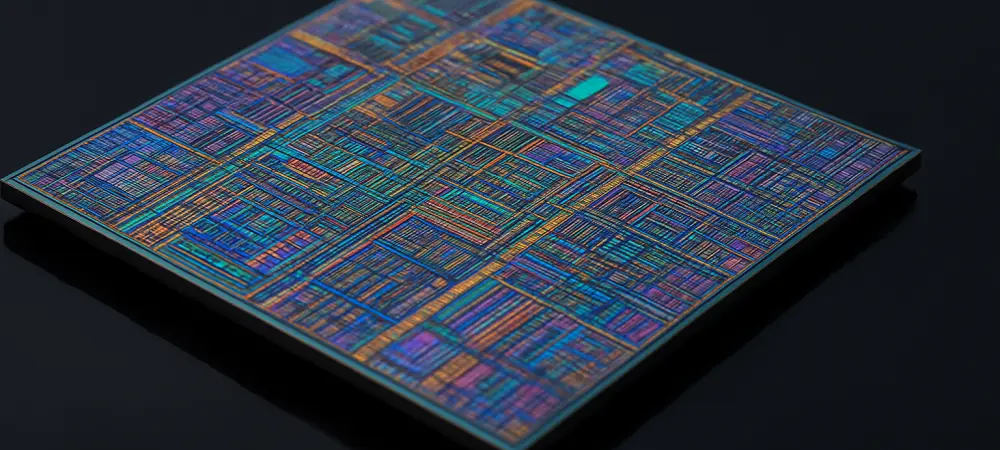
The emergence of open-source RISC-V architecture is providing developers with more flexibility and lower licensing hurdles for new embedded processor designs. This shift significantly impacts the current semiconductor landscape, as proprietary barriers begin to dissolve in favor of more collaborative, modular development cycles that prioritize speed and customization. By 2026, the global Metal-Oxide-Semiconductor (MOS) microprocessor market has reached a valuation of approximately $73.32 billion, up from $66.73 billion in the preceding year. This steady expansion is largely driven by the relentless integration of digital control systems into every facet of industrial and consumer life. Financial analysts highlight that the compound annual growth rate is currently hovering around 9.9%, with expectations for this rate to accelerate to 10.1% as the decade closes. Such momentum suggests that the industry is well on its way to hitting the $107 billion mark by 2030, reflecting a deep global reliance on advanced logic hardware.
Section 1: Technical Foundations and Historical Scaling
MOS microprocessors serve as the fundamental cognitive units of the modern digital world, acting as the primary brain for a vast array of electronic equipment. Utilizing high-density transistor arrays, these circuits manage the primary logic and arithmetic tasks required for complex computer execution. Their architecture allows for a seamless transition between low-level instruction sets and high-level software requirements, making them the standard for everything from microcontrollers to enterprise-grade CPUs. The internal efficiency of MOS technology, particularly in how it handles electron flow through silicon and metal-oxide layers, provides the reliability needed for long-term operational stability in harsh environments. As devices become more compact, the precision of these microscopic gates determines the overall performance ceiling of the host system. This technical consistency has allowed the industry to scale operations across a diverse range of hardware platforms.
The historical trajectory of this market was forged through the continuous refinement of Complementary Metal-Oxide-Semiconductor scaling, which remains a cornerstone of progress. By shrinking the physical dimensions of transistors, manufacturers have consistently managed to increase clock speeds and instruction throughput without proportional increases in power consumption or surface area. This miniaturization fueled a decades-long boom in the personal computing and workstation sectors, where users continuously demanded faster hardware to support increasingly complex software suites. In the current year, this trend is manifesting in the widespread deployment of 5G telecommunications infrastructure and high-speed broadband networks. These systems require a new generation of microprocessors that can manage significantly higher data volumes with minimal latency. Furthermore, the expansion of smart household appliances has created a ubiquitous demand for MOS logic in the global supply chain.
Market Catalysts: Cloud Adoption and Fabrication Breakthroughs
A primary factor propelling the market toward its $107 billion goal is the massive global migration to cloud-based computing architectures among large enterprises. Organizations are increasingly moving their operational workloads from localized on-premise hardware to distributed, remote data centers to achieve greater scalability and cost-efficiency. This shift is particularly visible in the European Union, where the use of paid cloud services among businesses has grown from 45.2% to a current level of 52.74%. Because these cloud platforms operate through massive, interconnected server farms, the requirement for high-performance MOS microprocessors has never been greater. These processors must handle simultaneous requests from millions of users while maintaining strict data integrity and security standards. This organizational transition has effectively decoupled computing power from physical location, leading to a surge in demand for server-grade silicon.
To meet the growing demand for higher performance, the semiconductor industry has turned toward innovative fabrication techniques that go beyond traditional planar layouts. Manufacturers are now regularly implementing sub-nanometer fabrication processes and modular chiplet designs to circumvent the physical limitations of single-die chips. By utilizing 3D stacking and advanced packaging technologies, engineers can layer multiple processing elements vertically, significantly increasing transistor density without expanding the physical footprint of the chip. This approach allows for the creation of more powerful systems-on-chip that can integrate memory and logic more closely than ever before. This innovation is critical for the development of high-density computing environments where space and thermal management are at a premium. As these techniques become more refined, they provide the technical foundation for the next generation of supercomputers and high-efficiency mobile devices.
The New ErArtificial Intelligence and Sustainable Architectures
The current market landscape is also being reshaped by the integration of heterogeneous computing models designed specifically to handle Artificial Intelligence workloads. Rather than relying on a single general-purpose core, modern MOS microprocessors often feature specialized neural processing units that work in tandem with traditional logic gates. This specialization allows for a massive increase in efficiency for tasks like machine learning, image recognition, and natural language processing. Alongside these hardware shifts, the rise of the RISC-V instruction set architecture is offering a viable alternative to proprietary models, fostering a more competitive and innovative design ecosystem. This openness encourages smaller developers and regional startups to build custom silicon solutions that are perfectly tailored to specific edge-computing or embedded applications. By reducing the reliance on restrictive licensing, the industry has unlocked a new wave of creative growth.
The global expansion of the MOS microprocessor market relied heavily on the strategic dominance of the Asia-Pacific region, which functioned as the primary center for both high-end manufacturing and electronics assembly. During this period of rapid growth, industry leaders prioritized the development of ultra-low power devices to address the increasing energy demands of massive data centers and mobile networks. These efforts led to a more sustainable semiconductor ecosystem that balanced high-performance output with environmental considerations. Forward-looking organizations invested in localized supply chain resilience and advanced material research to mitigate potential shortages and technical bottlenecks. By focusing on modular architectures and open-source standards, the industry ensured that computing power remained accessible and scalable across diverse economic zones. These collective actions established a robust framework that supported the transition toward a fully digitized global economy.