

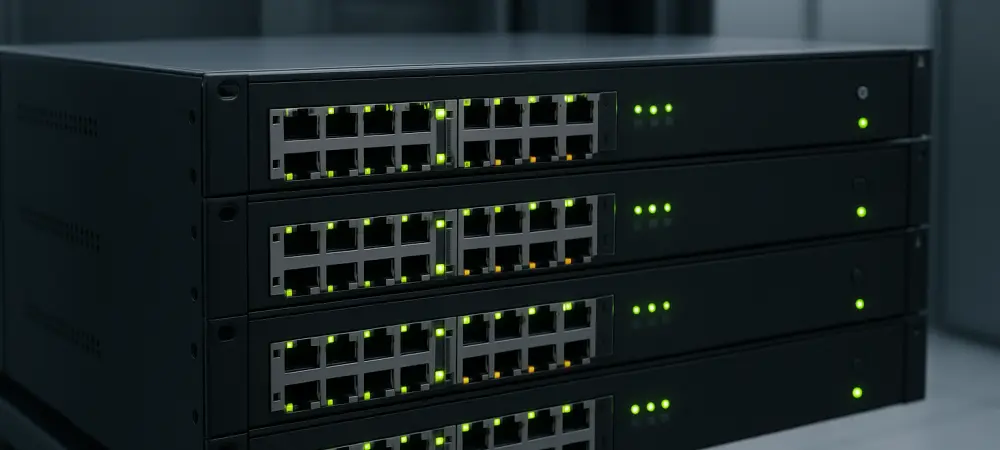
Edge computing is decentralizing traditional network structures by moving data processing closer to the source to meet the ultra-low latency requirements of 5G applications. As the digital economy matures in 2026, Internet Protocol (IP) networks have transcended their role as simple utility tools to become the vital nervous system of global communication. These infrastructures provide a standardized set of rules that allow disparate systems to exchange information across diverse wired and wireless platforms, ensuring that global connectivity remains seamless and efficient. From high-frequency financial trading to standard mobile browsing, the efficiency of these networks determines the operational pace of modern life. As businesses increasingly depend on real-time data exchange, the underlying IP frameworks must offer the scalability and interoperability required to maintain a highly interconnected world. This constant demand for reliability is pushing network providers to rethink how data is routed and delivered across the globe.
Market Expansion and Strategic Technological Shifts
Market Dynamics: Projecting Growth and Economic Impact
The financial trajectory of the IP networks sector reflects its growing importance, with the global market expected to reach a valuation of $53.45 billion by 2030. Currently valued at approximately $35 billion, the industry is maintaining a steady compound annual growth rate of roughly 8.7% as of 2026. This expansion is driven by a long-term trend of broadband modernization and the continuous migration of legacy enterprise services to sophisticated, high-performance cloud environments. The transition is not merely about increasing capacity but about fundamentally changing how data travels across the internet backbone. As more regions achieve high-speed connectivity, the density of traffic requires more robust and intelligent routing protocols. This surge in market value is also a direct result of increased investment in subsea cables and terrestrial fiber optics, which form the physical layer of the IP networking ecosystem.
Modern enterprise strategies are increasingly centered on digital-first models, where any delay in network communication results in significant financial loss. This reality has catalyzed a move away from rigid, hardware-centric networking toward more flexible, service-oriented architectures. The rise of hybrid work environments and decentralized corporate offices has further accelerated the need for secure, high-capacity IP networks that can provide consistent performance regardless of geographical location. Consequently, the industry is seeing a massive influx of capital directed toward upgrading existing infrastructure to handle the complexities of modern data traffic. This financial commitment ensures that the backbone of the internet remains capable of supporting the next decade of innovation. By 2030, the reliance on these systems will only deepen as digital transformation initiatives reach full maturity in both developed and emerging economies.
Infrastructure Evolution: The Synergy of 5G and IoT
A primary engine behind this market surge is the global rollout of 5G technology, which demands infrastructure capable of supporting vastly higher speeds and ultra-low latency. With median 5G download speeds increasing significantly every year, network providers are under immense pressure to upgrade their IP backbones to handle the resulting throughput. These high-performance connections are no longer optional for businesses; they are critical for the survival of emerging digital services and real-time communication platforms. The integration of 5G into the IP layer allows for network slicing, a technique that creates multiple virtual networks on top of a single physical infrastructure to serve different use cases. This capability ensures that mission-critical applications, such as remote surgery or autonomous vehicle coordination, receive the dedicated bandwidth and low latency they require without interference from standard traffic.
Beyond consumer speed, the explosion of the Internet of Things (IoT) has introduced billions of new endpoints that require constant and reliable connectivity. Managing the staggering volume of data generated by these devices necessitates the efficient routing capabilities inherent in modern IP networking. Each sensor, smart appliance, and industrial machine requires a stable connection to process and transmit information, creating a complex web of traffic that must be managed with precision. As these devices become more ubiquitous in urban planning and industrial automation, the role of IP networks in maintaining system stability becomes paramount. The intersection of 5G and IoT creates a data-rich environment that offers unprecedented insights into operational efficiency. To capitalize on this, organizations are investing in intelligent networking solutions that can autonomously prioritize traffic and ensure that the most important data packets reach their destination without delay.
Architectural Innovation: Virtualization and Security
The industry is currently undergoing a radical shift toward virtualization, utilizing Software-Defined Networking (SDN) and Network Function Virtualization (NFV) to reduce dependence on rigid hardware. This transition allows for more agile traffic management and greater operational flexibility across large-scale deployments, enabling administrators to reconfigure network paths via software rather than manual hardware adjustments. Simultaneously, the widespread adoption of IPv6 is addressing the address-space limitations of older protocols, ensuring that the network can support an almost infinite number of connected devices as the digital ecosystem continues to expand. This software-centric approach not only lowers capital expenditures by utilizing commodity hardware but also increases the speed at which new services can be deployed. By abstracting the control plane from the data plane, SDN provides a centralized view of the network, allowing for more holistic management.
Technological maturity is also evident in the integration of Artificial Intelligence and advanced security protocols directly into the network fabric. AI-powered automation helps optimize performance by predicting potential failures and adjusting routing in real-time to avoid congestion. As these networks become more central to daily life, there is an intensified focus on cybersecurity, with advanced encryption and secure routing protocols being built into the architecture to mitigate expanding threats. This move toward intrinsic security ensures that data is protected from the moment it enters the network until it reaches its final destination. Furthermore, the decentralization of data processing through edge computing helps reduce the attack surface by handling sensitive information locally. This combination of intelligent automation and proactive security measures creates a resilient infrastructure capable of withstanding both technical failures and sophisticated cyberattacks.
Forward Outlook and Strategic Implementation
The evolution of the IP networking sector demonstrated that technical adaptability remained the primary differentiator for success in an increasingly crowded digital landscape. Industry leaders prioritized the deployment of automated, self-healing architectures to counteract the complexities of 5G and massive IoT traffic. These organizations moved toward a unified management model where software-defined parameters replaced manual configurations, effectively reducing the risk of human error in critical routing tasks. Strategic investments in IPv6 transition plans became mandatory as the pool of available addresses for legacy protocols virtually vanished. Furthermore, security was no longer treated as a perimeter-based addition but was integrated directly into the packet-routing logic of the network itself. By focusing on these core areas, stakeholders ensured that their infrastructures were prepared for the next wave of data-intensive applications and high-bandwidth requirements.