

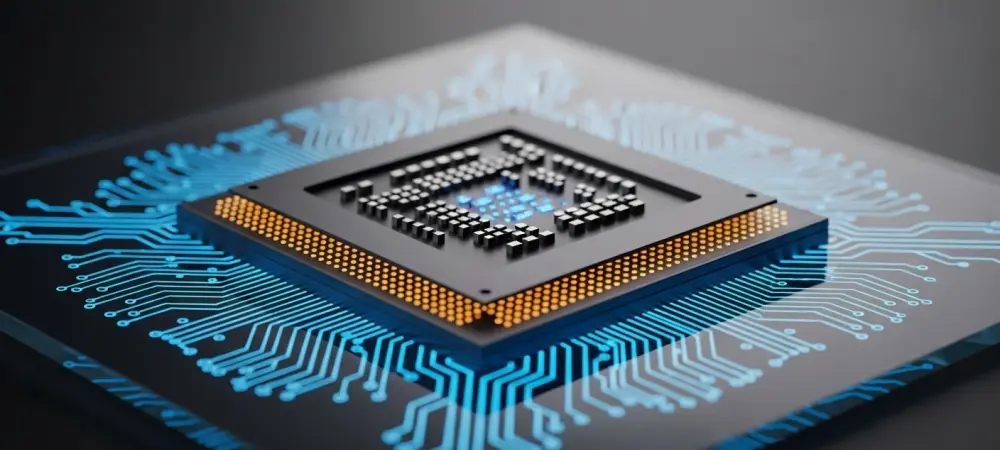
The relentless expansion of generative artificial intelligence across industrial and consumer sectors has propelled the global microprocessor market toward a monumental valuation of two hundred and thirty-three billion dollars by the end of 2028. This surge is not merely a quantitative increase in sales but represents a fundamental pivot in how silicon is designed, manufactured, and deployed within modern infrastructure. As legacy x86 architectures face increasing competition from high-performance ARM-based designs and specialized accelerators, the industry is witnessing a massive reconfiguration of supply chains and research priorities. Manufacturers like Taiwan Semiconductor Manufacturing Company are accelerating their two-nanometer production schedules to meet the insatiable appetite for chips capable of handling trillions of parameters. This evolution signifies that the microprocessor is no longer just a general-purpose component but has become the strategic bedrock of the global digital economy, influencing everything from national security to the basic efficiency of cloud services.
Architectural Shifts: The Rise of Custom Silicon and Specialized NPUs
Building on this foundation of rapid growth, the architectural landscape is shifting away from traditional central processing units toward highly specialized Neural Processing Units and advanced graphics processors. Major hyperscalers, including Amazon Web Services with its Trainium line and Google with its latest Tensor Processing Units, are increasingly opting for in-house designs to optimize specific workloads while reducing reliance on external vendors. This trend toward vertical integration allows these organizations to fine-tune power consumption and throughput for large language models, providing a competitive edge in cost-per-inference metrics. Furthermore, the integration of high-bandwidth memory directly onto the processor substrate has become a standard requirement for high-end AI chips. These technical advancements are forcing established players like Intel and AMD to redefine their roadmaps, emphasizing multi-die chiplet designs that allow for greater flexibility and yields. The result is a diversified market where the “one size fits all” approach to computing has been replaced by a mosaic of workload-optimized hardware solutions.
Strategic Implementation: Navigating the Edge and Data Center Nexus
Organizations seeking to capitalize on this $233 billion market trajectory moved beyond simple procurement and began focusing on long-term lifecycle management and edge integration strategies. High-performance computing shifted from being centralized solely in massive data centers to being distributed at the network edge, where low-latency processing became essential for autonomous systems and real-time industrial robotics. Decision-makers prioritized the deployment of heterogeneous computing environments, combining traditional CPUs with AI-specific accelerators to balance versatility with raw computational power. Investment also flowed into software-defined hardware layers, which enabled developers to abstract the underlying silicon complexities, thereby accelerating the deployment of sophisticated algorithms. Companies that successfully transitioned to this model viewed hardware as a dynamic asset rather than a static expense, ensuring that their infrastructure remained compatible with the rapid iterations of neural network architectures. By aligning silicon roadmaps with specific operational goals, stakeholders secured their positions within an increasingly complex and valuable technological ecosystem that redefined the boundaries of digital capability.