

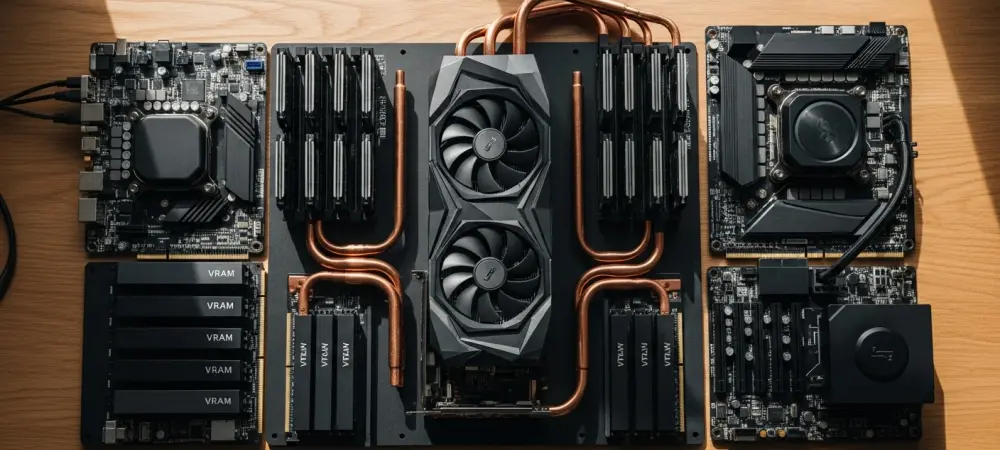
The recent strategic withdrawal of the Rubin CPX from the official roadmap signals a monumental shift in how high-performance computing leaders balance enterprise growth against consumer commitments. While the artificial intelligence boom has often left PC enthusiasts scavenging for remnants of production capacity, this specific cancellation suggests a recalibration that prioritizes sustainable development across disparate sectors. By stepping back from a hardware design that risked cannibalizing its own supply chain, the industry leader has inadvertently provided a lifeline to a gaming market that was bracing for another era of scarcity and inflated prices. This move reflects a deeper understanding of memory constraints and the technical requirements of modern inference tasks, which are increasingly diverging from traditional training needs. As the dust settles on this decision, it becomes clear that the move is not just a tactical retreat but a necessary evolution in a market where specialized silicon is becoming the new standard for efficiency and performance.
Strategic Shifts in the Rubin Architecture
The Transition to Dedicated Inference Hardware
The Rubin architecture was initially conceived to address the global demand for instantaneous AI responses, representing a departure from the brute force methods that defined earlier GPU generations. Unlike the massive clusters used for training Large Language Models, the CPX variant was intended to be a lean, high-throughput processor optimized specifically for the inference phase. This optimization was critical because the market had begun to value the speed of execution over raw computational power, pushing engineers to seek designs that could handle thousands of concurrent queries with minimal latency. By focusing on inference, the project sought to bridge the gap between heavy-duty data centers and edge computing requirements. However, this focus required a specific balance of memory bandwidth and power consumption that ultimately proved difficult to reconcile with the existing manufacturing capabilities. The decision to abandon this path highlights the technical hurdles involved in creating a truly specialized AI unit.
Technical Conflicts: Memory Architecture Challenges
Perhaps the most debated technical feature of the Rubin CPX was its unconventional reliance on GDDR7 memory modules mounted directly onto the printed circuit board, a significant shift from integrated High Bandwidth Memory. This choice was intended to lower production costs and improve thermal management, but it inadvertently placed the enterprise division in direct competition with the consumer graphics division. Since both the high-end AI inference chips and the next generation of gaming graphics cards were slated to use the same GDDR7 pools, a massive internal supply bottleneck was virtually guaranteed. Had the CPX proceeded to mass production, the demand from enterprise clients would have likely swallowed the entire global supply of memory modules, leaving PC gamers with limited stock and prohibitive pricing. The cancellation effectively decouples these two product lines, ensuring that the specialized needs of AI inference do not inadvertently cripple the availability of hardware intended for the broader consumer market.
Evidence of Abandonment and New Alliances
Indicators from the Industrial Supply Chain
Observations within the South Korean semiconductor manufacturing ecosystem have provided the most concrete evidence that the Rubin CPX project has been effectively mothballed or terminated. Analysts monitoring the supply chain have reported a total cessation of orders for the specialized high-capacity circuit boards and unique mounting substrates that were exclusive to the CPX design. In a sector where production schedules for complex silicon are locked in months or even years in advance, such a sudden and absolute silence from the purchasing departments is a definitive signal of a major shift in corporate strategy. These supply chain monitors, who track everything from raw material acquisition to final packaging, noted that resources originally earmarked for the CPX have already begun to be reallocated to other high-priority projects. This industrial pivot suggests that the decision to cancel was not made lightly, but was instead a reaction to changing market conditions and more viable alternative technologies.
Strategic Partnerships: Technological Pivots
A primary driver behind this sudden abandonment is the significant technology licensing agreement with Groq, which provided access to advanced Language Processing Unit designs. By integrating this new architecture, the focus has shifted toward a processing model that utilizes massive amounts of Static Random-Access Memory integrated directly into the silicon die itself. This approach offers an order of magnitude improvement in speed and energy efficiency compared to the older GDDR7-based external memory design of the CPX. The move to SRAM-based designs effectively rendered the Rubin CPX obsolete before it could even reach the commercial market, as the performance metrics of the newer architecture far surpassed the capabilities of traditional DRAM configurations. This technological leap allows for the creation of chips that can handle complex AI workloads without the latency penalties associated with external memory access. Consequently, the pivot toward licensed tech represents a more efficient use of capital and research resources.
Positive Outcomes for the Gaming Community
Relief for Next-Generation GPU Availability
The decision to step away from the CPX design has provided much-needed breathing room for the PC gaming community, which has long feared being marginalized by the insatiable appetite of the AI sector. With the upcoming GeForce RTX 50-series graphics cards confirmed to utilize the latest GDDR7 memory, the removal of a massive internal competitor for these components is a significant victory for consumers. By shifting the AI inference strategy toward integrated SRAM and other specialized formats, the pressure on the global supply of GDDR7 has been greatly reduced. This change ensures that production lines for consumer GPUs can operate at full capacity without being outbid by enterprise departments with vastly larger procurement budgets. For the average gamer, this translates into a higher likelihood of finding cards in stock at launch and a reduction in the artificial scarcity that has plagued previous releases. The focus on gaming-specific memory now remains firmly with the enthusiasts.
Mitigation of Market Volatility
Historical trends have shown that whenever enterprise AI hardware shares a component list with consumer products, the result is almost always a market imbalance that favors the high-margin data center products. By canceling a chip that would have required millions of GDDR7 modules, the risk of a VRAM shortage for the next generation of gaming cards has been substantially mitigated. This move allows the consumer division to secure its necessary components with greater certainty and at more predictable price points, which is essential for maintaining the health of the enthusiast ecosystem. Without the looming shadow of the CPX, the launch of the next flagship GPUs can proceed with a focus on delivering value to gamers rather than surviving a bidding war for memory. This strategic decoupling is a rare instance where the rapid evolution of AI technology has actually benefited the traditional computing market by forcing a diversification of hardware requirements that protects less profitable sectors.
The Broader Landscape of Memory Technology
Navigating the Global Memory Crisis
Despite the optimistic outlook for graphics memory, the broader technology landscape remains gripped by a volatile supply situation colloquially known as the RAMpocalypse. The demand for other memory formats, particularly High Bandwidth Memory and standard DDR5, continues to push the manufacturing limits of industry giants like Samsung and SK Hynix. While the specific threat to GDDR7 has been alleviated by the pivot in AI strategy, the overall competition for silicon wafers and packaging facilities remains intense. Manufacturers are still incentivized to prioritize high-profit AI training chips, which can often lead to bottlenecks in the production of standard consumer-grade memory and storage modules. The industry is currently navigating a period where every square millimeter of production capacity is scrutinized for maximum profitability, meaning that any relief in one sector is often offset by increased pressure in another. This ongoing volatility requires a cautious approach from both manufacturers and consumers as they plan for the next few years.
Architectural Specialization and Future Stability
Ultimately, the termination of the Rubin CPX architecture signals the definitive end of the one-size-fits-all approach to high-performance GPU development. The industry is moving rapidly toward a future defined by hyper-specialization, where inference, training, and rendering tasks are handled by distinctly different hardware architectures that do not cannibalize each other’s resources. For the consumer, this transition provides a necessary buffer against the supply-side shocks that have defined the early part of this decade, ensuring that the next leap in graphics performance is not stifled by the growth of artificial intelligence. By embracing specialized units like the Language Processing Unit for inference, companies can meet the demands of the AI boom without sacrificing the needs of their traditional customer base. This shift toward architectural diversity is a positive development that promises a more stable and predictable hardware market. It ensures that innovation in one field no longer comes at the direct expense of progress in another.
Future Directions: Semiconductor Strategy
The analysis of the Rubin CPX cancellation revealed a strategic pivot that prioritized architectural efficiency over stop-gap hardware solutions. It was observed that by abandoning the GDDR7-based design, the company successfully decoupled its enterprise AI goals from its consumer gaming obligations, effectively safeguarding the supply chain for upcoming enthusiast products. This decision demonstrated a sophisticated understanding of the limitations inherent in sharing memory technologies across radically different workloads. Moving forward, consumers should monitor local inventory levels and prepare for a more stable launch window, while manufacturers must prioritize silicon diversification to avoid future resource conflicts. Investors were encouraged to view this shift as a maturation of the AI hardware market that will eventually lead to more robust and available technology for all. The path ahead necessitated a clear separation of hardware priorities, a lesson that was thoroughly reinforced by the conclusion of the CPX project.