

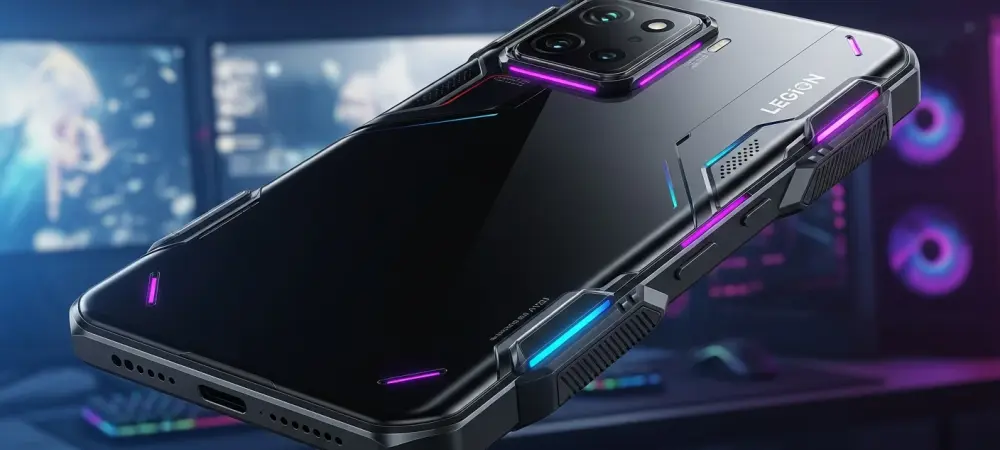
Dominic Jainy is an acclaimed IT professional whose career spans the transformative landscapes of artificial intelligence and machine learning. His deep-seated fascination with how hardware evolves to meet the demands of cutting-edge software has made him a leading voice in the consumer electronics sector. In this discussion, we explore the resurgence of dedicated gaming hardware, specifically focusing on the engineering breakthroughs that allow modern mobile devices to outperform their predecessors through advanced display science and thermal management. We also touch upon the shifting priorities of mobile users, where massive battery capacities and professional-grade camera sensors are becoming standard expectations even in devices designed primarily for competitive play.
High-performance displays now reach 7,000 nits of brightness while claiming to consume less power than lower-resolution panels. How does Q10 screen technology balance such extreme peak brightness with energy efficiency, and what specific benefits does a 144Hz refresh rate offer for modern mobile gaming titles?
The Q10 display technology represents a significant leap in material science, allowing the 6.82-inch screen to reach an astonishing 7,000 nits of peak brightness without draining the battery. By optimizing the light-emitting layers, this 2K resolution panel actually consumes less power than traditional 1.5K displays, which is a feat that feels almost like magic when you see the vibrant, punchy colors under direct sunlight. For a gamer, that 144Hz refresh rate is the difference between a blurred mess and surgical precision during a high-stakes match. It ensures that every frame transitions with buttery smoothness, reducing input lag to a point where the device feels like a natural extension of your reflexes. Feeling the fluidity of a fast-paced shooter at that frequency provides a tactile satisfaction that standard 60Hz or even 120Hz screens simply cannot replicate.
Current cooling architectures use 10W thermal conductivity gels and large vapor chambers to manage heat during intense sessions. Why are these specific materials necessary for maintaining sustained performance on a Snapdragon 8 Gen 5 processor, and how do they prevent the thermal throttling that plagues thinner devices?
When you are pushing a Snapdragon 8 Gen 5 processor to its limits, the sheer amount of heat generated can quickly become a performance killer, leading to those frustrating frame drops just when the action peaks. To combat this, the integration of 10W thermal conductivity gel acts as a high-speed highway, pulling heat away from the silicon and into a massive vapor cooling chamber. This system is designed to spread the thermal load across a larger surface area, allowing the phone to maintain peak clock speeds without the processor needing to “throttle” or slow down to stay cool. Holding a device that stays comfortably warm rather than scorching hot during a three-hour session is a testament to how far internal thermal engineering has come. It gives the user the confidence to play at ultra-settings, knowing the hardware can breathe and perform consistently.
Mobile batteries are hitting 8,000mAh capacities, promising nearly 20 hours of continuous gameplay and over 50 hours of regular use. What are the engineering challenges of integrated high-capacity cells without making phones too bulky, and how do bypass charging and 90W speeds alter a player’s daily habits?
Fitting an 8,000mAh battery into a handheld chassis requires an incredible balancing act of energy density and spatial efficiency to ensure the phone doesn’t feel like a heavy brick in your pocket. This massive capacity provides a staggering 19.3 hours of gameplay or up to 57.6 hours of regular use, effectively killing “battery anxiety” for even the most demanding users. The inclusion of 90W fast charging means that even if you do run low, a quick break is enough to juice back up, but the real hero is bypass charging. By allowing the phone to draw power directly from the wall instead of the battery during play, it prevents unnecessary heat buildup and preserves the long-term health of the cell. It changes the way you live with your device, turning the constant hunt for a power outlet into a forgotten chore.
Modern gaming hardware often includes specialized LPDDR5X Ultra RAM and UFS 4.1 storage alongside triple IP66/68/69 ratings for durability. How do these high-end memory standards impact load times and multitasking, and why is high-level ingress protection becoming a priority for devices primarily intended for indoor gaming?
The combination of LPDDR5X Ultra RAM and UFS 4.1 storage creates a data environment where bottlenecks virtually disappear, allowing massive game files to load in a heartbeat. When you’re jumping between a resource-heavy game and multiple social apps, the 12GB of RAM ensures that nothing stutters or closes unexpectedly in the background. What is truly surprising is the move toward triple IP66, IP68, and IP69 ratings, which provides a level of protection against dust and high-pressure water jets that we rarely see in this category. While many think of gaming as an indoor hobby, the reality is that gamers take their phones everywhere—from rainy commutes to dusty outdoor cafes. This industrial-grade durability means a spilled drink or a sudden downpour is no longer a death sentence for a $600 investment, offering a sense of rugged reliability that matches the internal power.
Many gaming-centric phones are incorporating 50MP Sony sensors and anti-flicker technology while maintaining a price point near $600. How has the expectation for camera quality in the gaming segment shifted recently, and what trade-offs do manufacturers face when balancing professional-grade photography with specialized gaming components?
The era of “gaming phones with bad cameras” is officially over, as users now demand a flagship experience in every department, regardless of the device’s primary focus. Incorporating a 50MP Sony LYT-710 sensor alongside specialized anti-flicker and anti-overexposure technology allows this device to capture stunning, professional-grade images that rival traditional flagship phones. The challenge for manufacturers is managing the bill of materials; at a price point of roughly $588, every dollar spent on a high-end 32MP selfie camera is a dollar not spent on the GPU or cooling. However, by striking this balance, they create a versatile tool that captures the beauty of real life just as well as it renders virtual worlds. It creates a more emotional connection to the device when it can serve as both your competitive rig and your primary memory-catcher.
What is your forecast for the Legion gaming phone lineup?
I forecast that the Legion lineup will successfully bridge the gap between niche enthusiast hardware and mainstream appeal by focusing on extreme battery longevity and superior display tech. As mobile titles become more graphically intensive, Lenovo’s commitment to massive 8,000mAh batteries and ultra-bright 7,000-nit screens will likely force competitors to move away from slim designs in favor of sheer endurance and outdoor visibility. We are moving toward a future where “gaming” phones are simply the “power user” phones of choice, offering better value and more robust cooling than traditional premium flagships. Within the next two years, I expect the Legion brand to expand its global presence, particularly if they continue to offer high-end specs like UFS 4.1 and triple IP-ratings at a price point that undercuts the established giants.