

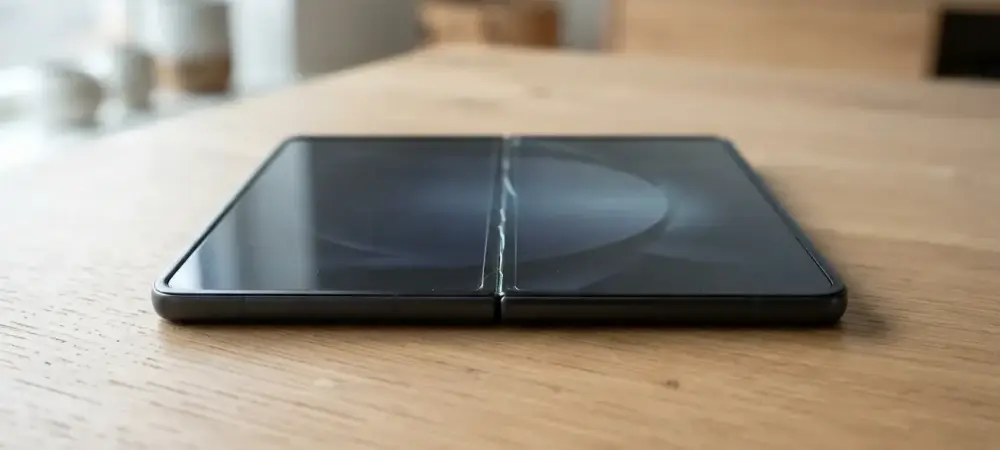
Unlike the Samsung Galaxy Fold’s delayed launch, Apple has chosen to continue sales of the iPhone Duo while managing screen defects through a quiet, localized replacement program for affected users. This strategic decision comes as the tech giant navigates the turbulent waters of its first major entry into the foldable smartphone market, where the high price point of $1,999 for the base 256GB model has amplified consumer scrutiny. Within just seventy-two hours of the October 23, 2026, release, a wave of social media posts and forum discussions began to highlight a troubling pattern of inner displays fracturing precisely along the central hinge. These reports quickly coalesced under the moniker “Crackgate,” a term that has since dominated tech news cycles and put Apple’s engineering team on the defensive. While the company maintains that the issue impacts only a fraction of the total units sold, the geographic spread of the failures suggests a deeper systemic challenge rather than a simple batch-related fluke. The situation is particularly delicate as it precedes a major fiscal earnings report, forcing investors and analysts to weigh the potential for a large-scale recall against the immense demand that saw initial pre-orders sell out in record time.
1. Timeline: From Global Launch to Official Acknowledgment
The rollout of the iPhone Duo began with significant momentum on October 23, 2026, supported by an aggressive marketing campaign that emphasized the device’s unique passport-style form factor. However, the celebration was short-lived as early adopters in Australia and the United States began reporting catastrophic screen failures before the first weekend had even concluded. By October 25, the narrative had shifted from the device’s innovative design to its apparent fragility, with reports emerging from Canada, China, and India in rapid succession. This timeline is critical because it highlights how quickly a premium product’s reputation can be challenged in the age of viral social media. Apple’s internal monitoring systems likely flagged these incidents immediately, yet the company waited until the following Monday to issue a formal statement. This gap in communication allowed speculation to run rampant, with various tech outlets and independent reviewers attempting to replicate the failures in controlled environments.
Apple’s official statement arrived on October 26, 2026, delivered via major tech news platforms to ensure maximum visibility. The company described the response to the iPhone Duo as “incredibly positive” before pivoting to address the reports of display damage. By characterizing the problem as affecting only a “small number” of units, Apple attempted to contain the narrative and prevent a full-blown consumer panic. Simultaneously, the company instructed its support staff to prioritize these cases, offering free replacements even for users who had not purchased additional insurance. This proactive approach to customer service was designed to mitigate the damage to the brand’s premium standing, though it did little to address the underlying concerns regarding the device’s long-term durability. As the week progressed, the tension between Apple’s optimistic sales forecasts and the growing number of “Crackgate” posts created a complex environment for prospective buyers, many of whom began to reconsider their $2,000 investments ahead of the holiday shopping season.
2. Engineering Challenges: The Mechanics of Hinge Failure
The most compelling technical insights into the “Crackgate” phenomenon have come from independent teardowns, most notably those performed by repair experts who dissected the iPhone Duo’s complex internal architecture. These investigations revealed that the central hinge is a masterpiece of micro-engineering, containing over one hundred individual components designed to provide a smooth, tactile folding experience. However, the iFixit teardown identified a potential Achilles’ heel in the form of a central support bar that may not be retracting far enough when the device is closed. This mechanical misalignment creates a stress hotspot where the flexible OLED panel is forced against a rigid internal edge. Such a design flaw would explain why the cracks appear almost exclusively on the lower half of the inner display, where the flex cables and hinge supports converge. The concentration of force on a microscopic scale is often enough to fracture the thin-film layers that protect the organic light-emitting diodes, leading to the characteristic bright line of dead pixels reported by owners.
Beyond the mechanical stress of the hinge itself, environmental factors such as dust and microscopic debris have emerged as significant contributors to the display failures. During stress testing involving fluorescent powders, investigators found that fine particles could easily migrate into the moving parts of the hinge mechanism. Once inside, these particles act as abrasives or create tiny obstructions that prevent the hinge from moving through its intended range of motion. For a foldable screen, even a fraction of a millimeter of deviation can be disastrous. While rival manufacturers have faced similar challenges with their foldable designs, the iPhone Duo’s passport-style layout seems particularly susceptible to these ingress issues. This technical reality creates a paradox for users who expect a $2,000 device to be both cutting-edge and durable enough for daily life. The interplay between high-tolerance engineering and the unpredictable nature of real-world usage remains the primary hurdle for Apple as it works to refine the Duo’s hardware in future production runs.
3. Financial Implications: Repair Costs and Warranty Disputes
The economic impact of the display issues is significant, particularly given the unprecedented cost of repairing foldable screen technology. For owners without the protection of an insurance plan, the out-of-warranty replacement cost for the inner display currently sits at a staggering $999. This figure represents nearly half the total cost of the device, creating a high-stakes environment for every interaction with the phone. While Apple is currently honoring free replacements for hinge-related cracks under the standard one-year warranty, the line between a manufacturing defect and accidental damage can often be blurry. Owners have reported varying experiences at retail locations, with some receiving instant swaps while others are subjected to rigorous inspections to ensure the device shows no signs of impact. This inconsistency has led to a surge in interest for extended coverage plans, which lower the deductible for screen repairs to a more manageable $99, effectively making such plans a hidden tax on the device’s base price.
The financial narrative extends beyond the individual consumer to the broader stock market, where Apple’s valuation is closely tied to the success of its flagship hardware. Following the emergence of the “Crackgate” reports, the company’s stock saw a modest decline of approximately 1.1% on October 28, 2026. While this dip was relatively minor given Apple’s multi-trillion-dollar market cap, it signaled a degree of investor caution regarding the potential costs of a widespread hardware fix. Analysts are particularly focused on the upcoming fiscal Q4 earnings call on November 2, where management will likely be questioned about warranty reserves and the impact of the foldable launch on overall margins. If the failure rate exceeds the typical industry standard for first-generation products, the cost of replacing tens of thousands of units could weigh on the holiday quarter’s profitability. Despite these concerns, some market experts remain bullish, noting that the demand for the iPhone Duo remains high and that the supply chain has already been directed to increase production to meet long-term shipping targets.
4. User Experiences: Real-World Accounts of Display Trauma
The human element of “Crackgate” is perhaps best captured in the stories of the early adopters who stood in line to be among the first to own the iPhone Duo. Narrative accounts from users across the globe describe a similar sense of sudden, unexpected failure that often occurs during the most mundane tasks. For instance, some owners have reported hearing a distinct popping or clicking sound just before the screen displayed a permanent vertical line of distorted colors. These experiences are not limited to heavy users; several accounts highlight failures occurring within the first few hours of unboxing, sometimes even before the initial software setup was complete. These anecdotes have been widely circulated on tech forums, creating a perception of fragility that Apple’s marketing has struggled to counter. The emotional toll of seeing a $2,000 investment fail so quickly has led to a significant amount of vocal frustration, which in turn has fueled the media’s obsession with the “Crackgate” label.
In contrast to the catastrophic failures, many reviewers and power users have reported no issues even after thousands of folds. This disparity in user experience suggests that the defect might be related to specific manufacturing tolerances or environmental conditions rather than a universal design flaw. For example, some stress tests performed by independent laboratories involved mechanical rigs that folded the device with perfect symmetry and consistent force, often reaching over 30,000 cycles without a single crack. This suggests that the human element—specifically how a person applies pressure with their thumbs when opening the device—might play a role in how the internal stress is distributed. However, a premium consumer product must be designed to withstand the variability of human touch, and the fact that some units fail during normal use remains a valid criticism. The divergence between lab results and real-world reports continues to be a central point of debate among tech enthusiasts and industry experts alike.
5. Comparative Analysis: How the Duo Competes with Rivals
When placed alongside its primary competitors, the iPhone Duo’s launch struggles are not entirely unique, yet they are viewed through a more critical lens due to Apple’s reputation for hardware perfection. Rival devices like the Google Pixel 11 Pro Fold and the latest Samsung Galaxy Fold series have spent years refining their hinge designs to minimize the exact types of failures now seen in the Duo. These competitors have often had the advantage of multiple hardware iterations to solve problems related to screen tension and debris ingress. Google, for instance, has lowered the entry price for its foldable to $1,649, making it a more accessible, and perhaps more seasoned, alternative to Apple’s offering. The Huawei Pura X Max also represents a significant challenge in the international market, offering a similar wide-aspect ratio that some users find more productive than the traditional smartphone shape. Apple’s entry into this space was meant to define the category, but the current issues suggest the company is still in the learning phase of foldable technology.
Despite the durability concerns, the iPhone Duo maintains a significant lead in software integration and ecosystem appeal. Many users who have encountered display issues still express a preference for the device’s interface and the way iOS handles the transition between the cover screen and the large inner display. This software polish often keeps customers within the Apple ecosystem even when the hardware proves problematic. However, as “Crackgate” continues to make headlines, the gap between Apple’s software superiority and its hardware reliability has become a primary talking point for critics. For the foldable market to reach mainstream maturity, manufacturers must prove that these devices can survive the typical three-to-four-year upgrade cycle of a standard smartphone. As it stands, the iPhone Duo is a high-performance machine that requires a level of care and financial protection that many average consumers might find prohibitive compared to more established, rigid flagship models.
6. Guidance: Critical Steps for Current Device Owners
If you encounter display issues with your foldable device, follow these instructions to secure a replacement. First, operate the device with caution. Open and close the handset slowly. If you notice any physical resistance or hear a clicking or popping sound, stop immediately and do not apply extra force to the hinge. Attempting to force the device to close when an obstruction is present can lead to permanent damage to the OLED layers. Second, gather visual and purchase evidence. Take clear photos of the screen damage from multiple angles and locate your original purchase receipt. Having a record of the damage before visiting a technician is essential, as it helps establish that the failure occurred during normal usage rather than through an accidental drop. Third, initiate a claim via Apple Support. Reach out to AppleCare or visit an Apple Store directly rather than going through your cellular provider. Apple has confirmed that these specific hinge issues are eligible for replacement, and dealing directly with the manufacturer often speeds up the resolution process.
Once the replacement process has been initiated, owners must take practical steps to protect their data and their financial interests. Fourth, perform a data backup. Ensure all your personal information and files are backed up to iCloud or a computer, as the store will likely exchange your unit for a different one rather than repairing your original device on-site. Fifth, evaluate your return options. Keep track of your initial fourteen-day return period. If you are concerned about the device’s long-term durability, you may choose to return it for a full refund during this window rather than risking a second failure. Finally, secure additional protection. Consider purchasing AppleCare+. This reduces the financial risk of future screen failures, bringing a potential $999 out-of-warranty repair fee down to $99. Given the current reports, this investment provides a much-needed safety net for those who wish to stick with the foldable platform despite its initial growing pains. Taking these steps ensures that you are protected both technically and financially as Apple works through these early production challenges.
7. Strategic Advice: Procedures for Potential New Buyers
If you are considering purchasing the iPhone Duo despite the reports, follow these steps to ensure a successful experience. First, monitor long-term durability reviews. Wait for reports from users who have owned the device for more than a few weeks to see if failures are limited to the initial production batch or if they represent a more widespread design flaw. As production lines are refined, the tolerances that led to “Crackgate” may be adjusted, making later units more reliable than those manufactured in the first month. Second, verify local inventory levels. Check with your local Apple Store regarding replacement stock. This ensures that if your unit fails, you won’t be without a phone for weeks due to backorders, which have become a common complaint among those seeking repairs during the launch window. Knowing that a store has “buffer stock” for warranty claims can provide peace of mind in the event of a sudden hardware failure.
The final consideration for any prospective buyer involves the total cost of ownership and the reality of early adoption. Third, factor insurance into the total cost. View the price of AppleCare+ as a mandatory addition to the $1,999 base price to protect against the high cost of foldable screen technology. Relying solely on the standard warranty can be risky, especially as the device ages and the specific “Crackgate” replacement program eventually concludes. Potential buyers also kept a close eye on the secondary market and trade-in values, which fluctuated based on the perceived reliability of the hardware. Experts recommended that those who were not comfortable with the inherent risks of first-generation technology opted for the more traditional iPhone 18 Pro Max instead. As the market matured, the industry looked toward Apple’s next move, which many anticipated would involve a hardware revision aimed at reinforcing the hinge mechanism. The initial launch phase of the iPhone Duo served as a high-priced experiment in consumer durability, teaching valuable lessons to both the manufacturer and the early adopters who participated.