

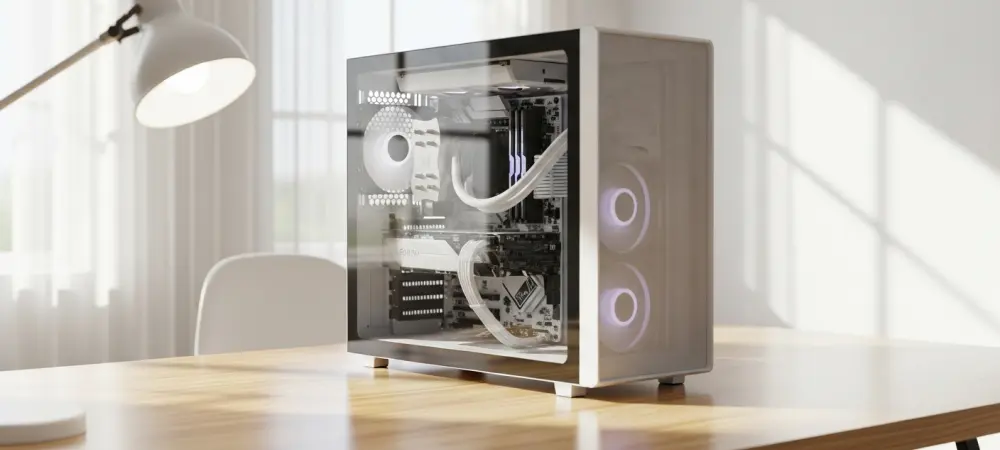
The arrival of the AMD Ryzen 9000 series processors has fundamentally altered the desktop computing landscape, ushering in a new era of performance that demands a more sophisticated motherboard ecosystem to keep pace. While the initial launch of the AM5 platform focused on establishing DDR5 and PCIe Gen 5 as industry standards, the current refinement represented by the 800-series chipsets emphasizes efficiency and accessibility. This progression is not merely a technical update but a strategic realignment designed to provide enthusiasts with the tools they need for high-intensity workloads without the prohibitive costs traditionally associated with top-tier hardware. As the market stabilizes in 2026, the focus has shifted from early adoption hurdles to maximizing the return on investment for long-term system builds. This environment sets the stage for components that bridge the gap between enthusiast-grade specifications and mainstream budgets, creating a unique opportunity for builders to secure flagship performance today.
The Technological Shift: 800-Series Chipsets
Chipset Segmentation: Navigating the New Tiers
The 800-series lineup is strategically segmented into four distinct tiers—X870E, X870, B850, and B840—to cater to diverse computing needs across the spectrum of professional and casual use. The flagship X870E utilizes a dual-die configuration to provide the maximum number of I/O lanes, ensuring that users do not have to compromise between high-speed graphics and multiple storage drives. By mandating USB4 and PCIe Gen 5 support across the top two tiers, AMD has established a new baseline for high-performance computing, effectively future-proofing these systems for the next generation of peripherals. This shift ensures that even mid-range consumers benefit from high-speed data transfer rates that were previously reserved for professional workstations. Furthermore, the integration of these standards simplifies the buying process, as the “Extreme” designation now guarantees a specific level of connectivity that users can rely on for years to come without unnecessary worry.
Beyond the raw bandwidth provided by the primary chipset, the architectural layout of the 800-series promotes a more efficient distribution of data across the motherboard’s internal buses. This optimization is particularly evident in the way the X870E handles simultaneous data transfers from NVMe storage and high-bandwidth networking components without thermal throttling or latency spikes. Designers have prioritized signal integrity in these newer boards, utilizing high-quality PCB materials that reduce electromagnetic interference, which is critical for maintaining the stability of the PCIe Gen 5 interface. As external devices become increasingly demanding, the inclusion of dedicated controllers for advanced connectivity ensures that the CPU can focus its resources on computational tasks rather than managing I/O overhead. This level of engineering detail reflects a shift toward holistic system performance, where every component is optimized for the latest Ryzen chips.
Performance Enhancements: Memory and Power Delivery
These new motherboards address earlier concerns regarding memory stability and performance tuning through advanced firmware and hardware optimizations that target the latest DDR5 modules. The 800-series natively supports higher memory frequencies and refined EXPO profiles, allowing users to achieve speeds exceeding 8000 MT/s with significantly greater ease than during the initial AM5 rollout. This is further bolstered by updated Precision Boost Overdrive algorithms specifically optimized for the Zen 5 architecture, which grant builders more granular control over their processor’s behavior and thermal efficiency. Improved signal integrity across the motherboard’s PCB layers means that reaching these high memory speeds is no longer a matter of luck in the silicon lottery but a standard expectation for modern builds. The refined power delivery systems found in these boards ensure that even under heavy overclocking, the voltage remains stable.
Robust voltage regulator modules are essential for maintaining the performance of high-core-count processors, and the 800-series boards incorporate high-amperage power stages to meet this demand. These components are designed to stay cool even under sustained multi-threaded workloads, such as video rendering or scientific simulations, by utilizing oversized heat sinks and high-conductivity thermal pads. The integration of digital PWM controllers allows for precise voltage control, which is vital for maximizing the efficiency of the Zen 5 architecture’s power management features. Users can now benefit from more sophisticated load-line calibration settings that prevent voltage droop during sudden transitions in workload intensity. By providing a stable electrical foundation, these motherboards enable the Ryzen 9000 series to reach its full boost potential more frequently. This technical maturity ensures that the system remains reliable regardless of the complexity of the tasks.
Engineering for Sustainability: Socket Infrastructure
Hardware Continuity: Cooling and Socket Standards
A fundamental aspect of the AM5 platform is the move to the LGA 1718 socket, which provides the density required for complex data signaling like PCIe Gen 5 and high-speed memory interfaces. AMD has successfully maintained physical cooler compatibility by keeping the dimensions and Z-height of the integrated heat spreader consistent with previous generations. This engineering choice allows users to migrate their existing high-end cooling solutions to the new platform, significantly reducing the total cost of an upgrade while maintaining high thermal performance. For builders who invested heavily in custom liquid loops or premium air coolers during the early AM4 era, this continuity is a welcome relief that preserves the long-term value of their existing hardware. The ability to reuse mounting brackets and cooling blocks simplifies the assembly process, making the transition to the 800-series chipsets much more attractive for everyone.
The structural integrity of the LGA 1718 socket also plays a vital role in protecting the delicate pins on the motherboard while ensuring a consistent mounting pressure for the processor. This consistency is crucial for maintaining proper contact between the CPU and the cooler, which directly impacts the thermal efficiency and longevity of the entire system. Manufacturers have responded to this by reinforcing the socket area with high-quality backplates that prevent PCB flexing during the installation of heavy cooling solutions. Additionally, the standardized mounting holes ensure that third-party vendors can continue to provide reliable support without the need for proprietary adapters or complex hardware kits. This focus on physical standardization demonstrates a commitment to the user experience, reducing the potential for installation errors that could lead to hardware damage. By prioritizing a seamless physical upgrade path, the AM5 ecosystem remains the most user-friendly option.
Strategic Value: The Challenger and the AM5 Roadmap
AMD’s commitment to platform longevity is a major selling point, with a roadmap that extends support for the AM5 socket through 2029 and beyond, providing a stable path for future system updates. This long-term approach mirrors the success of the AM4 era, giving consumers confidence that their motherboard investment will remain relevant for multiple processor generations without a total overhaul. By combining this longevity with the “Gen 5 Everywhere” philosophy, the 800-series ensures that builders have a clear path for future hardware expansions, such as next-generation storage and graphics cards. This vision of a unified, long-lasting socket allows for incremental upgrades, where a user might start with a mid-range chip today and move to a more powerful successor in the future. This strategy effectively lowers the total cost of ownership over time, as the motherboard remains the backbone of the system through cycles of technological innovation.
The ASRock X870E Challenger WIFI White stands out by offering the complete feature set of the X870E chipset at a price point typically associated with mid-range boards from the previous year. It features a clean, white aesthetic that caters to the growing trend of themed PC builds, proving that visual appeal and high-end specs can coexist in an affordable and accessible package for all. With its robust voltage regulator modules and dual-chipset architecture, the board provides the stability needed for heavy multi-threaded workloads while offering a superior number of usable PCIe lanes. This specific model challenges the status quo by demonstrating that premium features like USB4 and dual PCIe 5.0 slots do not have to be locked behind an expensive price barrier. By focusing on essential performance metrics rather than decorative lighting, ASRock has created a product that appeals to the pragmatic enthusiast who values functional excellence and reliability.
Final Assessment: Sustaining High-Performance Computing
Looking back at the maturation of the AM5 platform, the decision to prioritize the 800-series chipsets emerged as a pivotal moment for desktop enthusiasts seeking long-term stability. Builders who chose to adopt the X870E Challenger realized that the real value lay in the balance between immediate performance gains and future-proof expandability for coming years. To maximize this investment, users were encouraged to prioritize high-speed DDR5 memory and Gen 5 storage to fully utilize the available bandwidth provided by the sophisticated dual-die architecture. Maintaining the latest BIOS updates became a standard practice to ensure optimal compatibility with the evolving Zen 5 architecture and its upcoming successors. For those seeking to build a resilient system, the focus shifted toward selecting components that offered the best performance-per-dollar rather than chasing brand prestige. This strategic approach to hardware selection empowered users to create workstations that remained powerful.