

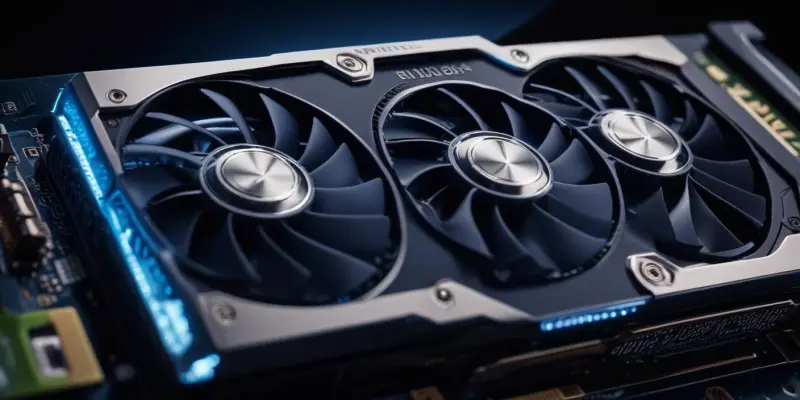
The anticipation surrounding Nvidia’s RTX 5060 Ti has generated considerable excitement, especially given the promise it holds for mid-range gamers. However, recent benchmarks of the 8GB RTX 5060 Ti version, which Nvidia did not prominently feature in its marketing campaign, raise some concerns about its actual performance capacity. While Nvidia has heavily promoted the 16GB version, the performance of the 8GB model appears to be significantly inferior in several gaming scenarios.
Performance Comparison: 8GB vs. 16GB
Initial performance reviews from various sources suggest that the 8GB RTX 5060 Ti struggles to keep pace with its 16GB counterpart in multiple instances. While the synthetic benchmarks show that the 8GB model can hold its own in games such as Cyberpunk 2077: Phantom Liberty with reasonable settings, Counter-Strike 2, Resident Evil 4, Forza Horizon 5, and Call of Duty, its performance dips markedly in more demanding scenarios. In Assassin’s Creed: Shadows, users have noticed a 10% performance gap compared to the 16GB version. Even more concerning is the substantial decrease in performance observed in Horizon Zero Dawn Remastered, where average frame rates at 1080p drop by 23%, and one percent lows see a 30% reduction. Furthermore, the multi-frame generation technology, which is a key aspect of the RTX 50 series, appears to underscore the 8GB model’s limitations. For instance, during Cyberpunk 2077 at max settings, the 16GB version drops to 18 FPS, but the 8GB model dips significantly lower to just 9 FPS. The multi-frame generation technique offers partial mitigation, but the fundamental VRAM limitation cannot be overlooked.
Implications for Mainstream Gamers
The persistent push by Nvidia to release mainstream GPUs with only 8GB of VRAM is troubling, especially as mid-range cards are expected to handle increasingly demanding gaming environments. This trend has more severe implications for budget-conscious gamers, who may find themselves with hardware struggling to keep pace with contemporary and upcoming titles. Given the dominance of 60-class Nvidia cards with 8GB VRAM on platforms like Steam’s top GPU charts, it is clear that a large segment of gamers may soon face performance bottlenecks and frustration due to inadequate VRAM capacity.
The gaming industry continues to evolve, with more intricate and resource-intensive games being released that demand higher VRAM for optimal performance. This reality makes Nvidia’s decision to market the 8GB variant of RTX 5060 Ti without prominently highlighting its limitations seem increasingly questionable. Gamers relying on these cards might find themselves missing out on seamless gaming experiences, rendering their investments less future-proof than anticipated.
Conclusion
The anticipation surrounding Nvidia’s RTX 5060 Ti has sparked considerable excitement, particularly among mid-range gamers looking for a new upgrade. This excitement stems from the promises Nvidia has made about the card’s performance. However, recent benchmarks of the 8GB version of the RTX 5060 Ti have raised some eyebrows. Nvidia didn’t heavily promote the 8GB variant, focusing most of its marketing efforts on the 16GB model instead. Now, it’s becoming clear why: the performance of the 8GB RTX 5060 Ti seems notably weaker in several gaming scenarios when compared to its 16GB counterpart. Mid-range gamers had high expectations for this card, hoping it would provide a perfect balance of performance and price. Yet, the benchmarks indicate that the 8GB version might not hold up to these expectations. Its underperformance in various gaming settings means that gamers looking for robust performance might need to think twice before opting for the less prominent version. Therefore, while the 16GB RTX 5060 Ti remains promising, the 8GB model may not live up to the hype, leading to a disappointing experience for some gamers.