

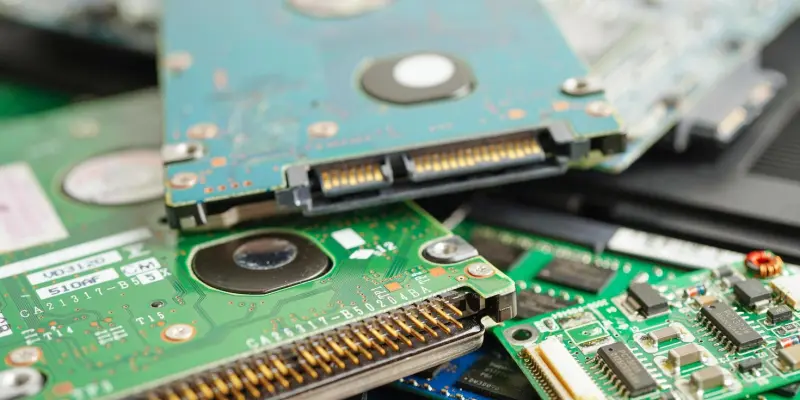
The tech industry is increasingly facing e-waste challenges and supply chain disruptions, primarily due to the substantial use of rare earth elements in hard disk drives (HDDs). Western Digital, in concert with Microsoft, Critical Materials Recycling (CMR), and PedalPoint Recycling, has initiated an HDD recycling program to address these issues. Named the Advanced Recycling and Rare Earth Material Capture Program, this initiative seeks to reclaim valuable materials that are often lost when data center drives are discarded and destroyed. As the industry grapples with growing environmental concerns and supply chain volatility, this program offers a promising solution.
Addressing E-Waste through Innovative Processes
The Role of Hard Disk Drives in Data Centers
Despite the rising popularity of solid-state drives (SSDs) for personal computing, mechanical hard drives remain crucial in data centers due to their cost-effectiveness and storage capacity. When these hard drives reach the end of their lifecycle, they are frequently shredded to ensure data security. This practice, while effective for data protection, results in significant material loss, including aluminum, steel, and rare earth magnets. These materials often end up in landfills, exacerbating e-waste problems. Western Digital’s recycling program aims to mitigate this issue by reclaiming critical materials from end-of-life drives. PedalPoint Recycling plays a pivotal role in this process by collecting and shredding the drives from Microsoft’s U.S. data centers. The shredded materials are then sent to Critical Materials Recycling (CMR), where an innovative recycling technology is employed to recover rare earth elements with high purity. This technology stands out due to its use of a copper salt-based, acid-free dissolution process, which avoids the harsh chemicals traditionally used in recycling, thereby preserving the integrity of the materials.
Environmental and Economic Benefits
The recycling technology developed at the Critical Materials Innovation Hub at Ames National Laboratory has shown remarkable efficiency. Western Digital reports that the pilot program has already diverted approximately 47,000 pounds of hard drives, SSDs, and mounting caddies from landfills or less efficient recycling processes. Impressively, over 90% of the rare earth elements and about 80% of all shredded material by mass have been successfully recovered. This level of efficiency not only reduces e-waste but also lessens the environmental impact of material extraction. The environmental benefits are substantial, with the new recycling process generating 95% fewer greenhouse gas emissions compared to traditional mining and refining methods. By reclaiming materials domestically, the initiative cuts down on transportation emissions and reinforces the resilience of the U.S. supply chain. This is particularly critical in light of recent export restrictions imposed by China on key materials. These constraints have threatened the stability of supply for American technology companies, making the reclamation of rare earth elements within the U.S. even more vital.
Strengthening Supply Chains Through Recycling
Impact on Rare Earth Material Supply
Rare earth elements such as dysprosium, neodymium, and praseodymium are essential in various high-tech applications, including manufacturing hard drives. The mining process for these elements is energy-intensive and environmentally detrimental, often involving significant greenhouse gas emissions and ecological disruption. Western Digital’s initiative aims to provide a sustainable alternative by recovering these materials from discarded hard drives, thereby reducing reliance on new mining operations.
The pilot program’s success demonstrates the potential for scaling this recycling approach. Microsoft, a key partner in this initiative, supplies end-of-life drives and underscores the importance of this program for creating a circular economy in the tech sector. According to Chuck Graham, Microsoft’s corporate vice president for cloud sourcing, supply chain, sustainability, and security, the pilot program has proven that sustainable, economically viable end-of-life management for hard drives is achievable. By recovering critical materials, the program contributes to a more stable and sustainable supply chain for the technology industry.
Future Prospects and Expansion
Considering the scale of data center operations, the potential impact of this recycling program is vast. In the past year alone, there have been 23,000 data centers housing 70 million servers, each containing multiple hard drives with a lifespan of typically three to five years. The successful pilot with Microsoft has prompted Western Digital to expand the HDD rare earth material capture program. Collaborations with several other hyperscale customers are underway, indicating a growing interest and commitment to sustainable practices within the industry. The program’s expansion is expected to drive further development and adoption of advanced recycling technologies. By promoting the recovery of valuable materials and reducing environmental impact, this initiative sets a precedent for future e-waste management strategies. It also highlights the critical role that corporate partnerships and innovative technologies play in addressing complex challenges in the tech industry.
Sustainable Future in Tech
The tech industry is confronting significant challenges related to e-waste and supply chain disruptions, largely due to the heavy usage of rare earth elements in hard disk drives (HDDs). In response to these issues, Western Digital has partnered with Microsoft, Critical Materials Recycling (CMR), and PedalPoint Recycling to launch an HDD recycling program. Dubbed the Advanced Recycling and Rare Earth Material Capture Program, this initiative aims to reclaim valuable materials that are often lost when data center drives are discarded and destroyed. By capturing these materials, the program seeks to mitigate the environmental impact and enhance resource sustainability. As the tech sector faces increasing environmental concerns and supply chain uncertainties, this program presents a forward-thinking solution to both problems. It not only addresses e-waste but also provides a more sustainable approach to managing rare earth resources, which are pivotal for tech development. This effort underscores the importance of collaboration in tackling industry-wide challenges and fostering a greener future.