

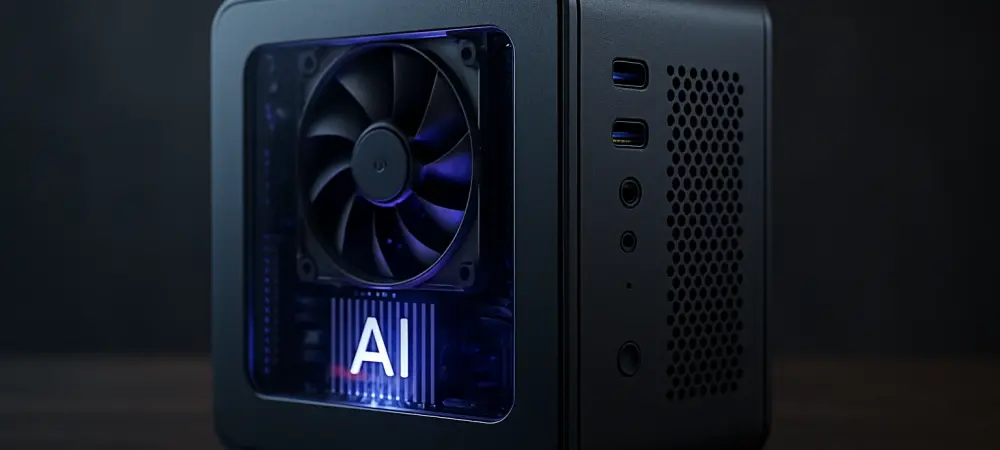
In a world where artificial intelligence drives innovation at breakneck speed, the demand for accessible, high-performance computing has never been greater, and now, a new device is capturing attention. Picture a gadget so small it fits in the palm of your hand, yet powerful enough to run AI models rivaling the complexity of cutting-edge systems. Enter a new contender that’s turning heads in the tech industry—a compact marvel promising to redefine how developers approach local AI development. This tiny titan challenges the status quo of bulky hardware, sparking curiosity about whether the future of AI could indeed be portable.
Why Local AI Matters Now More Than Ever
The shift toward local AI development emerges as a critical response to pressing industry challenges. With data breaches costing businesses an average of $4.45 million per incident, as reported by recent cybersecurity studies, the need for secure, on-premises solutions is undeniable. Cloud computing, while convenient, often comes with high costs and latency issues that hinder real-time AI applications, pushing developers to seek alternatives that keep data close to home.
This growing trend aligns with broader concerns around privacy regulations and operational efficiency. Local processing slashes dependency on external servers, cutting down both expenses and delays. Compact devices tailored for such tasks are stepping into the spotlight, offering a lifeline to companies and individuals navigating the complexities of an AI-driven landscape.
Unveiling a Game-Changer: The Compact AI Powerhouse
At the heart of this revolution stands the Dell Pro Max Mini AI PC, a device unveiled at GTC earlier this year. Measuring just 150x150x51mm and weighing a mere 1.31kg, it packs an astonishing punch with the NVIDIA GB10 Superchip. Capable of delivering 1000 TOPS of FP4 compute power, it effortlessly handles AI models with up to 200 billion parameters—think running something as intricate as Llama 3.3 70B without breaking a sweat.
Beyond raw performance, the hardware specifications cater to demanding workflows. Equipped with up to 128 GB of LPDDR5x memory at 273 GB/s bandwidth and storage options reaching 4 TB, bottlenecks become a thing of the past. Its design also supports scalability—stack two units via the NVIDIA ConnectX-7 Smart NIC to manage models up to 400 billion parameters, proving that size doesn’t limit ambition.
Connectivity seals the deal with features like Wi-Fi 7, multiple 20 Gbps USB Type-C ports, and 200 Gbps QSFP ports, ensuring seamless integration into any setup. This blend of power and practicality positions the device as a standout tool for AI professionals who need robust performance without sprawling infrastructure.
Voices from the Field: What Experts Think
The tech community has been abuzz since the device’s debut, with industry leaders quick to weigh in. NVIDIA engineers have lauded the Blackwell architecture-based GPU, noting its performance rivals high-end consumer GPUs like the RTX 5070. One engineer remarked, “This isn’t just a step forward; it’s a leap for local AI processing, bringing data center-grade power to a desktop footprint.”
Early adopters echo this enthusiasm, highlighting the seamless experience offered by the NVIDIA DGX OS. A developer who tested the system for large-scale AI workloads shared, “The ability to manage massive models locally without latency hiccups is transformative. It’s like having a supercomputer that fits in a briefcase.” Such feedback underscores the practical impact of this innovation on real-world projects.
These perspectives add weight to the notion that compact AI workstations are not just a novelty but a necessity. As more professionals adopt this technology, its role in reshaping development practices becomes increasingly clear, fueling discussions on how local solutions can address long-standing challenges.
Transforming Workflows with Cutting-Edge Tech
Integrating a device like this into daily operations offers a wealth of possibilities for AI developers. Start by leveraging the high-speed connectivity options, such as the 10 GbE LAN and multiple USB Type-C ports, to ensure rapid data transfers and a streamlined setup. This foundation supports the intense demands of training and deploying complex models without the usual delays.
For projects requiring even greater capacity, the stackable design provides a straightforward path to expansion. Pairing two units doubles the processing power, accommodating larger models while maintaining efficiency through the NVIDIA ConnectX-7 interface. This flexibility allows teams to scale operations based on project needs, avoiding overinvestment in hardware. Security remains a top priority, and local processing addresses this concern head-on. By keeping sensitive data in-house rather than on external servers, risks of exposure are minimized, offering peace of mind in an era of stringent privacy laws. This approach not only protects information but also trims costs associated with cloud subscriptions, making it a strategic choice for budget-conscious innovators.
The Road Ahead for AI Innovation
Looking back, the emergence of the Dell Pro Max Mini AI PC marked a pivotal moment in the evolution of local AI development. Its fusion of NVIDIA’s advanced GB10 Superchip with a compact, scalable design redefined what was possible for developers constrained by traditional hardware. The impact resonated across industries, proving that high-performance computing no longer required vast spaces or endless budgets.
As the tech landscape continued to evolve, the challenge became clear: how could professionals and businesses harness this newfound power to drive innovation further? Exploring tailored applications for specific sectors, from healthcare to finance, offered a promising next step. Investing in skills to maximize the device’s potential also stood out as a priority for staying competitive.
Ultimately, the journey sparked by this compact powerhouse laid the groundwork for a broader rethink of AI infrastructure. The focus shifted toward building ecosystems where portability, security, and performance coexisted seamlessly, paving the way for breakthroughs yet to come.