

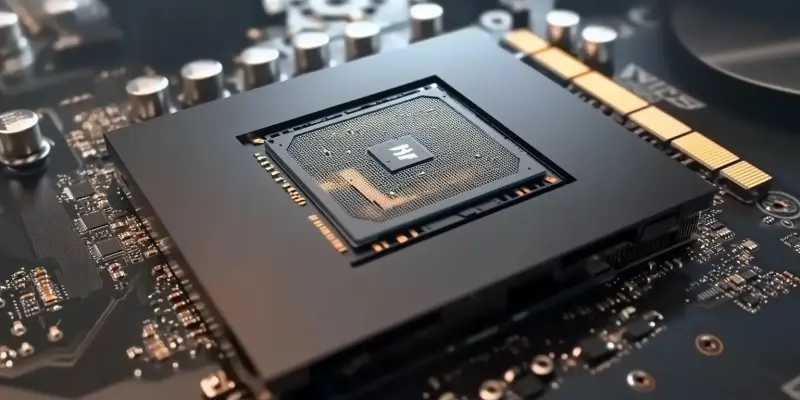
The recent announcement by AMD that its RX 9070 GPUs, part of the RDNA 4 family, will not be available until March 2025 has caused a stir in the PC gaming community. This delay, confirmed by AMD’s David McAfee, Vice President and General Manager of Ryzen CPUs and Radeon graphics, has led to disappointment and frustration among gamers who were expecting an earlier release. The delay has significant implications for AMD’s market positioning, especially against Nvidia’s upcoming RTX 5070 cards, expected in February.
Disappointment from the Gaming Community
Anticipation and Frustration
The gaming community had high expectations for the RX 9070 GPUs, fueled by rumors and hints from AMD executives suggesting an imminent release. Gamers were looking forward to an early edge in the market against Nvidia’s RTX 5070, but the delay has dashed these hopes. The frustration is palpable, with many expressing their disappointment on social media and gaming forums. There is a clear sentiment of feeling let down, as gamers hoped for an advantage that now seems lost. This disappointment is particularly acute given the build-up of anticipation and the fervent discussions across numerous online platforms.
Adding insult to injury, the delay not only impacts consumer excitement but also affects market dynamics. With Nvidia’s RTX 5070 slated for a February release, it appears Nvidia will capture the mid-range GPU segment first. Gamers, often eager to upgrade their systems, might not wait for the RX 9070. This shift could steer potential AMD customers toward Nvidia, altering buying decisions and influencing future brand loyalty. The gaming community, while vocal in their dissatisfaction, also acknowledges the competitive advantage Nvidia stands to gain with this head start, potentially reshaping market shares in the tech industry.
Impact on Market Dynamics
The delay means that Nvidia’s RTX 5070 will likely dominate the mid-range GPU segment when it launches in February. Gamers who were on the fence about which GPU to purchase may now lean towards Nvidia, given the earlier availability. This shift could have long-term implications for AMD’s market share in the mid-range segment. The change in consumer choice, swayed by impatience combined with Nvidia’s proven track record, could consolidate Nvidia’s hold in a category where AMD once looked to gain significant ground.
Furthermore, the ripple effect of this decision might extend beyond current sales. Future product launches could face skepticism from a now wary and perhaps slightly jaded consumer base. Should Nvidia deliver robust performance with the RTX 5070, it would not only dominate sales but also establish a precedent which AMD may struggle to counter in subsequent product cycles. The impact of this delay, therefore, extends beyond immediate sales numbers to influence future market strategy and brand perception, painting a complex picture for AMD’s market ambitions.
Rumors of Premature Stock Availability
Sightings and Reports
There have been numerous reports suggesting that RDNA 4 GPUs have already been shipped to retailers and reviewers. VideoCardz noted that some reviewers had received sample RDNA 4 GPUs ahead of the retail shipment. These sightings have led to questions about why AMD is delaying the launch until March if the stock is already in place. The perceived readiness contrasts sharply with the announcement, igniting rumors and feeding the frustration of consumers keen to get their hands on the new technology.
This apparent contradiction has sparked vigorous debate among tech enthusiasts and industry watchers alike. Some postulate logistical hurdles or unforeseen technical issues, while others suggest a more strategic maneuver may be in play. Regardless, the lack of a clear explanation from AMD has only fueled the fire of speculation. As more sightings come to light and reports by credible sources like VideoCardz gain circulation, the pressure mounts on AMD to clarify their stance and intentions. The narrative thus formed is one of mystery and suspense, keeping interested parties in a state of continual anticipation.
Questions and Speculations
The apparent readiness of stock has fueled speculation about the reasons behind the delay. Some believe that AMD might be facing internal challenges, while others think it could be a strategic move to adjust pricing in response to Nvidia’s RTX 5070 pricing. The lack of clear communication from AMD has only added to the confusion and frustration among gamers. Questions abound regarding manufacturing capabilities, potential supply chain disruptions, or even last-minute design adjustments. Each theory adds a new layer to the already complex portrait of AMD’s current strategic operations.
Moreover, the strategic angle seems increasingly plausible when considering Nvidia’s aggressive positioning with their pricing strategy. AMD, known for its competitive pricing, might be recalibrating to ensure their RX 9070 offers unmatched value against the RTX 5070. This recalibration, although potentially beneficial in the long term, creates short-term market turbulence and ignites consumer impatience. Transparent communication from AMD could mollify some confusion, providing a clearer picture of the company’s strategic imperatives and reassuring a jittery market.
Underlying Issues and Market Strategy
Pricing Adjustments
One of the speculated reasons for the delay is that AMD might be rethinking its pricing strategy for the RX 9070 models. Nvidia surprised the market with its pricing for the RTX 5070, which might have prompted AMD to adjust its Manufacturer’s Suggested Retail Prices (MSRPs). This process could involve compensating retailers and ensuring that the new pricing strategy is competitive. Developing a pricing strategy that undercuts Nvidia while maintaining profitability is a sophisticated balancing act, implying deeper deliberations within AMD’s strategic teams.
Adjustments in MSRP involve meticulous planning and execution. Retailers, having anticipated a certain price range, must be looped into a revised strategy, which can be both resource and time-intensive. Additionally, navigating the financial implications of adjusting prices without eroding brand equity or perceived value adds another layer of complexity to AMD’s efforts. This scenario suggests a multidimensional strategy is under development, one that could potentially realign AMD’s market perception while facing direct headwinds from Nvidia.
Internal Challenges
Another possible reason for the delay could be internal challenges within AMD. Adjusting launch pricing and coordinating with retailers can be complex and time-consuming. These internal issues might be contributing to the delayed launch, despite the apparent readiness of stock. Operations within a tech giant such as AMD involve multiple moving parts, where synchronizing efforts across departments and external partners can pose significant challenges. The complexity of such internal coordination can create unforeseen delays, particularly under market pressures.
Additionally, internal challenges could be technical, operational, or logistical in nature. Fine-tuning the GPUs for optimal performance, ironing out software-hardware integration issues, or addressing last-minute quality control feedback might be part of the mix. These technical intricacies, while crucial for a successful launch, can cumulatively push back timelines. Understanding these potential internal dynamics offers a glimpse into the multifaceted challenges AMD faces as it prepares to introduce the RX 9070 to a competitive market landscape.
Potential Market Impact
Competitive Disadvantage
The delay puts AMD at a competitive disadvantage. By the time the RX 9070 hits the shelves in March, the RTX 5070 would have been available for about a month. This head start could sway many potential AMD customers towards Nvidia, especially if the RTX 5070 models are widely available and not constrained by stock shortages. The timing disadvantage thus compounds the challenge, as early movers often capture significant consumer interest, potentially relegating AMD to a catch-up game.
Should the RTX 5070 prove to deliver on performance and reliability, Nvidia’s foothold in the mid-range market could solidify, making it harder for AMD to reclaim lost ground. Potential consumers might also interpret the delay as indicative of deeper issues within AMD, further swaying their purchase decisions. Nvidia’s ability to meet market demand promptly capitalizes on the latency from AMD, turning this timing misalignment into a strategic benefit. The challenge for AMD, therefore, lies in mitigating this timing gap through compelling value propositions or enhanced performance metrics with the RX 9070.
Consumer Loyalty
The delay and the resulting frustration among gamers could also impact consumer loyalty. Gamers who were eagerly waiting for the RX 9070 might feel let down by AMD and switch their allegiance to Nvidia. This shift in loyalty could have long-term implications for AMD’s market position and brand reputation. Consumer loyalty, a crucial intangible asset, once destabilized, can be difficult to regain. Each delay not only impacts current sales figures but also molds future perceptions and purchase behaviors.
Restoring this trust would require AMD to not only meet but exceed consumer expectations with subsequent launches. Additionally, effective communication channels featuring transparency on delays and robust marketing campaigns emphasizing the RX 9070’s strength could help regain confidence. Re-building this loyalty against a backdrop of rapid technological evolution and discerning consumer expectations places AMD at a critical juncture. Moving forward, AMD’s strategic pivot will need to encompass both superior technical offerings and enriched customer engagement to reforge this essential connection.
Strategic Uncertainty and Market Positioning
Balancing Act
AMD is walking a fine line in terms of product timing, market competition, and consumer expectations. The company’s actions, including the public announcement by McAfee and the strategic responses to Nvidia’s moves, reflect a dynamic and challenging environment in the tech industry. Timing and pricing are crucial factors that can significantly impact competitive advantage. The ability to orchestrate a disciplined strategy amid these challenges tests AMD’s comprehensive market acumen and agility.
This balancing act involves not just immediate tactical decisions but long-term strategic road mapping. AMD must consider how each decision reverberates across various market segments, impacting future product launches and broader consumer trust. Typically, such complex environments demand agile yet robust internal frameworks, capable of adapting to emerging market trends while maintaining steadfast strategic goals. Navigating this terrain is crucial for AMD to uphold a competitive edge, ensuring its market positioning remains resilient against competitive pressures.
Transparent Communication
AMD’s recent announcement that its RX 9070 GPUs from the RDNA 4 family won’t be available until March 2025 has stirred up the PC gaming community. This delay, confirmed by David McAfee, AMD’s Vice President and General Manager of Ryzen CPUs and Radeon graphics, has left many gamers feeling disappointed and frustrated. They were anticipating an earlier release of these much-awaited graphics cards. The delay in launching the RX 9070 has broader implications for AMD’s position in the market, particularly as it competes with Nvidia. Nvidia’s highly anticipated RTX 5070 cards are expected to hit the market in February, a full month before AMD’s new GPUs. This timing could give Nvidia a significant edge over AMD, potentially swaying gamers and PC builders towards Nvidia’s offering. Consequently, AMD fans and gamers who were excited about the enhanced performance and features of RX 9070 will now have to wait longer, potentially impacting their purchasing decisions and possibly benefiting Nvidia in the competitive GPU market.