

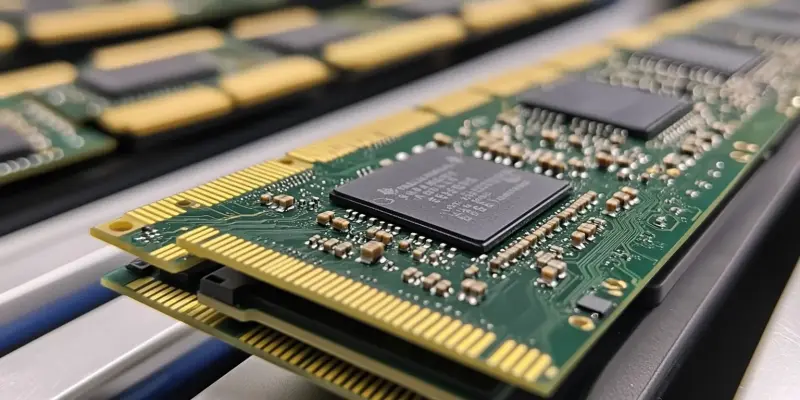
Overclocking enthusiasts were recently treated to an impressive achievement in the realm of DDR5 RAM when G.Skill Trident Z5 DDR5 hit an astonishing speed of 12,054MT/s. The most remarkable part of this feat was that it was achieved using only air cooling, sidestepping the more extreme and typically employed methods such as liquid nitrogen or dry ice. While this accomplishment does not set a world record, it underscores the significant potential of modern hardware in overclocking within a standard PC setup. This feat was performed by an Indonesian expert known as ‘speed.fastest,’ who used a G.Skill Trident Z5 24GB DDR5-8000 CL38 module. The hardware configuration included an Intel Core Ultra 9 285K processor paired with an Asus ROG Maximus Z890 Apex motherboard.
Another noteworthy attempt in this high-speed adventure came from a Canadian overclocker operating under the alias ‘saltycroissant.’ Utilizing the same RAM module, this overclocker achieved a speed of 12,050MT/s using a different motherboard, the ASRock Z890 Taichi OCF. These attempts underscore that achieving phenomenal performance out of DDR5 RAM does not necessarily require sophisticated cooling techniques. However, it is essential to note a significant caveat to these accomplishments. Both setups involved configuring the CPU to run with a single core at a mere 400MHz. Although this allowed the systems to reach such incredible speeds, it rendered the configurations impractical for everyday use but offered a glimpse into the potential speed capacities of these systems.
Implications for Arrow Lake Systems
The substantial overclocking potential of DDR5 RAM within Arrow Lake systems is a testament to remarkable advancements in memory technology. Intel’s Arrow Lake lineup, while having seen criticism for instability, shows promising capabilities in pushing hardware limits. Nevertheless, despite such overclocking achievements, their practical implications in day-to-day computing activities are minimal. The primary purpose of these feats is to illustrate what modern hardware can achieve under specific conditions. Although not suitable for regular application use, these results can pave the way for potential future refinements and optimizations in memory modules.
Overclocking typically interests a niche group of enthusiasts who are often willing to experiment with extreme setups. However, the capacity to achieve formidable speeds without exotic cooling systems might broaden interest among a wider audience. Given the controlled environment in which these records were set, more stable and practical applications are likely to continue using conventional speeds for everyday computing needs. Still, the possibilities remain enticing for those who push towards the edges of technological advancement. These efforts validate the commitment to innovation seen within companies like Intel and offer hope for continued enhancements in mainstream memory performance.
Future Directions and Practical Applications
Overclocking enthusiasts recently witnessed an astounding milestone in DDR5 RAM performance as the G.Skill Trident Z5 DDR5 achieved speeds of 12,054MT/s. What’s particularly impressive is that this was accomplished using only air cooling, avoiding more extreme methods like liquid nitrogen or dry ice. While this doesn’t set a new world record, it highlights the tremendous potential for overclocking with modern hardware in standard PC setups. This feat was achieved by an Indonesian expert known as ‘speed.fastest,’ using a G.Skill Trident Z5 24GB DDR5-8000 CL38 module, an Intel Core Ultra 9 285K processor, and an Asus ROG Maximus Z890 Apex motherboard.
Adding to this achievement, a Canadian overclocker known as ‘saltycroissant’ pushed the same RAM module to 12,050MT/s, albeit with a different motherboard, the ASRock Z890 Taichi OCF. These efforts demonstrate that reaching exceptional DDR5 RAM performance doesn’t necessarily require advanced cooling techniques. However, there’s a crucial caveat: both setups had the CPU running with a single core at only 400MHz. While this allowed for these incredible speeds, it rendered the configurations impractical for day-to-day use but showcased the potential speed capabilities of DDR5 systems.