

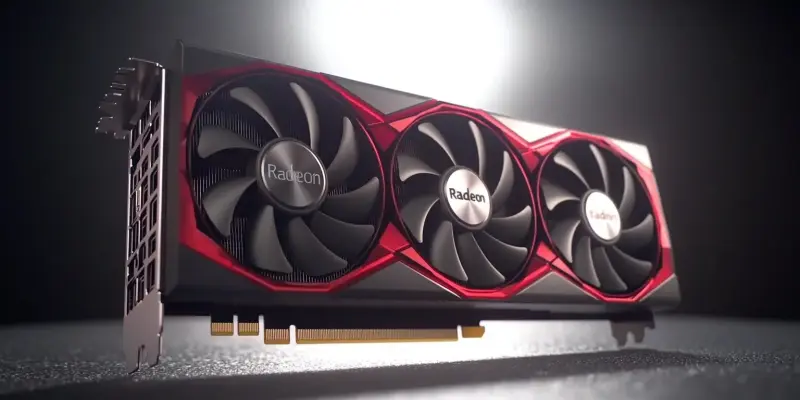
As speculation mounts over AMD’s anticipated launch of its new Radeon RX 9070 XT GPUs, the industry is buzzing with excitement about the potential impact of a version that could feature an unprecedented 32 GB of VRAM. This GPU innovation suggests AMD is targeting more than just gaming; it points toward a broader application in sectors requiring intense computational power, like artificial intelligence (AI) workloads. The revelation promises to push the envelope, not just in gaming performance but also in fostering a convergence with AI-capable hardware, sparking conversations about the future directions of GPU technology.
The Leap to 32 GB VRAM
AMD’s Radeon RX 9070 XT and RX 9070 models are expected to initially launch in March 2025 with 16 GB of GDDR6 VRAM, adequately addressing most contemporary gaming needs. However, the much-rumored 32 GB version of the RX 9070 XT, anticipated by the end of Q2 2025, has generated significant intrigue. Such enhanced VRAM capacity will have significant design implications, including the need to place extra memory modules on the back side of the GPU due to space constraints. This alteration emphasizes the lengths to which AMD is willing to go to break new ground in video memory potential.
While gamers will undoubtedly appreciate the increased VRAM for running more demanding titles at higher settings and resolutions, the 32 GB configuration might initially seem excessive for gaming alone. However, the excess capacity is likely to find utility in memory-intensive tasks where current GPUs fall short. Such tasks include large language model processing and other AI workloads. This development aligns with broader industry trends suggesting that future gaming GPUs will not just focus on rendering video games but also supporting complex machine learning projects.
Convergence of Gaming and AI Hardware
This move by AMD to incorporate higher VRAM suggests a strategic push to blur lines between gaming-focused GPUs and those intended for professional or industrial applications. The 32 GB VRAM could significantly benefit industries requiring robust computational power, such as AI and machine learning, potentially making GPUs versatile tools in diverse applications. As the tech industry progresses, the distinction between gaming hardware and professional-grade hardware is becoming increasingly fluid, aligning with the mixed usage patterns of many consumers and professionals alike.
Nevertheless, the challenge remains whether gaming software can leverage this massive VRAM to its full potential upon release. Despite the higher cost implication and more complex memory module configurations, this represents AMD’s aggressive foray into making 32 GB gaming GPUs a reality. The question remains: will the gaming experience be transformed, or will these memory advancements serve primarily high-end professional tasks, like training expansive neural networks or running sophisticated data simulations?
Future Implications and Prospects
As anticipation builds over AMD’s expected launch of the new Radeon RX 9070 XT GPUs, the tech industry is abuzz with discussions surrounding the impact of a rumored model featuring an astounding 32 GB of VRAM. This groundbreaking innovation by AMD indicates that the company isn’t just aiming to revolutionize gaming; it hints at a broader scope of applications requiring immense computational power, notably in fields like artificial intelligence (AI) workloads. Such a revelation is poised to push the boundaries, enhancing not just gaming experiences but also encouraging a blend with AI-capable hardware. This development has ignited conversations about the future trajectory of GPU technology, suggesting a dynamic evolution where graphics cards tackle more diverse and demanding tasks beyond traditional gaming. The Radeon RX 9070 XT’s potential to bridge gaming and AI hardware could mark a significant milestone, pushing the industry towards new heights and reimagining the role of GPUs in tomorrow’s digital landscape.