

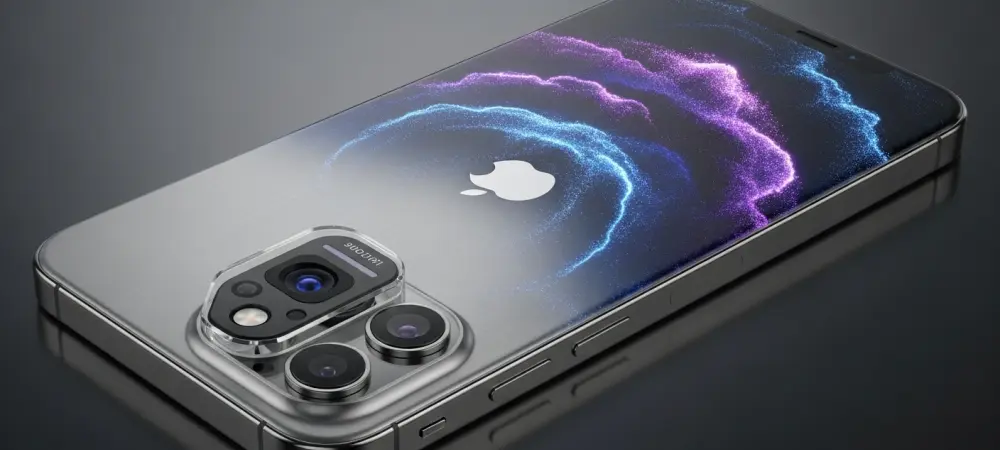
Dominic Jainy stands at the forefront of mobile innovation, possessing a keen eye for the technical nuances that define the modern smartphone era. With a background rooted in the complexities of high-end hardware and emerging tech, he offers a unique perspective on how small physical changes can lead to massive shifts in user behavior. Today, he breaks down the latest leaks surrounding the 2026 iPhone lineup, focusing on the delicate balance of battery density, weight, and the long-awaited arrival of a foldable flagship. Our conversation delves into the engineering feats required to keep a device slim while pushing its internal capabilities to the absolute limit.
How do you interpret the technical challenge of maintaining an 8.75mm thickness while simultaneously increasing the battery capacity?
It is a fascinating engineering puzzle where every tenth of a millimeter counts toward the final user experience. By sticking to that 8.75mm profile, it appears the design teams are signaling a shift toward internal optimization rather than just making the phone larger to accommodate more power. We are looking at a jump to a battery range of 5,100mAh to 5,200mAh, which is a meaningful step up from the 5,088mAh capacity found in the current eSIM variants of previous models. To pull this off without expanding the 6.9-inch frame, Apple likely had to shrink peripheral components or overhaul the internal layout entirely to find every bit of available space. It feels like a very calculated move to satisfy power-hungry users who demand longer runtimes without sacrificing the familiar hand-feel they have grown accustomed to.
With reports suggesting the next flagship could exceed 240 grams, what are the implications for the physical reality of using such a heavy device?
Crossing that 240g threshold is a significant milestone, as it would potentially crown this model as the heaviest flagship released since the era of the iPhone 14 Pro Max. You can really feel that extra heft in your palm after just a few minutes of scrolling, and it fundamentally changes how a device sits in a pocket or a small bag. While the thickness remains at a steady 8.75mm, the added mass suggests that the internal hardware—perhaps new cooling systems or the denser battery—is significantly more substantial. It is a classic trade-off where the sensory experience of “premium weight” meets the physical reality of hand fatigue during long video calls or intense gaming sessions. Users will have to decide if the internal upgrades are worth the extra strain on their wrists.
The rumors of an “iPhone Ultra” foldable are gaining momentum; how do you see this fitting into the broader roadmap for late 2026?
The industry is buzzing about this “Ultra” designation because it represents the first major departure from the standard slab design we have seen for over a decade. Expected to debut in Q3 2026 alongside the traditional Pro models, this foldable is not just a secondary project; it is a strategic play to capture the ultra-premium market. Much of the developmental focus has reportedly shifted toward this new form factor, which might explain why the Pro Max’s physical dimensions are staying relatively static for now. If these leaks hold true, we are witnessing a two-pronged strategy: refining the classic flagship while simultaneously launching a revolutionary foldable to lead the next generation of mobile computing. It is a bold move that suggests the company is finally ready to compete in the folding screen space.
Looking at the hardware leaks like the C2 modem and variable aperture, what can we expect regarding the functional evolution of these specific models?
The integration of a variable aperture in the primary camera is a massive win for mobile photographers who crave more granular control over depth of field and light intake. This hardware change, combined with a smaller Dynamic Island, suggests the visual and functional real estate is becoming much more efficient and immersive for the end user. Under the hood, the next-generation C2 modem promises more stable and faster connectivity, which is essential as our daily reliance on cloud-based processing continues to grow. We are also seeing a revised implementation of the Camera Control, suggesting a desire for the physical interaction with the lens to feel more intuitive and tactile than ever before. These are not just incremental changes; they are foundational upgrades that improve the core utility of the phone.
What is your forecast for the iPhone 18 Pro Max?
I expect the iPhone 18 Pro Max to serve as the ultimate “refined beast” that bridges the gap between traditional smartphones and the upcoming foldable era. Even with a potential price surge due to rising component costs, the combination of a 5,200mAh battery and a variable aperture camera will likely make it the gold standard for power users. It won’t necessarily look different from the outside at 8.75mm thick, but the internal hardware shifts will make it feel like a completely different class of machine. Ultimately, the 2026 release cycle will be remembered as the moment the company proved they could pack massive utility into a familiar frame while finally stepping into the foldable arena with the Ultra. This transition marks a pivotal point where the flagship slab reaches its peak performance just as the next form factor begins its journey.