

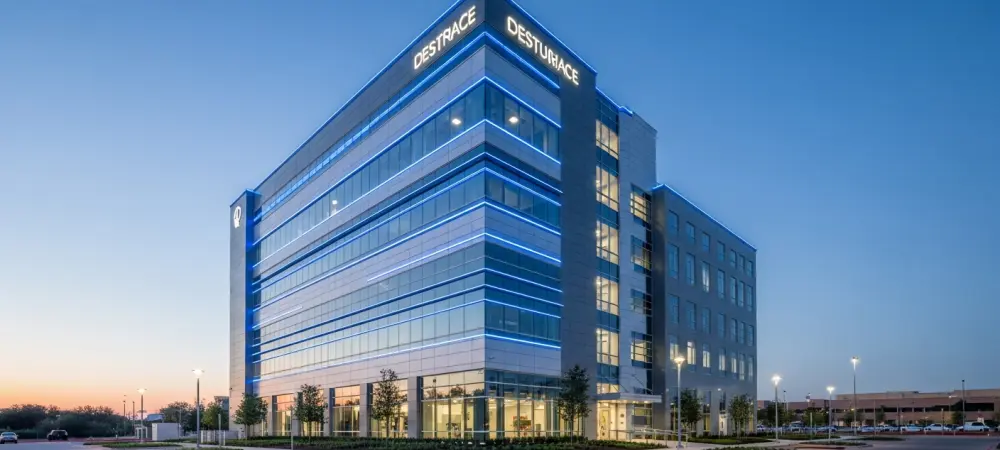
The echoing halls that once buzzed with the frantic energy of wholesale traders and exhibition seekers now stand silent, awaiting a high-tech transformation that will redefine the skyline of Texas commerce. Since 1960, the 202,000-square-foot Dallas Market Hall has served as the anchor of the city’s wholesale trade district, but its era of hosting public exhibitions has come to an abrupt end. The facility has officially ceased booking future events to facilitate its replacement by a massive, five-story data center that signals a pivot toward digital dominance.
This transition represents a high-stakes bet on the future of technology over traditional physical commerce, turning a site once known for trade shows into a 245-megawatt hub for large-scale data processing. As the world shifts from manual trade to automated intelligence, this redevelopment stands as a testament to the changing priorities of urban land use.
A 1960s Trade Landmark: Making Way for a Digital Powerhouse
The dismantling of this historic venue marks a significant cultural shift in the heart of Dallas. For decades, the Market Hall hosted thousands of vendors and millions of visitors, acting as a centerpiece for the regional economy. However, the surge in global data requirements has made the site more valuable as a digital engine than a physical event space.
By ceasing all exhibition operations, the owners have paved the way for a structure that will house server racks instead of showrooms. This 245-megawatt hub is designed to handle large-scale data processing, reflecting a new reality where the flow of information takes precedence over the physical exchange of goods.
The Strategic Evolution: Urban Real Estate in a Tech-Driven Market
The decision to repurpose this real estate highlights an urgency among developers to secure prime urban locations with high power potential. As demand for cloud computing and artificial intelligence continues to rise, Dallas has solidified its position as a top-tier market for hyperscale infrastructure.
Crow Holdings and CleanArc Data Centers are spearheading this transition by leveraging a 40-acre footprint already integrated into the municipal grid. This strategy addresses the critical shortage of power and space in high-density metropolitan areas. By repurposing an existing site, the developers bypass many of the logistical hurdles associated with greenfield projects in remote locations.
The Hyperscale Project: Breaking Down the Five-Story 245-Megawatt Build
This redevelopment is far more than a minor renovation; it is a total transformation of the landscape. The partnership aims to complete the first phase of the modern data facility by late 2027. The project will utilize a five-story design to maximize capacity within a limited geographical area, accommodating advanced cooling systems.
Trading traditional exhibition aisles for rows of server racks allows the facility to support massive hyperscale workloads. Crow Holdings’ $34 billion asset portfolio provides the financial foundation for this massive undertaking. The technical expertise of CleanArc ensures that the high-density environment remains efficient and scalable for future technological demands.
Expert Backing: The National Shift Toward Sustainable Data Campuses
Led by industry veteran Jim Trout and backed by the investment firm Snowhawk, CleanArc Data Centers brings significant credibility to the Dallas venture. This collaboration mirrors a broader national trend where massive campuses are developed with a focus on sustainable power. Investors are increasingly prioritizing sites that can integrate clean energy solutions to meet modern environmental standards. Crow Holdings is currently evaluating a pipeline exceeding 3 gigawatts of capacity in other key regions. Projects are being considered in New Jersey, Georgia, and North Carolina as part of this aggressive expansion. This move reflects a widespread belief among investors that prime urban real estate is most valuable when it supports the burgeoning digital economy.
Success Factors: Converting Traditional Event Spaces Into Digital Infrastructure
Successful urban redevelopment in the data sector relied on maximizing existing footprints to reduce the environmental impact of new construction. Securing high-capacity power allocations early in the planning phase was essential for this project to support energy-intensive operations. Vertical architecture proved to be the most efficient way to increase capacity in space-constrained city centers like Dallas.
The partnership demonstrated how specialized developers could integrate technical needs with traditional real estate management. Stakeholders recognized that the shift from physical trade to digital processing required a bold reimagining of urban space. This redevelopment project successfully repositioned a legacy asset to ensure its relevance in a technology-driven market for decades to come.