

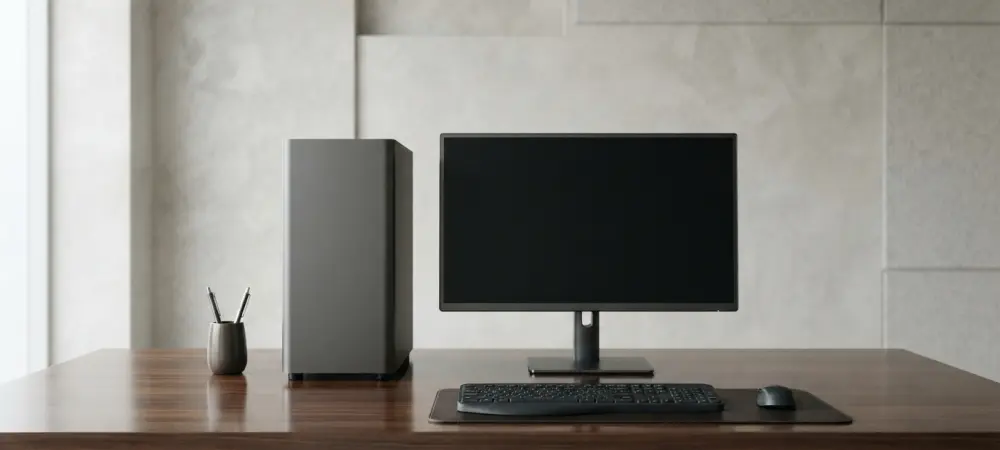
The emergence of the Huawei Qinyun HM650 represents a pivotal moment in the global shift toward technological autonomy as it attempts to redefine the standards of entirely localized hardware production. This review explores the technical evolution of this machine, its core capabilities, and the impact it has made across various strategic applications. Understanding this technology provides a window into the potential trajectory of localized digital infrastructure.
Introduction to the Qinyun HM650 and Domestic Computing
Marketed as China’s first purely domestic desktop, the Qinyun HM650 embodies the strategic drive for de-Americanization within the hardware sector. It adheres to strict “Safe and Reliable” standards required for government procurement, ensuring that sensitive data remains within a controlled environment. This shift toward localized supply chains ensures national security by reducing the reliance on Western technology within critical IT infrastructure.
Moreover, the system represents a departure from traditional global partnerships that dominated the industry for decades. By prioritizing domestic sourcing, the HM650 serves as a test case for whether a major economy can sustain a high-performance computing ecosystem independently. This transition is not merely a technical change but a fundamental shift in the broader technological landscape.
Technical Architecture and Core Components
The Kirin X90 SoC and Process Technology
The Kirin X90 SoC, designed by HiSilicon, adapts ARM-based architecture for desktop-level performance needs. Manufactured using SMIC’s 7nm-class process, it proves that high-performance silicon is possible without advanced EUV lithography. This approach prioritizes production resilience, ensuring hardware availability despite ongoing international trade restrictions and manufacturing hurdles.
While it utilizes international architecture designs, the execution is purely local, optimizing the balance between power efficiency and processing speed. The chip architecture provides a stable profile for professional desktop environments, maintaining competitive benchmarks in administrative and analytical tasks.
Domestic Memory, Storage, and Hardware Ecosystem
The integration of memory from CXMT and NAND flash storage from YMTC creates a synchronized domestic hardware stack. These components optimize data throughput within the HM650 system, ensuring that data-intensive tasks do not suffer from bandwidth bottlenecks. This localized architecture significantly reduces the risk of hardware-level vulnerabilities often associated with foreign-sourced parts.
Furthermore, the interaction between these components allows for tighter control over the BIOS and firmware layers. By securing the hardware from the ground up, the system offers a cohesive environment that resists external interference. This level of integration is essential for maintaining the integrity of national data sets.
Recent Innovations in Localized Operating Systems
HarmonyOS for PC has matured from its mobile roots into a comprehensive desktop environment designed for professional productivity. The shift toward independent software frameworks signifies a definitive departure from Western frameworks like Windows or macOS. This evolution prioritizes internal security and local compatibility, fostering an increasingly self-sustaining software ecosystem.
The current trend emphasizes optimization for domestic applications, ensuring that local software runs more efficiently than on generic international platforms. This focus on internal synergy allows the operating system to deliver a fluid experience while maintaining rigorous security protocols.
Real-World Applications and Sector Deployment
Sector deployment focuses on government offices and state-linked enterprises where data protection is the highest priority. In these environments, the HM650 protects sensitive data and ensures operational continuity by providing a secure, air-gapped potential. The machine serves as a vital tool for maintaining sovereignty over national information in an era of digital friction.
Additionally, critical infrastructure sectors have adopted the HM650 to manage power grids and transportation systems. The high-security profile of the localized hardware provides a defense against remote exploits that target ubiquitous Western systems. This specialized deployment confirms the desktop’s role as a shield for sovereign operations.
Adoption Obstacles and Technical Constraints
However, challenges remain, such as the lack of native support for Windows executable files, which complicates the transition for some legacy businesses. Furthermore, the industry still relies on imported manufacturing tools for specific fabrication steps like ion implantation. These technical hurdles require ongoing innovation to achieve a truly independent production cycle.
To mitigate these gaps, developers have utilized virtualization tools and the expansion of the OpenHarmony community. These efforts aim to bridge the software compatibility gap while domestic equivalents are developed. Navigating these constraints is essential for the long-term viability of the Qinyun series.
Future Outlook for Sovereign Technology
The trajectory of the Qinyun series suggests a potential decoupling from international intellectual property in the coming years. Future adoption of RISC-V or proprietary architectures could further isolate the supply chain from global IP constraints. This long-term trend may fundamentally alter the global semiconductor market and redefine international trade dynamics.
Looking forward, the success of this series will likely influence other nations to pursue similar “technological sovereignty” paths. As localized hardware becomes more sophisticated, the dominance of global standards may fracture into regionalized tech spheres. This evolution will dictate how digital resources are governed and secured on a global scale.
Final Assessment of the Qinyun HM650
The Qinyun HM650 represented a monumental achievement in balancing domestic technical growth against global dependencies. It demonstrated that a functional alternative to international standards could be implemented within highly sensitive sectors. The machine provided a blueprint for localized computing, signaling a definitive departure from global reliance. Ultimately, the hardware successfully proved that sovereign computing was no longer a theoretical pursuit. It established a foundation for future iterations to expand beyond government use into broader commercial markets. The project underscored the reality that independent semiconductor ecosystems could sustain essential national functions under pressure.