

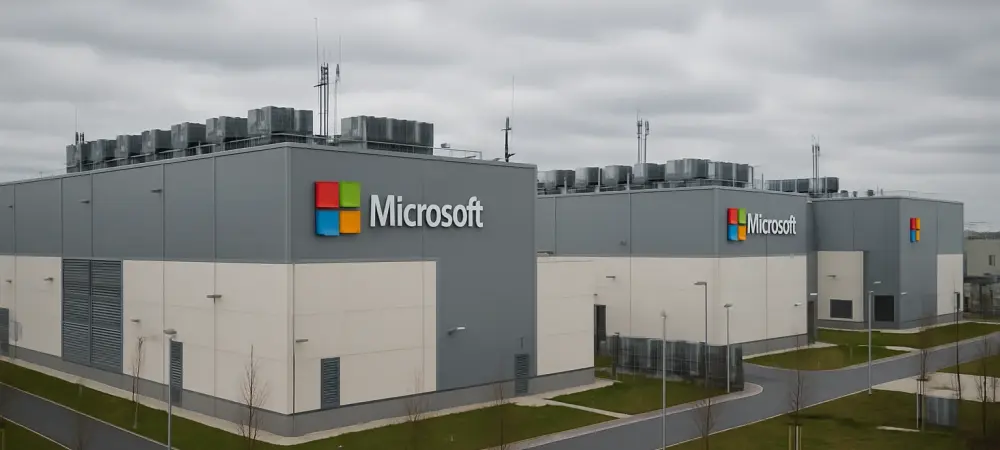
Imagine a small town in Germany, once reliant on coal, now poised to become a hub for cutting-edge technology with Microsoft’s ambitious plans to build data centers stirring both excitement and debate. This is the reality for places like Elsdorf, where a staggering €3.2 billion investment by the tech giant is reshaping the landscape of cloud computing and AI in Germany. This roundup gathers diverse opinions, expert insights, and local perspectives to explore how these new facilities in North Rhine-Westphalia are transforming the region. The aim is to provide a balanced view of the economic, technical, and social implications of this monumental project.
Unpacking the Announcement: Microsoft’s Bold Investment
The tech world buzzed with anticipation when Microsoft revealed its plan to construct data centers in Elsdorf, Bergheim, and Bedburg, near Cologne. This initiative, backed by a multi-billion-euro commitment, is seen by many industry observers as a game-changer for Germany’s digital infrastructure. Analysts from various tech forums emphasize that this move is not just about expanding capacity but also about positioning Germany as a central player in Europe’s cloud and AI ecosystem.
Local government voices in North Rhine-Westphalia echo a sense of optimism about the economic potential. Officials in the region have highlighted the promise of sustainable job creation, viewing the data centers as a bridge from traditional industries to modern tech. However, some community advocates caution that such rapid development could strain local resources if not managed with care, pointing to the need for strategic planning.
Contrasting opinions emerge when discussing the timeline and scale of the project. While some tech consultants applaud the aggressive push to have facilities operational by 2026, others question whether the infrastructure can keep pace with such ambitious deadlines. This mix of enthusiasm and concern sets the stage for a deeper dive into specific impacts and viewpoints.
Economic and Regional Impacts: A Spectrum of Opinions
Revitalizing North Rhine-Westphalia’s Economy
Economic analysts widely agree that the data centers signify a transformative shift for areas historically tied to coal production. In towns like Elsdorf, the transition to tech is seen as a lifeline for long-term growth, with projections of job opportunities in cloud computing and related fields. Many local leaders describe this as a rare chance to redefine the region’s identity.
On the flip side, some economic commentators express reservations about the distribution of benefits. There’s a concern that smaller communities might miss out while larger hubs reap the rewards, potentially widening regional disparities. This perspective urges a closer look at how investment is allocated across the 26-hectare site south of Heppendorf and beyond.
A third angle comes from business owners in the area, who see both opportunity and challenge. While excited about potential partnerships with a global tech leader, they also worry about rising costs and infrastructure demands. This blend of hope and caution reflects the complex economic landscape these projects are navigating.
Community Voices on Development and Sustainability
Community feedback reveals a strong desire for sustainable growth alongside Microsoft’s expansion. Residents in Bergheim and Bedburg, where facilities will span significant industrial parks, often cite the importance of preserving local environments. Many advocate for green initiatives to accompany the data centers, hoping for a model that balances progress with responsibility.
Environmental groups add a critical layer to the discussion, pressing for transparency on energy consumption and emissions. Some argue that while the shift from coal is positive, large-scale data centers could introduce new ecological challenges if not designed with sustainability at the forefront. Their input calls for innovative solutions in facility planning.
Meanwhile, urban planners offer a pragmatic take, suggesting that community engagement is key to success. They propose town hall meetings and collaborative frameworks to ensure local needs are met, viewing Microsoft’s presence as a chance to set a precedent for corporate-community partnerships in tech-driven transformations.
Technical and Strategic Implications: Expert Insights
Enhancing Cloud Infrastructure and Reliability
Tech experts across various platforms highlight the strategic importance of establishing three Availability Zones near Cologne. This setup, designed for redundancy and resilience, is praised as a robust enhancement to Microsoft’s existing Germany West Central Azure region in Frankfurt. Many see this as a vital step toward meeting Europe’s soaring demand for reliable cloud services.
However, cybersecurity specialists raise valid concerns about potential risks. They note that concentrating infrastructure in a single region could heighten vulnerability to targeted attacks or system failures, urging diversified backup systems. This cautionary stance contrasts with the general optimism about improved service delivery.
A further perspective from IT consultants focuses on the business implications. They suggest that enhanced cloud capabilities will empower companies to scale operations efficiently, but warn of over-reliance on a single provider. This insight encourages firms to explore hybrid solutions while leveraging the new infrastructure.
Positioning Germany in AI and Cloud Leadership
Industry thought leaders recognize Germany’s emerging role as a frontrunner in AI and cloud computing, thanks to Microsoft’s doubled capacity goals. The choice of North Rhine-Westphalia and Frankfurt as strategic hubs is often cited as a calculated move to tap into central Europe’s economic and logistical strengths. This view paints Germany as a potential tech epicenter.
Some analysts, however, question the long-term sustainability of such concentrated growth. They speculate that rapid industrialization could spark community pushback or environmental strain, suggesting a need for broader regional planning. This critical take challenges the assumption that tech expansion is inherently beneficial.
A contrasting opinion from innovation hubs stresses the ripple effect on future tech investments. They argue that Microsoft’s commitment could attract other giants, potentially creating a network of tech clusters across Germany. This forward-looking idea underscores the strategic weight of the current projects.
Key Takeaways from Diverse Stakeholders
Synthesizing the range of opinions, it’s evident that Microsoft’s data center expansion is a multifaceted endeavor with profound implications. Economic revitalization stands out as a shared hope among local leaders and analysts, with the promise of jobs and growth driving much of the enthusiasm. Yet, the cautionary notes on resource distribution and environmental impact add depth to the conversation.
Technical experts and business consultants largely agree on the transformative potential of enhanced cloud infrastructure, though cybersecurity and dependency risks remain points of contention. Community perspectives bring a human element, emphasizing sustainability and engagement as non-negotiable aspects of development. This diversity of thought paints a comprehensive picture of the challenges and opportunities ahead.
Reflecting on these discussions, a balanced approach emerges as the most advocated path. Stakeholders from various sectors stress the importance of collaboration between corporations, governments, and communities to maximize benefits. As this chapter of Germany’s tech journey unfolds, the focus is on laying a foundation for inclusive and sustainable progress. Moving forward, businesses are encouraged to explore partnerships for cloud access, while policymakers should prioritize education and green initiatives to support long-term success.