

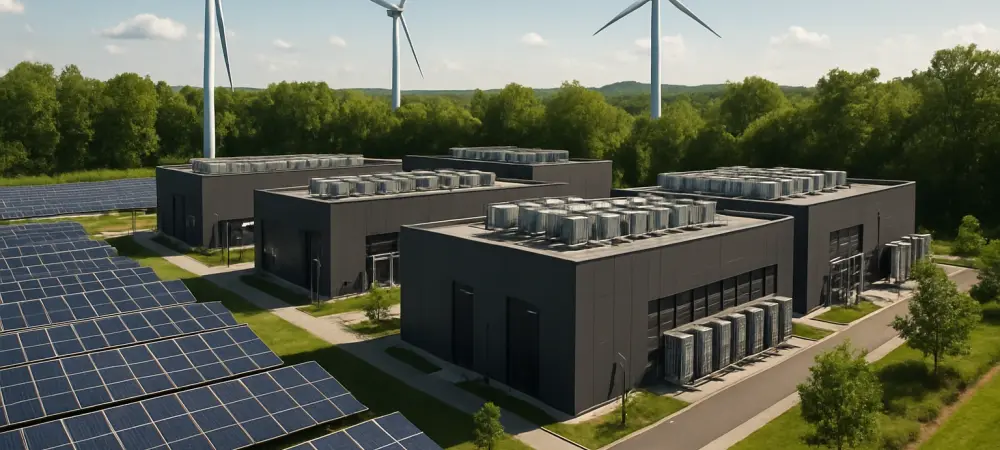
The explosive growth of artificial intelligence (AI) has unleashed a staggering demand for computational power, with data centers worldwide consuming energy at an unprecedented rate— projected to account for up to 9% of global electricity use by 2030, according to the International Energy Agency (IEA). This surge, driven by AI workloads like machine learning models and generative algorithms, poses a critical challenge: how can the industry scale to meet these needs without exacerbating environmental harm? As AI reshapes technology and business landscapes, the spotlight falls on sustainable data centers as a vital solution. This analysis dives into the trend of eco-friendly infrastructure tailored for AI, spotlighting Verne, a pioneering provider, while exploring industry dynamics, real-world innovations, and future implications.
The Rising Demand for Sustainable AI Infrastructure
Industry Growth and Environmental Challenges
The data center sector is experiencing rapid expansion, fueled by AI’s insatiable appetite for processing power. Reports from Moody’s highlight the risk of overbuilding as companies rush to meet demand, with global data center energy consumption expected to double from current levels by 2030. This growth, while promising for technological advancement, raises alarms about carbon footprints, with some facilities still relying on fossil fuels for power.
Parallel to this, the market is witnessing a shift toward sustainability, with over 60% of data center operators adopting renewable energy strategies, as noted by Gartner. The rise of specialized cloud providers offering GPU-as-a-service for AI workloads further intensifies the need for efficient infrastructure. These platforms, catering to hyperscalers and startups alike, underscore the urgency of balancing high-performance computing with environmental responsibility.
Beyond raw numbers, the environmental stakes are clear. AI models, particularly those training on massive datasets, can emit carbon equivalent to hundreds of car journeys per query cycle, according to studies from MIT. This reality pushes the industry to innovate, not just for scalability but to mitigate long-term ecological damage in an era of heightened climate awareness.
Real-World Solutions: Verne’s Strategic Approach
Amid these challenges, Verne stands out as a leader in sustainable data center design, operating facilities in Finland, Iceland, and the UK. By leveraging 100% renewable energy sources like hydroelectric and geothermal power, coupled with the naturally cool Nordic climate for free cooling, Verne achieves zero water consumption—a stark contrast to traditional centers reliant on resource-heavy cooling systems.
Tailored for high-performance computing (HPC), Verne’s infrastructure meets the intense demands of AI hardware, such as GPUs and TPUs, which require consistent, high-density power. Their facilities are engineered to support the computational rigor of AI training and inference, ensuring hyperscalers and enterprise clients can scale without sacrificing efficiency or environmental goals.
A notable example of Verne’s impact lies in partnerships with major tech firms seeking sustainable solutions for AI expansion. By situating data centers in regions with abundant clean energy and low operational costs, Verne not only reduces carbon emissions but also offers cost-effective scalability, setting a benchmark for how strategic location choices can align with green principles.
Expert Perspective on Balancing Scale and Sustainability
Insights from Sam Wicks, Verne’s head of design and product development, reveal a proactive stance on AI’s evolving demands. Wicks emphasizes that Verne has long prioritized HPC design to anticipate the scale required by modern AI, ensuring their facilities are not just reactive but future-ready. This foresight positions the company to handle exponential growth in computational needs.
Quoting Wicks, the philosophy is clear: “The goal is to build the future, not wait for it.” This mindset drives Verne to align infrastructure development with chip and platform roadmaps, staying ahead of AI’s rapid innovation cycles. Such an approach mitigates the risk of obsolescence, a persistent concern in a field where technology evolves in mere weeks while physical buildouts span years.
Industry experts broadly agree that scalability, sustainability, and digital sovereignty form a triad of interconnected challenges. Verne’s holistic model—combining renewable energy, strategic design, and compliance with regional data laws—offers a blueprint for addressing these issues simultaneously. This integrated strategy is seen as a guiding light for others aiming to navigate the complex demands of an AI-driven digital economy.
The Future of Sustainable Data Centers in an AI World
Looking ahead, data center technology is poised for transformative advancements, with innovations like immersion cooling and enhanced energy storage systems promising greater efficiency. A heavier reliance on renewable sources, such as solar and wind, is also expected to dominate, driven by both market pressures and policy incentives across global regions.
In Europe, significant investments—totaling €200 billion for AI infrastructure—and legislative proposals like the Cloud and AI Development Act aim to triple data center capacity by 2032 while enforcing strict sustainability standards. These initiatives highlight a regional commitment to green tech, yet they also expose timeline mismatches, as AI progress outpaces infrastructure readiness, creating potential bottlenecks.
Challenges persist, including energy grid constraints and regulatory complexities surrounding digital sovereignty, especially in Europe where data localization laws grow stricter. However, positive outcomes are evident in efforts by companies like Verne, which contribute to a secure, ethical digital future through compliance with European data protection standards, while hurdles like grid reliability remain a concern for widespread adoption.
Final Reflections on a Sustainable AI Path
Reflecting on the journey, Verne has carved a notable path as a leader in sustainable data centers, harnessing renewable energy and optimal locations to meet AI’s voracious demands. Their alignment with European policies on environmental care and data security stands as a testament to balancing technological growth with broader responsibilities.
Looking back, the challenge of scaling infrastructure without ecological compromise revealed a clear need for innovation. Moving forward, industry stakeholders should prioritize collaborative efforts to refine cooling technologies and expand renewable energy integration. A commitment to adaptive strategies will ensure that the rapid pace of AI development harmonizes with a sustainable and secure digital landscape for generations to come.