

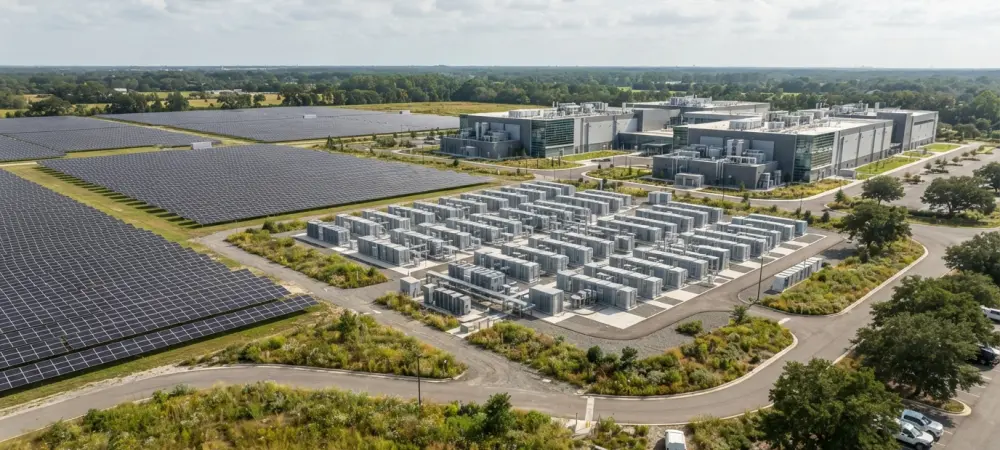
Architects are utilizing prefabricated and lightweight shells to reduce the embodied carbon footprint of massive gigawatt-scale campuses during the initial build phase. This strategic shift represents a departure from the historical treatment of data centers as inconspicuous, utilitarian structures often relegated to the peripheries of industrial zones. Today, as artificial intelligence becomes an inescapable component of professional workflows and daily life, the physical infrastructure supporting these digital processes has moved into the spotlight. These facilities are no longer mere “monolithic boxes” but have evolved into gigawatt-scale campuses that demand significant environmental, social, and economic consideration. In the United States, data centers now constitute the largest segment of private office construction, reflecting a fundamental reorganization of how society consumes energy and land. This transformation is driven by the sheer scale of the current market, where seasonally adjusted annual investment has reached $50 billion to satisfy the demand for hyperscale facilities. These massive sites, housing upwards of 5,000 servers each, are projected to account for two-thirds of all global data capacity by 2031. This immense growth places a heavy burden on the power grid, with projections indicating that server energy consumption alone could represent one-third of the total electricity used by commercial buildings by 2050. Consequently, the role of the architect has expanded beyond aesthetic design to encompass complex systems engineering and long-term resource management.
Advancing Sustainable Engineering and Efficiency
The Transition: Advanced Cooling and Material Innovation
The most profound technical evolution occurring within the industry is the rapid transition from traditional air-cooling and evaporative systems to advanced liquid cooling technologies. Historically, data centers relied on massive quantities of water to cool hardware, but the high thermal density of modern artificial intelligence chips has rendered these methods increasingly inefficient and environmentally costly. Liquid cooling, which involves immersing components in or circulating dielectric fluid through a closed-loop system, has emerged as the definitive solution. This method ensures that thermal energy is managed without the constant “burn-off” associated with evaporative cooling, drastically reducing water consumption while allowing for higher computing densities. By utilizing these closed systems, designers can create more compact facility footprints that operate with significantly higher efficiency. This technical shift is not merely about performance; it is a direct response to the urgent need for water stewardship in regions where data centers compete with local communities for potable resources.
In addition to cooling innovations, the structural composition of data centers is being reimagined through the use of sustainable materials like mass timber and “stress-skin” wood construction. While concrete and steel have long been the standard for industrial facilities, their high embodied carbon makes them less attractive in an era of strict environmental targets. Mass timber offers a sequestered-carbon alternative that can theoretically reduce the initial environmental impact of a massive campus. However, the implementation of these materials faces a significant hurdle in the form of supply chain limitations. The sheer volume of timber required for the current wave of gigawatt-scale construction far exceeds current production capacities, highlighting how the data center industry is now large enough to dictate and reshape national supply chains. Architects must navigate these constraints by combining low-carbon concrete with modular, prefabricated components that minimize waste. This balanced approach allows for the rapid deployment of infrastructure while maintaining a commitment to reducing the long-term ecological footprint of the digital economy.
Corporate Responsibility: Grid Integration and Energy Strategy
Modern data center development is increasingly defined by a commitment to carbon-free energy goals that extend beyond simple carbon offsets. Leading developers are moving toward a 24/7 carbon-free energy matching model, ensuring that every megawatt consumed by a facility is directly supported by renewable production on the same local grid. This transition marks a shift from being a passive consumer of electricity to becoming an active participant in grid management. Instead of relying on traditional diesel generators for emergency backup—which are notorious for their localized emissions—operators are now testing and implementing utility-scale battery storage systems. These battery arrays do more than just provide backup power; they allow data centers to engage in “load shedding” during peak demand periods. By drawing on stored energy rather than the grid when local demand is highest, the data center functions as a stabilizer for the community’s power infrastructure, effectively transforming a potential resource drain into a resilient asset for the regional energy ecosystem.
Sustainability in this sector also encompasses a sophisticated approach to the circular economy, particularly regarding the rapid turnover of high-performance computing hardware. While the physical shell of a data center may be designed to last thirty years or more, the internal servers and storage components typically reach obsolescence within three to seven years. To mitigate the resulting surge in e-waste, industry leaders are prioritizing comprehensive recycling programs that recover precious metals and rare earth elements for reuse in new components. This holistic management strategy ensures that the “data factory” is not merely an endpoint for resources but a link in a larger industrial cycle. Furthermore, the use of free-air cooling—leveraging natural nighttime temperatures to reduce mechanical cooling loads—demonstrates a design philosophy that works with local climates rather than against them. By integrating these diverse strategies, developers are proving that large-scale industrial projects can meet rigorous environmental standards like BREEAM while simultaneously improving operational profitability and long-term viability.
Redefining the Relationship: Technology and Community
Modular Solutions: From Megascampuses to Urban Infrastructure
The traditional model of the massive, isolated megascampus is facing increasing scrutiny due to its overwhelming impact on local environments and municipal infrastructure. In response, a new paradigm is emerging that favors modular, factory-built data center units that can be integrated directly into the urban fabric. These units, which can support significant power loads within a relatively small footprint, allow for a more distributed approach to digital infrastructure. Rather than concentrating thousands of servers in a single rural location, developers can deploy smaller modules on underutilized land parcels within existing neighborhoods. This “rightsizing” of infrastructure helps to prevent the creation of massive heat islands and reduces the need for the extensive land clearing associated with traditional warehouse-style facilities. By becoming as commonplace as local libraries or post offices, these modular data centers can provide low-latency computing services exactly where they are needed most without disrupting the character of the surrounding community.
Integrating these facilities into populated areas requires a proactive approach to addressable engineering challenges, specifically noise mitigation and resource usage. Public opposition to data centers is frequently rooted in the persistent acoustic hum of cooling fans and the perceived competition for water during periods of drought. Architects are solving these issues by moving all mechanical equipment inside the building envelope and using advanced acoustic louvers to manage airflow without leaking noise. Furthermore, many new projects are designed to be water-neutral by utilizing reclaimed or non-potable water from municipal treatment plants for their cooling needs. By “plugging leaks” in aging municipal water systems or investing in infrastructure that benefits the entire community, data center operators can establish themselves as “good neighbors.” This shift from a secretive, walled-off industrial presence to a transparent and integrated civic partner is essential for the continued expansion of the infrastructure required to support the next generation of artificial intelligence and digital services.
Data Governance: Managing Digital Rhythms and Storage Philosophy
A fundamental rethink of how society interacts with data is necessary to achieve true sustainability in data center design. Current digital habits are built on the expectation of instantaneous access to all information at the highest possible resolution, a requirement that keeps thousands of servers in an “always-on” state. Experts are now proposing a tiered storage philosophy that categorizes data into “hot, warm, and cold” categories, much like the organization of a physical public library. Under this model, “hot” data required for daily operations remains instantly accessible, while “cold” data—information used only rarely—is stored on servers that can be powered down when not in use. Implementing a nominal retrieval period for certain types of information would drastically reduce the baseline power demand of hyperscale facilities. This approach acknowledges that not all digital interactions require the same level of urgency, allowing for a more rationalized and less energy-intensive use of hardware resources.
This philosophy naturally leads to the concept of “digital slower rhythms,” where the digital landscape mirrors the natural fluctuations of the physical city. Just as urban activity often slows down during weekends or late at night, digital infrastructure could be programmed to operate at different speeds based on the current stress levels of the local power grid. During periods of peak energy demand or high atmospheric temperatures, non-essential data processing and background synchronization could be delayed, reducing the overall burden on the energy ecosystem. This move away from unrestricted, perpetual growth toward a model of synchronized consumption represents a significant cultural and technical shift. It encourages a more sustainable relationship with technology by respecting the inherent limits of physical resources and energy production. By designing systems that can adapt to the rhythms of the environment, the industry can ensure that the rapid advancement of artificial intelligence does not come at the expense of ecological stability or community resilience.
Synthesizing the Future: A Path Toward Integrated Infrastructure
The Collaborative Model: Building Civic Trust and Grid Resilience
The overarching consensus among planners, architects, and developers is that the era of unrestricted, siloed growth is effectively over. The emergence of global urban data center pacts and collaborative frameworks between private operators and municipal officials has fostered a new level of transparency in how these facilities are planned and operated. The focus has shifted toward “good neighbor” policies that prioritize the long-term benefits for local residents. This includes not only the mitigation of noise and resource consumption but also the provision of tangible infrastructure upgrades, such as improved power sub-stations or enhanced water treatment facilities, that remain in place for the community’s use. By viewing the data center as a sophisticated piece of social infrastructure rather than a private industrial asset, stakeholders have created a pathway for development that balances the needs of the digital economy with the preservation of local quality of life.
Ultimately, the successful integration of these facilities into the modern landscape depended on the industry’s ability to pivot toward a grid-positive and community-centric model. Developers who embraced modular construction and advanced battery storage found that they could navigate complex zoning and environmental regulations more effectively than those who clung to outdated megascampus designs. The transformation of the data center from a conspicuous industrial curiosity to a functional backbone of the civic landscape became a necessity for the survival of both the digital and physical environments. By applying holistic systems thinking and treating data centers as vital components of the circular economy, architects ensured that the “cloud” maintained a responsible and sustainable presence on the ground. This balanced approach allowed for the continued growth of artificial intelligence while fostering a resilient infrastructure that served the needs of both global technology firms and local communities alike.
Final Implementation: Actionable Strategies for the AI Era
The transition toward a more integrated data center typology was completed through a series of deliberate engineering and policy shifts that prioritized ecological balance. Operators successfully replaced traditional diesel backup systems with utility-scale batteries, which facilitated the stabilization of local power grids during extreme weather events. Architectural firms moved toward a standardized use of liquid cooling, which minimized the footprint of new builds and protected local water supplies from industrial depletion. Furthermore, the adoption of “cold storage” protocols for non-essential data allowed for a significant reduction in the total energy demand of hyperscale campuses. These advancements proved that the massive resource requirements of the AI era could be managed through innovation and a commitment to transparency. By treating data centers as shared resources that contributed to the stability of the energy grid, the industry moved from a position of conflict to one of cooperation with the public sector. The industry moved forward by establishing clear metrics for success that went beyond simple uptime and processing power. Success was redefined to include the successful repurposing of waste heat for local district heating systems and the full integration of facilities into the local urban environment. Architects and planners focused on creating adaptive structures that could be updated as server technology evolved, thereby extending the lifespan of the physical building and reducing the frequency of new construction projects. This comprehensive approach allowed for the creation of a digital backbone that was not only technologically advanced but also ethically grounded and environmentally sound. As a result, the infrastructure powering the digital future became an essential and respected part of modern society, proving that the laws of physics and the needs of human communities could be reconciled through thoughtful design and responsible stewardship.