

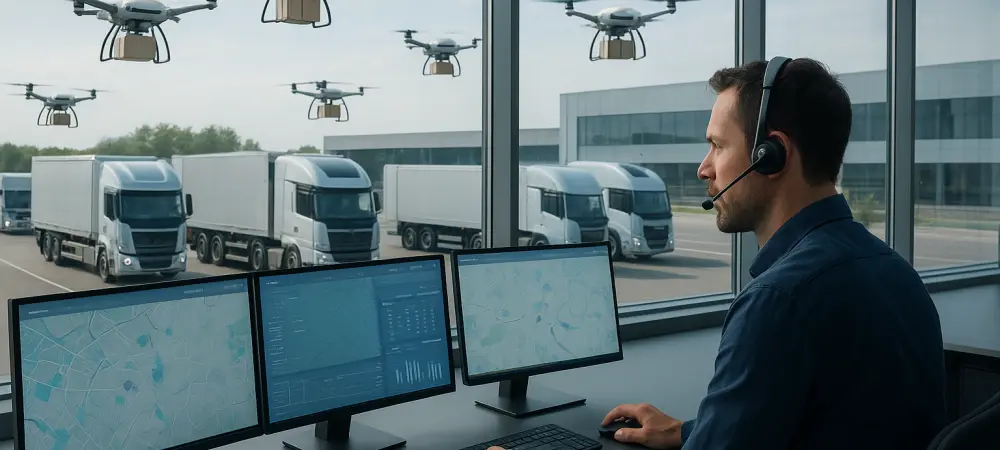
The conventional perception of artificial intelligence as a simple chatbot is rapidly dissolving as organizations deploy systems capable of independent decision-making and real-world execution. This transition signifies a movement away from reactive models that merely provide text-based responses toward agentic systems that proactively pursue multi-step goals. In the current enterprise landscape, AI is no longer confined to experimental sandboxes; it is being integrated into core production environments where it manages high-stakes operations.
Logistics, finance, and manufacturing sectors lead this shift by replacing rigid software with flexible AI frameworks. Events like the AI & Big Data Expo Europe in Amsterdam serve as a catalyst for industrial standards. These gatherings allow leaders from organizations like Syndio and Volvo to align on how autonomous actors should function within global supply chains, ensuring that innovation does not outpace the necessary infrastructure.
Bridging the Gap Between Digital Support and Agentic Autonomy
The transition from Large Language Models to goal-oriented agents represents a fundamental change in how software interacts with human intent. While traditional assistants required constant prompting, the current generation of agents interprets a single objective and determines the necessary steps to achieve it. This proactivity allows businesses to automate workflows that were previously considered too complex for machine intervention.
In the enterprise sphere, the shift from experimentation to production is driven by the need for measurable efficiency. Market leaders are no longer satisfied with internal prototypes; they are deploying agents that handle real-time customer interactions and supply chain adjustments. This evolution is particularly visible in sectors like finance, where the speed of decision-making determines competitive advantage.
The Technological Architecture Powering Autonomous Systems
Emerging Trends in Agentic AI and Physical Automation
Agentic AI is defined by its newfound authority to execute operational commitments without constant human approval. In logistics and warehousing, the rise of Robot Foundation Models enables a seamless material flow that adapts to environmental changes instantly. These systems no longer follow pre-programmed paths but instead use real-time data to navigate complex floors and manage inventory.
Technological interoperability is also advancing through the Model Context Protocol, which facilitates secure navigation across diverse data platforms. To protect data sovereignty, many corporations now prefer self-hosted small models over massive third-party APIs. This strategy reduces vendor lock-in and ensures that sensitive operational logic remains within the corporate firewall.
Market Projections and the Scaling of Intelligent Infrastructure
Growth forecasts for the autonomous agent market indicate a significant expansion within the TechEx Europe ecosystem from 2026 to 2028. High-performance indicators are already visible in developer workflows, specifically within CI/CD pipelines where automated testing is now managed by intelligent actors. These agents identify bugs and deploy fixes with minimal intervention, accelerating the software development life cycle.
The corporate decision to build or buy AI infrastructure is increasingly influenced by long-term capital expenditure projections. Companies like Coca-Cola and KLM are weighing the costs of custom development against the speed of off-the-shelf solutions. Data-driven insights suggests that the transition to full-scale autonomous actors will drive massive productivity gains across the global economy.
Technical and Operational Hurdles in the Path to Autonomy
A significant dilemma facing the industry is the distinction between technical permission and actual authority. Granting a system the ability to access a database is simple, but granting it the authority to authorize a financial transaction involves complex legal risks. Solving the challenge of master data quality remains a priority, as architectural fragmentation often prevents agents from accessing a single source of truth.
In physical environments, mitigating risks in robotic fleet management is essential for safety and efficiency. Unpredictable surroundings in warehouses require agents that can manage exceptions without halting the entire system. Maintaining a human-in-the-loop oversight model allows businesses to handle these anomalies while still benefiting from the speed of automation.
Governance, Security, and the New Regulatory Standard
Live model monitoring and comprehensive audit trails have become the bedrock of ethical AI behavior. As autonomous systems operate under evolving European data protection laws, compliance is no longer optional. Organizations like the BBC and Deutsche Bank have implemented rigorous decision boundaries to prevent unauthorized customer-facing commitments.
The importance of Sovereign AI has grown as industries strive to meet high-security benchmarks through localized hosting. By keeping data processing within specific jurisdictions, companies satisfy regulatory requirements while maintaining control over their proprietary intelligence. This approach ensures that autonomous actors remain auditable and transparent.
The Future Frontier of Independent Artificial Intelligence
The next wave of trusted agents will likely possess independent problem-solving capabilities and the power to allocate resources autonomously. This convergence of physical and digital intelligence is already optimizing global supply chains, where machines negotiate shipping rates and route logistics without human prompts. Such autonomy could eventually reshape traditional corporate hierarchies by decentralizing decision-making.
In the long term, the integration of AI agents into everyday operational discipline will become standard practice. These actors will move beyond simple tasks to manage entire departments or logistical networks. As decentralized agents become more reliable, the focus will shift from how to build them to how to best integrate them into the global economic fabric.
Final Perspective on the Evolution of Enterprise Intelligence
The transition from passive assistants to high-stakes autonomous actors represented a pivotal moment for industrial intelligence. The findings of the 2026 Expo demonstrated that success depended more on governance and data integrity than on the novelty of the models themselves. Organizations that prioritized auditable infrastructure found themselves better prepared for the complexities of an automated economy.
Stakeholders realized that the collaborative future of human expertise and machine autonomy required a foundation of trust and rigorous oversight. The strategic move toward sovereign hosting and decentralized actors offered a path to scalable growth. Ultimately, the evolution of these systems proved that clear decision boundaries were the most vital component of any successful AI deployment.