

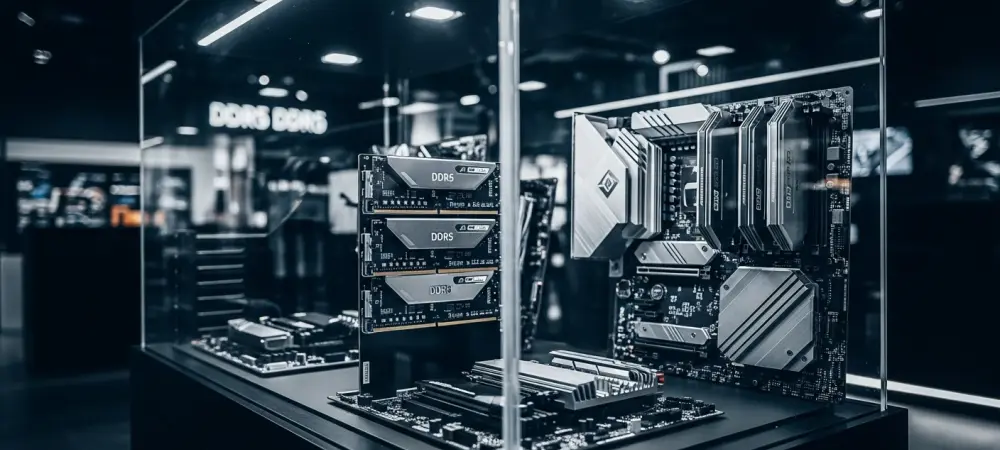
Dominic Jainy is a veteran IT professional whose career spans the transformative eras of artificial intelligence, machine learning, and blockchain integration. With a keen eye on how enterprise-level shifts dictate the reality of the consumer market, he offers a unique perspective on the current hardware crisis. As AI data centers consume the lion’s share of global component production, Dominic provides essential context on why the traditional DIY PC market is facing an unprecedented contraction and what this means for the future of personal computing.
The following discussion explores the ripple effects of the AI boom, examining how skyrocketing DDR5 costs and supply chain reallocations are forcing giants like Asus and AMD to recalibrate their entire business models. We delve into the shifting landscape of gaming hardware, the logistical nightmares facing smaller innovators, and the strategic pivots necessary to survive a market where components are increasingly diverted away from the home office and toward the data center.
Asus and Asrock are projecting shipment declines of up to 30% by 2026. How are these manufacturers adjusting their production lines to handle such a massive drop in demand, and what specific operational changes are being made to offset the lost revenue from the DIY PC market?
The reality on the ground is quite stark, with Asus expecting sales to plummet to just 10 million units in 2026, a sharp fall from their previous 15 million mark. To handle a 30% decline, manufacturers are forced to tighten their belts by consolidating production lines and reducing the volume of niche, high-end boards that sit on shelves for too long. We are seeing a strategic pivot where these companies are likely reallocating their internal resources toward the server and AI infrastructure sectors, which are currently cannibalizing the DIY market’s resources. By shifting focus away from the 2.7 million units Asrock expects to ship, compared to their previous 4.4 million, these firms are essentially following the money toward enterprise clients who aren’t as price-sensitive as the average gamer.
The demand for DDR5 memory in AI data centers has made RAM significantly more expensive for individual builders. How does this price surge specifically impact the adoption of newer hardware platforms like the AM5, and what steps can manufacturers take to keep these platforms viable for budget-conscious consumers?
The surge in DDR5 prices has created a massive barrier to entry for the AM5 platform, as these newer AMD CPUs strictly require the more expensive memory modules. When builders realize they cannot afford the RAM necessary to boot a new system, the demand for the compatible motherboards disappears entirely, causing the sales charts for these platforms to stall. To keep things viable, manufacturers might have to consider bundling components or offering deeper discounts on motherboards to offset the “RAM tax” that builders are currently paying. It is a frustrating cycle where the hardware is ready, but the 11.5 million units Gigabyte hoped to move are being held back by the simple fact that a PC isn’t functional without affordable memory.
Supply chain constraints have reportedly led to the cancellation of major hardware releases, such as the RTX 50 Super series. What are the long-term consequences for the traditional PC upgrade cycle when mid-cycle refreshes disappear, and how should enthusiasts plan their builds when expected hardware tiers never arrive?
The cancellation of the RTX 50 Super series is a major blow because it disrupts the predictable rhythm that enthusiasts rely on to time their purchases. Without these mid-cycle refreshes, users are left with aging hardware and no middle-ground upgrade path, which can lead to a total stagnation in the DIY sector for years at a time. Enthusiasts now have to shift their mindset from “waiting for the next best thing” to “buying what is available,” because the expected hardware tiers may simply never materialize due to component redirection. It forces a more conservative building strategy where longevity and repairability become more important than chasing the latest incremental performance boost.
Both Apple and gaming console manufacturers like Nintendo are facing price hikes or inventory shifts due to component shortages. In what ways do these rising costs across laptops and consoles change the competitive landscape for gaming, and how do you see consumer buying habits shifting in response to these increases?
We are seeing a rare moment where almost every gaming avenue—from the Mac mini’s popularity among developers to the upcoming price hikes for the Nintendo Switch 2—is becoming more expensive simultaneously. This creates a landscape where gaming is no longer a cheap hobby, and we see consumers holding onto their current devices for much longer periods. Apple has already been forced to cease offering certain models and raise prices, which pushes entry-level users toward older, refurbished tech rather than new releases. As the price of PlayStation and Xbox consoles also climbs, the market is splitting between those who can afford the “premium” of modern gaming and a growing number of people who are simply priced out.
Projects like Valve’s Linux-based gaming PC are facing delays as sourcing critical components becomes increasingly difficult. What specific logistical hurdles do smaller-scale hardware projects face when competing with data centers for parts, and how can they secure enough inventory to eventually reach a consumer launch?
Smaller-scale projects are at a massive disadvantage because they lack the massive purchasing power of a data center giant or a company like Apple. Valve’s delay of its Steam Machine is a perfect example; when you are competing for the same DDR5 modules as a billion-dollar AI facility, you are always going to be at the back of the line. These smaller firms have to get creative, perhaps by securing long-term contracts years in advance or by designing hardware that can utilize a wider variety of component specifications to avoid single-source bottlenecks. It is a logistical nightmare where a single missing part can postpone a 2026 launch indefinitely, leaving a project dead in the water before it even reaches the consumer.
AMD projects that its gaming revenue could drop by 20% in late 2026 as the hardware market tightens. Given this outlook, what strategies should companies use to maintain their research and development budgets, and what metrics will be most important for tracking a potential recovery in the DIY sector?
When a company like AMD forecasts a 20% drop in gaming revenue, they have to find ways to subsidize their R&D through other high-growth areas, specifically their AI and enterprise chips. They will likely focus on “efficiency of design,” trying to squeeze more performance out of fewer or more readily available components to keep costs down. The most important metrics to watch for a recovery will be the stabilization of memory prices and the inventory levels of mid-range motherboards, which currently sit at projected lows like MSI’s 8.4 million units. Only when we see a return to consistent, affordable component availability will the DIY sector begin to show signs of life again.
What is your forecast for the PC hardware market and the future of DIY building?
I believe we are entering a “dark age” for the budget DIY builder that will likely persist through 2026, as the appetite of AI data centers for memory and processing power shows no signs of slowing down. We will see a shift where the DIY market becomes a niche, high-end pursuit for enthusiasts, while the average consumer moves toward cloud gaming or more integrated, specialized devices. However, this pressure will eventually force a new wave of innovation in component efficiency; out of necessity, we will see hardware that does more with less, eventually leading to a leaner and more resilient ecosystem once the initial AI infrastructure gold rush stabilizes.