

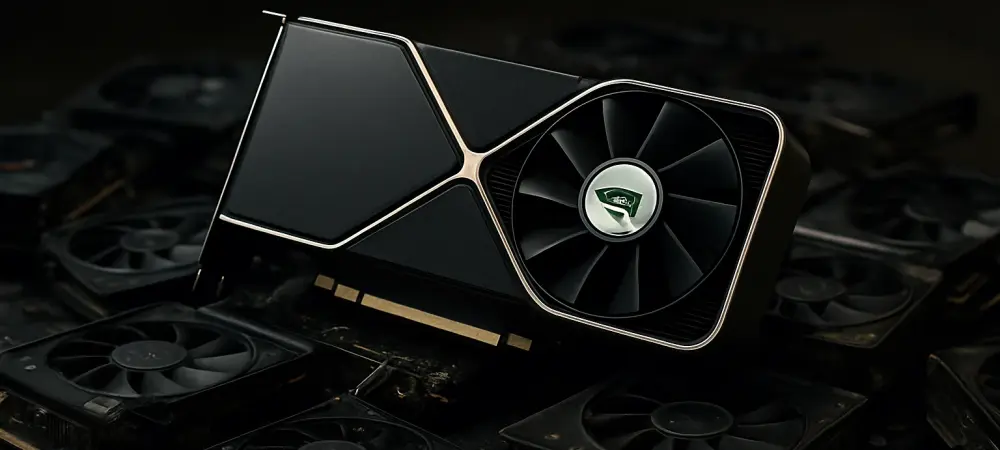
Market Snapshot: The GPU Giant’s Reign
In the ever-shifting landscape of technology markets, one statistic stands out in Q2 2025: Nvidia commands an astonishing 94% of the add-in board (AIB) market for graphics processing units (GPUs). This staggering dominance not only underscores the company’s ironclad position but also raises critical questions about competition, pricing, and external pressures shaping the industry. This market analysis delves into the driving forces behind Nvidia’s supremacy, examines the latest shipment data and pricing trends, and explores projections for the coming years. By dissecting these elements, the goal is to provide stakeholders with actionable insights into navigating a market heavily tilted toward one player, while identifying potential risks and opportunities that lie ahead.
Deep Dive into Market Dynamics
Shipment Surge and Nvidia’s Market Share Triumph
The GPU market witnessed a robust 27% increase in AIB shipments in Q2 2025, reaching a total of 11.6 million units, reflecting nearly a 30% jump from the prior quarter. Nvidia’s share of this booming market soared to 94%, a 2% gain from the previous period, leaving competitors like AMD with a shrinking 6% and Intel at a flat 0.0%. This overwhelming control is further evidenced by user metrics, such as Nvidia’s nearly 75% hold on the Steam survey user base. Notably, seven of the top thirteen best-performing GPUs in August belonged to Nvidia’s Blackwell RTX 5000 series, highlighting the company’s product strength despite occasional criticism. Yet, this success is not without hurdles, as stock shortages for high-end products have emerged, signaling potential supply chain constraints that could impact consumer satisfaction.
Pricing Fluctuations and Tariff Shadows
Pricing trends in Q2 2025 reveal a complex picture of market control and external influence. While prices for midrange and entry-level graphics cards have declined, offering some relief to budget-conscious buyers, high-end AIB prices have climbed, exacerbating retail stock shortages. This unusual divergence is largely attributed to anticipated tariffs, prompting buyers to stock up in advance to avoid future cost spikes. Compared to competitors, Nvidia’s ability to maintain premium pricing for top-tier products reinforces its brand power, even as supply chain reconfigurations occur weekly to mitigate tariff impacts. However, this strategy risks creating consumer confusion over fluctuating costs and availability, which could dampen demand if economic uncertainties persist.
Competitive Landscape and Broader Industry Trends
Beyond Nvidia’s dominance, the GPU market’s broader dynamics reflect both growth and underlying weaknesses. Desktop PC CPU shipments, for instance, rose by 21.6% quarter-over-quarter, with AMD achieving a notable 27% growth compared to Intel’s modest 2% uptick. Despite this quarterly gain, a year-over-year decline of 4.4% in CPU shipments points to lingering softness in demand. Regional variations also complicate the landscape, as tariff effects differ across markets, influencing strategic decisions for global players. Consumer hesitancy, driven by policy uncertainty, remains a critical concern, often overshadowed by headline figures of shipment growth. This nuanced reality suggests that market stability is far from guaranteed, even for a titan like Nvidia.
Projections and Emerging Challenges
Forecasting Market Trajectories
Looking ahead, industry forecasts paint a cautious picture for the AIB market, projecting a compound annual growth rate of -5.4% from 2025 to 2028, with an installed base expected to reach 163 million units by the end of this period. Innovations on the horizon, such as Nvidia’s rumored RTX 5000 Super variants potentially launching by late 2025, and AMD’s UDNA cards anticipated for late 2026 or early 2027, could introduce fresh competition. However, these product developments must contend with a backdrop of economic and regulatory challenges that threaten to constrain growth. The balance between technological advancement and market contraction will likely define the industry’s path in the near term.
External Pressures and Strategic Risks
External factors, particularly tariffs, loom large over future market stability. The ongoing uncertainty has already prompted significant shifts in supply chain management, with potential cost increases poised to affect both manufacturers and end users. Additionally, consumer confidence could waver if pricing volatility continues, risking a broader demand slowdown. While Nvidia’s focus on data center GPUs, which saw a 4.7% shipment increase in Q2 2025, offers a potential buffer, smaller competitors may struggle to adapt to these pressures. The interplay of geopolitical tensions and economic policies will remain a pivotal determinant of whether current growth trends can be sustained.
Reflecting on Q2 2025 Insights
Reflecting on the market analysis for Q2 2025, Nvidia’s 94% share and the 27% surge in AIB shipments highlight a period of remarkable achievement, tempered by challenges like tariff-induced uncertainty and supply shortages. For stakeholders, the path forward involves strategic inventory management to hedge against potential cost hikes, while businesses in gaming and data centers benefit from aligning with Nvidia’s robust ecosystem. Consumers find value in securing midrange GPUs to avoid looming price increases. Moving into subsequent quarters, the industry needs to prioritize adaptability, closely monitoring policy shifts and product launches to stay competitive. The key takeaway is clear: leveraging current market insights to build resilience against future uncertainties is essential for all players in this dynamic landscape.