

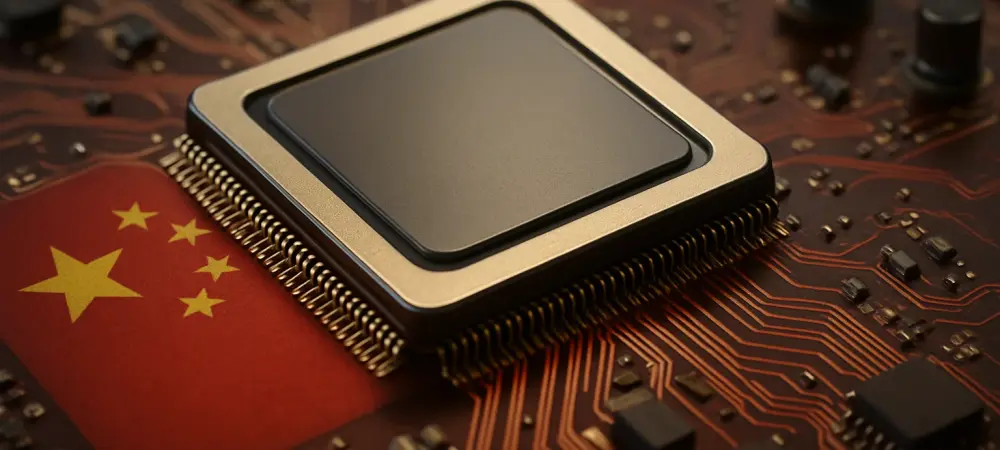
What happens when a tech giant must navigate the tightrope between innovation and international restrictions? NVIDIA, a titan in the world of graphics processing units, is stepping into this complex arena with a groundbreaking chip designed exclusively for the Chinese market, aiming to redefine how technology adapts to policy amid rising geopolitical friction and stringent US export controls. This development isn’t merely about hardware—it’s a high-stakes game of balancing market demands with global rules, sparking intrigue about the future of tech trade.
Why This Chip Is a Game-Changer
The significance of NVIDIA’s latest endeavor cannot be overstated. Dubbed the Blackwell B30A, this chip emerges at a critical juncture where the US-China tech rivalry intensifies, and demand for advanced computing in China skyrockets. With China being a key player in AI and data center expansion, NVIDIA faces the challenge of tapping into this lucrative market while adhering to US regulations aimed at safeguarding national security. The B30A isn’t just a product; it’s a symbol of how tech giants must innovate within constraints, offering a tailored solution that could set a precedent for navigating restricted markets worldwide.
This move also underscores a broader shift in the semiconductor industry, where compliance with geopolitical policies is as crucial as technological advancement. By crafting a chip that meets regulatory thresholds, NVIDIA aims to maintain its foothold in China without compromising on US mandates. The stakes are high—failure to balance these priorities could mean losing a massive market or facing legal repercussions, making this development a pivotal moment for the industry.
Decoding the Blackwell B30Specs and Strategy
At the heart of this story is the Blackwell B30A itself, a chip engineered with precision to fit China’s unique market needs. Unlike NVIDIA’s flagship Blackwell B200 or the powerhouse B300, which boast dual-chiplet designs and up to 15 PetaFLOPs of compute power with 288 GB of HBM3e memory, the B30A opts for a single-die architecture. This design limits its performance to roughly half of the B300’s capacity, yet it still offers up to 144 GB of memory—an upgrade from the Hopper-based ##0’s 96 GB.
Performance-wise, the B30A outshines the ##0, which lags with 41% fewer cores and 28% lower output compared to the Hopper #00. Retaining essential features like high-bandwidth memory and NVLink for rapid data transfer, this chip remains competitive for Chinese clients hungry for AI and high-performance computing tools. With initial samples slated to ship next month, NVIDIA continues to refine the specs, ensuring a delicate balance between capability and compliance.
The strategic intent behind this design is clear: provide enough power to meet market demand while staying within US export boundaries. This calculated compromise positions the B30A as a viable option for China’s tech ecosystem, where even incremental upgrades can drive significant adoption. It’s a testament to NVIDIA’s ability to adapt under pressure, crafting a product that serves a purpose beyond raw performance.
Power and Politics: Voices Shaping the Narrative
The Blackwell B30A transcends technology, stepping into the realm of political discourse. During a recent White House press conference on August 11 of this year, US President Donald Trump labeled the chip an “unenhanced” version of NVIDIA’s cutting-edge Blackwell lineup, aligning with policies to limit advanced tech exports to China. He proposed a potential 15-20% tariff on such products, emphasizing that any financial benefits would bolster national interests rather than personal gain.
Trump also highlighted the diminishing relevance of the older ##0 chip, rooted in the Hopper architecture, suggesting that the B30A represents a necessary middle ground. Industry analysts agree, noting that despite its scaled-back features, pre-launch interest in China is robust. One semiconductor expert remarked, “Even a constrained chip from NVIDIA is a leap forward for Chinese firms desperate for computing power. This isn’t about top-tier tech—it’s about access.” Such perspectives underline the chip’s role as a diplomatic and commercial bridge in a tense landscape.
The political angle adds layers of complexity to NVIDIA’s strategy. Navigating potential tariffs and policy shifts requires not just technical innovation but also a keen understanding of governmental priorities. This interplay of power and technology reveals how deeply intertwined global trade and national security have become, with the B30A as a focal point of this dynamic.
Market Hunger: China’s Demand for Computing Power
China’s appetite for advanced technology forms a critical backdrop to the B30A’s rollout. As a hub for AI development and data center growth, the country presents an enormous opportunity for semiconductor leaders like NVIDIA. Despite US restrictions, local companies and research institutions are eager for any upgrade over existing solutions like the ##0, driving significant buzz around the forthcoming chip even before its official debut.
This demand isn’t merely about numbers—it reflects a deeper need for technological progress in sectors pivotal to China’s economy. From machine learning algorithms to cloud computing infrastructure, the applications for high-performance chips are vast, and even a moderated version like the B30A can fuel innovation. Reports indicate that potential buyers are already lining up, showcasing a market willing to embrace constrained solutions if they promise advancement.
NVIDIA’s challenge lies in meeting this enthusiasm without overstepping regulatory lines. The early shipment of samples signals a proactive approach, but it also raises questions about how well the final product will align with expectations. This scenario illustrates a broader trend: in restricted markets, even partial access to cutting-edge tech can spark transformative growth, positioning the B30A as a catalyst in China’s tech journey.
Charting the Path Ahead: Lessons for Tech Giants
For NVIDIA and similar firms, operating in geopolitically sensitive regions like China demands a multifaceted strategy. First, compliance must be non-negotiable—designing products like the B30A with scaled-down architectures ensures adherence to export controls while still delivering value. Second, incremental progress matters; surpassing older models like the ##0 can capture substantial market share when alternatives are scarce.
Flexibility in rollout plans also proves vital. NVIDIA’s decision to ship samples next month while finalizing specifications demonstrates the importance of adaptability in unpredictable environments. Additionally, engaging with policymakers to anticipate changes—such as potential tariffs—helps align business tactics with political realities. These principles offer a blueprint for tech companies aiming to thrive in constrained markets, balancing innovation with regulation.
Looking back, NVIDIA’s journey with the Blackwell B30A stood as a defining moment in the intersection of technology and geopolitics. The chip’s tailored design, political commentary surrounding its release, and the palpable demand in China painted a vivid picture of an industry at a crossroads. Moving forward, the lessons learned paved the way for smarter strategies—prioritizing compliance, embracing adaptability, and focusing on incremental gains. As the tech landscape continued to evolve, the success of such endeavors hinged on the ability to innovate within limits, ensuring that even restricted markets could access the tools needed to shape tomorrow.