

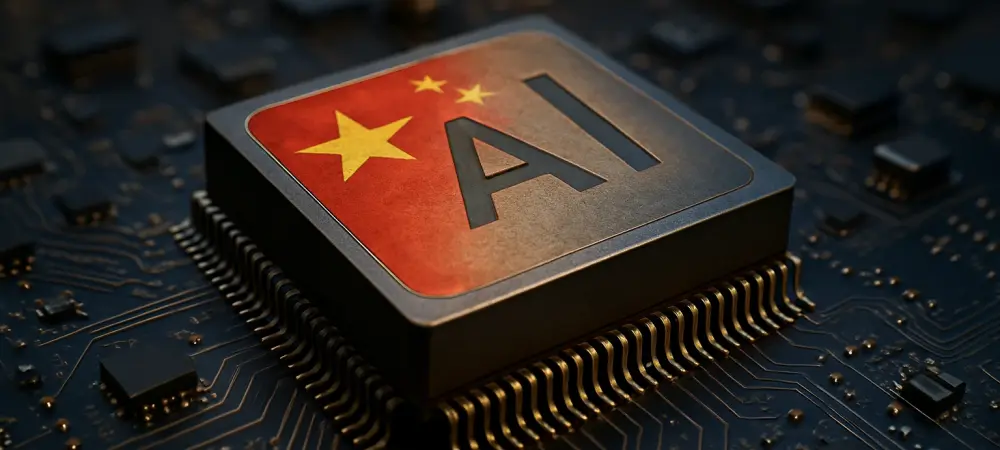
Unveiling a Tech Revolution Amid Global Rivalry
In a world where technological supremacy is increasingly synonymous with national power, the intensifying rivalry between the United States and China has taken center stage, particularly in the realm of artificial intelligence (AI) chips. These tiny powerhouses, crucial for everything from advanced computing to autonomous systems, have become a battleground for dominance, with China making bold strides to reduce its reliance on American technology. Amid escalating geopolitical tensions, Beijing’s push to develop and adopt domestic AI chip alternatives signals a seismic shift in the global tech landscape. This analysis delves into the motivations fueling China’s pivot, the current state of its homegrown solutions, expert perspectives on this transition, and the potential ramifications for the future of technology worldwide.
Forces Propelling China’s Move to Domestic AI Chips
Geopolitical Friction and Security Imperatives
The tech rivalry between the U.S. and China has reached a fever pitch, with provocative rhetoric amplifying the stakes. U.S. Commerce Secretary Howard Lutnick’s statement about making Chinese developers “addicted” to American technology while restricting access to cutting-edge innovations has struck a nerve in Beijing, intensifying calls for independence. This sentiment is not merely reactive but rooted in a broader strategy to safeguard national interests against perceived foreign influence in critical sectors.
Beyond rhetoric, security concerns are a potent catalyst for change. A recent investigation by China’s Cyberspace Administration into NVIDIA’s ##0 AI accelerators has raised alarms over potential backdoors and vulnerabilities that could compromise sensitive data. Such fears are driving a reevaluation of dependency on foreign tech, with national security taking precedence over immediate performance benefits.
Evidence of this shift is clear in the market behavior of Chinese tech giants. Reports indicate a significant reduction in orders for NVIDIA chips, with many firms opting to explore or fully commit to local alternatives. This deliberate pivot underscores a growing consensus that reliance on American tech poses an unacceptable risk in an era of heightened geopolitical uncertainty.
Strategic Drive for Technological Autonomy
On the practical front, Chinese companies are actively pursuing self-reliance through innovation and investment in domestic AI chip solutions. Firms like Huawei and Cambricon have emerged as frontrunners, developing chips tailored to meet the needs of local industries despite acknowledged gaps in performance compared to global leaders. Their efforts reflect a national imperative to build a robust, independent tech ecosystem.
A notable example of this transition is the decision by several major tech players to cancel orders for NVIDIA’s ##0 chips in favor of homegrown platforms. While these domestic options may not yet match the efficiency or power of their American counterparts, the move signals a willingness to prioritize long-term sovereignty over short-term convenience. This trend is evident across sectors, from cloud computing to AI model training.
However, the path is not without hurdles, as illustrated by the experience of DeepSeek, a Chinese AI firm. The company delayed the launch of its R2 model due to limitations in domestic chip capabilities, ultimately reverting to NVIDIA technology to meet performance demands. This case highlights the tension between ambition and reality, revealing the practical challenges that accompany China’s quest for technological independence.
Expert Perspectives on China’s AI Chip Evolution
Assessing the Feasibility of Independence
Industry analysts and tech leaders offer a mixed outlook on China’s ability to achieve AI chip autonomy in the near term. Many acknowledge the rapid progress made by domestic players but caution that closing the gap with global giants like NVIDIA will require sustained investment and time. The consensus points to a journey of incremental gains rather than an overnight transformation.
Technological Maturity of Local Solutions
When comparing the offerings of Huawei and Cambricon to NVIDIA’s chips, experts note that while domestic alternatives are viable for certain workloads such as inferencing, they often fall short in handling complex training tasks. This disparity raises questions about whether China’s tech ecosystem can fully support its AI ambitions without external support. The technological maturity of local solutions remains a critical area of focus for observers.
Navigating Pride and Pragmatism
A recurring theme in expert discussions is the delicate balance between national pride and practical dependency on U.S. technology. While the drive for self-reliance is fueled by a desire to assert sovereignty, there is an underlying recognition that complete detachment from American innovations may slow progress in the short term. This complexity underscores the nuanced challenges facing China’s AI sector as it seeks to redefine its place in the global market.
Projecting the Future of China’s AI Chip Goals
Anticipating Technological Breakthroughs
Looking ahead, there is cautious optimism about advancements in domestic AI chip technology over the coming years. With significant government backing and private sector innovation, the performance gap with NVIDIA could narrow, potentially reshaping China’s reliance on foreign tech. Continued research and development are expected to yield chips that better meet the demands of cutting-edge AI applications.
Implications for Global Tech Markets
The broader impact of China’s push for AI chip independence could reverberate through global supply chains and markets. A shift toward domestic solutions may lead to a bifurcated tech ecosystem, where competing standards and technologies create distinct spheres of influence. Such a scenario poses risks of fragmentation but also opportunities for diversification in the global tech landscape.
Weighing Benefits Against Challenges
While self-reliance offers the promise of security and autonomy, it comes with trade-offs. Slower innovation cycles and higher economic costs are among the challenges that China must navigate. Balancing these drawbacks against the strategic benefits of independence will be crucial, with both optimistic projections of rapid progress and more cautious views of prolonged dependency shaping the discourse on China’s AI future.
Reflecting on a Pivotal Shift in Tech Dynamics
Looking back, China’s determined push to ban NVIDIA chips and embrace domestic alternatives emerged as a defining moment in the broader geopolitical and technological contest with the U.S. The journey revealed deep-seated security concerns and a strategic vision for autonomy, tempered by the realities of current technological limitations. As this trend unfolded, it became clear that the path to independence was fraught with obstacles yet underscored by unwavering resolve. Moving forward, stakeholders must monitor how China balances innovation with practicality, potentially investing in international collaborations to bridge gaps while fostering local capabilities. The global tech community should also prepare for a landscape where China’s ambitions could redefine market dynamics, urging a proactive approach to adapt to emerging standards and partnerships.