

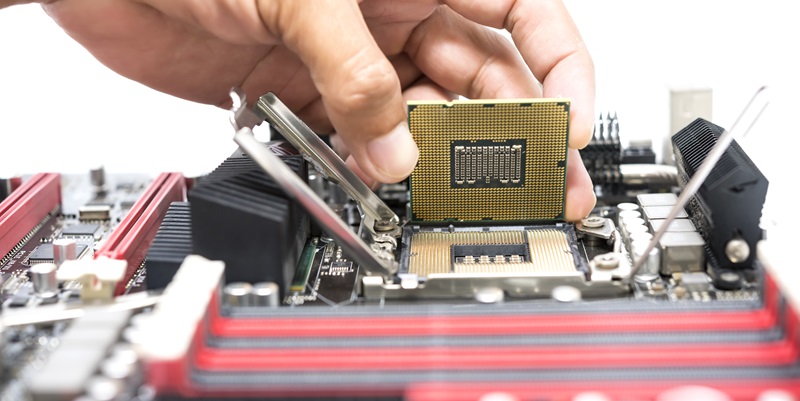
As the march of artificial intelligence (AI) continues to redefine industries, Intel’s Core Ultra processors stand out for their impact on AI in business computing. These chips, which are central to the Intel vPro platform, have been especially designed to meet the growing needs of AI in the corporate world. The Core Ultra processors offer more than just incremental updates; they are instrumental in pushing the envelope of what’s possible in enterprise AI, overcoming previous technical limitations.
Intel’s foray into AI-tuned chips with its Core Ultra series marks a significant shift toward equipping companies with the necessary computational power. With these processors, businesses can now leverage AI in ways that were once considered out of reach, addressing complex problems with greater efficiency and innovation. Intel’s commitment to enhancing AI capabilities through the Core Ultra lineup promises to catalyze a new wave of productivity and intelligent solutions across industries.
Unprecedented Productivity and Performance
The introduction of the Intel Core Ultra signifies quantum leaps in productivity within the enterprise environment. Surpassing previous expectations, these processors are bringing potential gains of up to 47% in office productivity. This is not a marginal improvement but a transformative change that can redefine how tasks and processes are executed within an enterprise. Such a change is made possible through the inclusion of new neural processing units (NPUs) that offload and accelerate AI tasks, allowing traditional CPU cores to focus on other critical operations.
AI is a resource-intensive domain, and the optimized fusion of NPUs with CPU cores in the Core Ultra processors enables enterprises to run AI applications smoothly and more efficiently than before. The sheer computational heft that these processors endow an enterprise can significantly shorten the time taken for data processing tasks, analytics, and AI-driven decision-making processes, thus enhancing overall business agility and competitive advantage.
Enhanced Security and Manageability
Intel’s Core Ultra processors are engineered with top-tier security in mind, as they utilize AI to proactively tackle cyber threats. These processors are built to preempt, identify, and counteract security issues promptly, thereby fortifying enterprise systems at their core. Such advanced security integration speaks to Intel’s commitment to safeguarding data and operations at the fundamental processor level.
On the manageability front, these processors excel with enhanced features that streamline system administration for IT departments. The processors’ compatibility with the upgraded Intel vPro platform is a significant boon, offering better stability and ease of use. This translates to seamless transitions to new technologies, along with more efficient deployment, monitoring, and upkeep of enterprise IT infrastructure. The enhancements in Intel’s latest processors affirm a dedication to improving the manageability and security landscape of enterprise computing.
AI Acceleration and Industry Partnerships
Intel’s Core Ultra processors, featuring integrated Intel Arc GPUs, bolster graphic performance and expedite AI tasks. Anticipating the surge of AI in computing, Intel’s processors are primed for the next generation of AI-centric applications. The forthcoming 14th Gen Intel Core processors aim to empower desktops and workstations further, harnessing AI’s potential across a myriad of uses.
To maximize these innovations, Intel partners with top software vendors to tailor over 300 AI-enhanced features for business. This strategic collaboration ensures the processors’ advanced hardware is matched by a powerful software ecosystem, primed for commercial success.
The Core Ultra and vPro platforms signify a new era in corporate computing, melding AI-driven performance with a focus on productivity, security, manageability, and eco-friendliness. Intel’s comprehensive strategy in enterprise AI positions it as a pivotal force shaping a smarter, more robust business landscape.