

Dominic Jainy is a leading IT professional and strategist specializing in the convergence of artificial intelligence, machine learning, and blockchain technology. With a career dedicated to exploring how these digital frontiers reshape physical industries, he has become a pivotal voice in the discussion surrounding the rapid evolution of humanoid robotics. As global powers race to integrate high-torque actuation with neural-network-driven motion, Dominic provides a unique perspective on the technical breakthroughs and strategic shifts currently unfolding in the sector.
The following discussion explores the transition of humanoid platforms from simple bipedal movement to high-dexterity tasks like traditional sword forms. We delve into the mechanics of imitation learning, the economic implications of China’s aggressive $16,000 pricing models, and the inevitable shift of these technologies from commercial labs to complex, unstructured environments such as disaster zones and logistics hubs.
Humanoid platforms have moved beyond simple bipedal locomotion to executing high-torque sword forms requiring whole-body coordination. What breakthroughs in real-time sensor feedback and predictive motion planning enabled this fluidity, and how do these martial skills translate to industrial or surgical precision?
The transition from the cautious, shuffling gait of early robots like ASIMO to the fluid, high-torque sword forms we see today is rooted in the sophisticated integration of the entire kinetic chain. To execute a sweeping cut with a traditional Chinese jian, the robot must manage torque across dozens of actuated joints simultaneously, moving from foot placement through hip rotation to wrist modulation. This fluidity is enabled by high-torque, low-latency actuators that respond to real-time sensor feedback in milliseconds, allowing the machine to maintain balance even during rapid directional changes or the shifting weight of a blade. These martial skills are not just for show; the precision required to stabilize a core while articulating a shoulder translates directly to high-stakes environments. For instance, the same whole-body coordination used in a defensive posture can be adapted for surgical assistance or complex construction tasks where a robot must apply varying degrees of pressure while maintaining absolute structural stability.
Training robots via imitation learning from human motion-capture data has significantly accelerated skill acquisition. How does reinforcement learning refine these movements for better balance and energy efficiency, and what are the technical hurdles when mapping human trajectories onto robotic kinematic structures for complex tool manipulation?
Imitation learning provides the initial blueprint by mapping human joint trajectories—captured via motion-capture suits or high-resolution cameras—onto the robot’s specific kinematic structure. However, because a robot’s weight distribution and joint limits differ from a human’s, reinforcement learning algorithms are essential to bridge the gap by running thousands of simulations to optimize for energy efficiency and fidelity. One major technical hurdle is “grip modulation” and the management of external forces; a robot swinging a blade must account for centrifugal force that a human feels intuitively but a machine must calculate. We have seen process milestones where research groups at Stanford and MIT have cut training times significantly, moving from months of manual programming to just weeks of AI-led refinement. This allows the robot to “learn” how to fold laundry or execute a sword spin by understanding the underlying physics of the motion rather than just mimicking a series of coordinates.
With mass production goals set for 2027 and prices for some platforms dropping to around $16,000, the humanoid market is shifting rapidly. How does this aggressive pricing and subsidy-driven ecosystem affect global competition, and what trade-offs in safety or reliability might arise from such a high-speed development cycle?
The aggressive push for mass production by 2027, particularly in China, has created a hyper-competitive ecosystem where the Unitree G1 is already being offered at a starting price of roughly $16,000. This is a staggering fraction of the cost of Western counterparts, driven by heavy government subsidies and a “civil-military fusion” doctrine that accelerates commercialization. While this speed drives innovation, the primary trade-off is often found in the rigor of safety and long-term reliability standards; Western firms like Boston Dynamics or Tesla tend to emphasize exhaustive testing for commercial readiness, whereas the current trend in the East favors rapid iteration and public capability demonstrations. This creates a global rift where the market must eventually choose between the high-cost, high-reliability models of the West and the rapidly evolving, budget-friendly platforms emerging from the East. The sheer volume of Chinese startups like Fourier Intelligence and Galbot ensures that breakthroughs are absorbed almost instantly across the industry, forcing a global re-evaluation of procurement cycles.
Advanced dexterity and dynamic balance in humanoids suggest capabilities far beyond simple laboratory demonstrations. How do these skills prepare machines for unstructured environments like disaster zones or contested logistics hubs, and what practical steps should be taken to manage the transition from commercial to military applications?
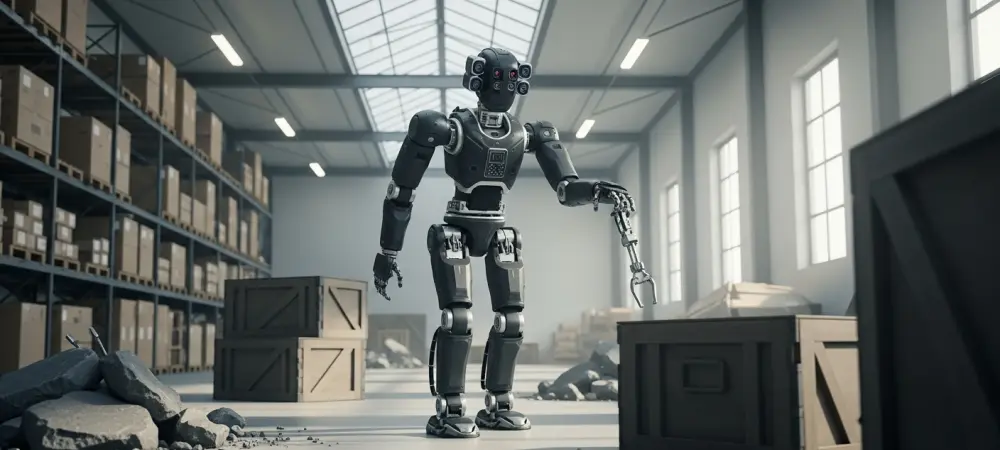
The ability to maintain balance while wielding a tool in a choreographed form is the ultimate proof of concept for operating in “unstructured environments” like a disaster-damaged building or a cluttered logistics hub. In these zones, wheeled or tracked robots fail because they cannot navigate over debris or reach human-centric controls, but a humanoid with dynamic balance can step over obstacles and use existing tools. The transition to military or contested logistics applications requires a shift from purely dexterous movement to “resilience to external forces,” where the robot can recover its footing if pushed or if it encounters uneven terrain. Practical steps for this transition include hardening the AI against electronic interference and ensuring that the high-torque actuators can operate under extreme temperature variants. While a sword-wielding robot may look like a prototype for combat, its true value lies in its potential to perform “contested logistics”—moving supplies through areas where traditional infrastructure has collapsed.
The integration of high-torque actuators and AI-driven motion planning allows robots to interact with the physical world with human-like adaptability. Beyond manufacturing, which specific sectors are most prepared for this level of humanoid dexterity, and what infrastructure changes are required to support their deployment?
Beyond the factory floor, the sectors most prepared for this level of dexterity are elder care, agricultural harvesting, and disaster response. In elder care, the robot’s ability to engage its entire kinetic chain for stabilization is vital for safely assisting a person with mobility, while in agriculture, the “grip modulation” perfected through tool use allows for the delicate picking of crops without bruising. To support this, we need significant infrastructure changes, specifically in local edge-computing arrays to handle the massive data processing required for real-time motion planning without lag. We also need to standardize charging interfaces and create “robot-friendly” workspaces that, while designed for humans, lack the minor hazards—like loose cables or deep pile carpets—that can still trip up current bipedal systems. The roadmap for this transition starts with pilot programs in controlled warehouse logistics, moving toward semi-structured environments like hospitals by the end of this decade.
What is your forecast for humanoid robotics?
I forecast that by 2030, the “humanoid-as-a-service” model will become a standard operational expense for mid-to-large-scale logistics and healthcare facilities, as the cost of hardware continues to plummet toward the price of a mid-range sedan. We will move away from the spectacle of “sword-wielding” demonstrations and toward invisible integration, where these machines perform the dull, dirty, and dangerous tasks that currently cause high turnover in the human workforce. The critical bottleneck will shift from hardware dexterity to “common-sense AI,” where robots must not only move like humans but also understand the social context of their environments to operate safely alongside us. Ultimately, the successful integration of humanoids will be measured by how quickly they become unremarkable—a seamless part of the architectural and economic fabric of our daily lives.