

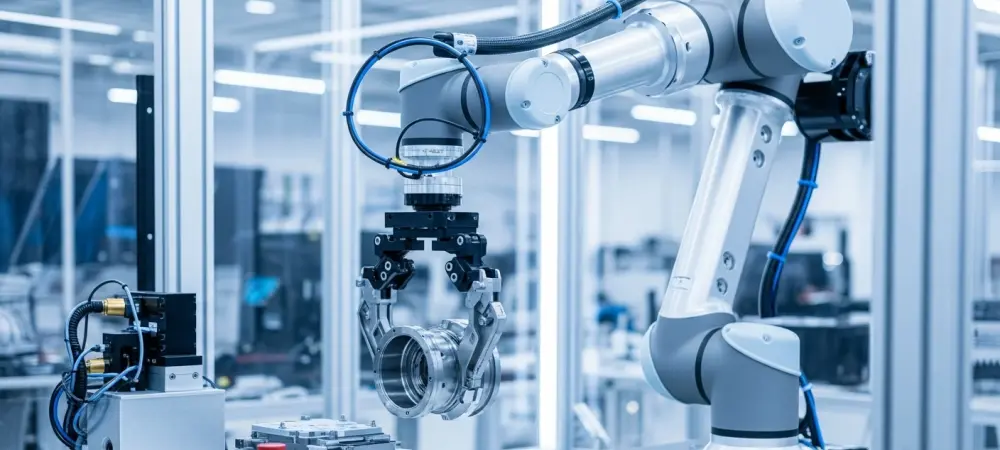
The modern manufacturing floor is no longer a place where massive size dictates power, but rather a space where the ability to handle heavy loads within a tiny footprint determines success. As floor space becomes a premium in modern smart factories, the emergence of small-scale robots capable of lifting substantial loads is redefining the limits of automated production. This trend highlights a shift from sprawling, dedicated lines toward dense, modular environments that prioritize agility. High-payload compact robotics represent the intersection of heavy-duty capability and surgical precision, allowing manufacturers to achieve high throughput without expanding their physical facilities. By shrinking the hardware while increasing the lifting capacity, industrial leaders are effectively densifying their production potential for a more competitive global market.
The Surge in Demand for Small-Scale Powerhouse Robots
Market Dynamics and the Shift Toward High-Density Automation
Recent industry data indicates a significant uptick in the adoption of small-to-medium robotics that defy traditional payload-to-size ratios. Manufacturers in the electronics and automotive sectors are increasingly moving away from sprawling assembly lines in favor of dense, modular production cells. This evolution is reflected in the growing demand for robots in the 10kg to 20kg payload class that can fit into spaces previously reserved for much lighter machines. The push for higher throughput in smaller areas is driving a compound annual growth rate in the “compact-heavy” segment, as facilities look to maximize every square foot of operational space.
Moreover, the necessity for rapid reconfiguration in response to fluctuating consumer demands has made these powerhouse robots indispensable. Rather than rebuilding entire wings of a factory, engineers now swap out modular units that handle heavier components in the same footprint as a standard picking arm. This transition toward high-density automation is not merely a preference but a strategic response to the rising costs of industrial real estate and the need for extreme operational flexibility.
Case Study: Technical Prowess of the KR AGILUS ultra Series
The KUKA KR AGILUS ultra serves as a prime example of this trend, pushing the boundaries of the small robot category with a payload capacity of up to 16 kg. Unlike its predecessors, this platform balances high rigidity with faster axis movements and reduced vibration, allowing for the handling of complex tooling or multiple workpieces simultaneously. Its application in real-world scenarios—such as high-speed semiconductor packaging and precision inspection—demonstrates how a reach of 900 mm to 1100 mm combined with superior positioning accuracy can drastically minimize cycle times.
Furthermore, the integration of ISO Class 5 cleanroom certification and ESD protection showcases its specialized utility in high-stakes electronics manufacturing. These technical attributes ensure that the robot remains stable under the stress of higher payloads while maintaining the delicate touch required for sensitive components. The internal cable routing further enhances this by reducing interference contours, making it easier to integrate the robot into crowded workspaces where external wires would pose a snagging risk.
Industry Perspectives on High-Payload Miniaturization
Experts in the field of industrial automation emphasize that the leap to higher payloads in small frames is not just about raw power, but about environmental resilience and digital integration. Thought leaders point to the necessity of full IP67 certification—as seen in the KR AGILUS ultra—which allows these compact units to function in harsh conditions involving lubricants and splash water, such as injection molding cells. This level of protection ensures that miniaturization does not come at the cost of durability or longevity in the field.
Additionally, the shift toward “AI-ready” control architectures, like the KR C5 micro and iiQKA.OS2 operating system, is viewed as a critical step. These advancements allow robots to adapt to software-based enhancements, ensuring that the hardware remains relevant as machine learning and predictive maintenance become standard industry practices. By decoupling the mechanical limits from the software capabilities, manufacturers now deploy systems that get smarter over time, even while performing the most physically demanding tasks.
The Future of Integrated and Decentralized Automation
The trajectory of compact robotics suggests a future where automation is increasingly decentralized and highly versatile. As industries continue to prioritize flexibility, these high-payload small robots take on more autonomous roles within integrated machine-tending cells. The ability to mount these units on floors, walls, or ceilings allows for creative facility layouts that were previously impossible. This flexibility empowers designers to rethink the verticality of their factories, moving processes off the floor and into previously unused spatial dimensions.
While challenges remain regarding heat dissipation in smaller high-torque motors and the complexity of internal cable routing, the trajectory points toward a unified platform that synthesizes physical durability with advanced digital control. This evolution will likely lower the barrier to entry for smaller manufacturers while providing global giants with the tools to further densify their production capabilities. The focus is shifting toward a seamless blend of mechanical strength and cloud-connected intelligence that operates in almost any environment.
Conclusion: Redefining the Industrial Footprint
The rise of compact high-payload robotics represented a pivotal shift in manufacturing that proved size was no longer a limitation for industrial strength. By combining the power of a 16 kg payload with the agility of a small-frame design and the intelligence of modern operating systems, companies like KUKA set a new standard for efficiency. Production environments became more crowded and demanding, making the ability to deploy robust, AI-ready automation in a minimal footprint a hallmark of a competitive enterprise.
Moving forward, decision-makers focused on auditing their current floor plans to identify where high-density cells could replace outdated, sprawling machinery. The adoption of these systems required a mindset shift from expanding square footage to optimizing cubic volume through wall and ceiling mounts. Organizations that prioritized the integration of cleanroom-certified and environmentally hardened units secured a more resilient supply chain. Ultimately, the industry moved away from the constraints of traditional robotics and embraced a future where power and compactness coexisted to drive unprecedented levels of precision and throughput.