

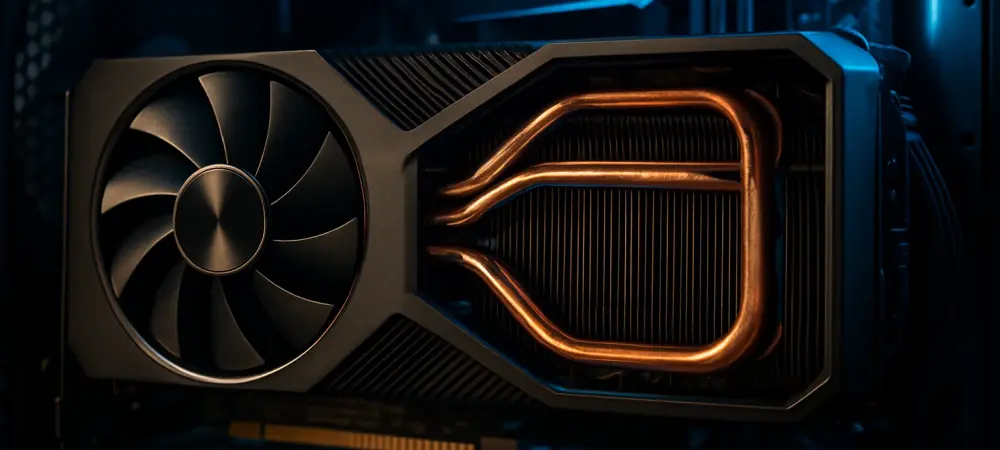
The transition to a unified ML path simplifies the development of upcoming AAA titles by reducing the fragmentation of upscaling technologies across different hardware tiers. On October 20, 2026, AMD fundamentally altered its approach to graphics technology by confirming that FidelityFX Super Resolution (FSR) 4.1, the latest machine-learning-based upscaling and frame reconstruction model, would no longer be exclusive to its newest hardware. Originally designed for the Radeon RX 7000 and the flagship RX 9000 Series, this technology is now being extended to the Radeon RX 6000 Series, several high-performance Ryzen AI processor families, and the Xbox Series X|S console ecosystem. This move is significant because it brings modern, AI-driven upscaling to hardware that first entered the market in 2020. For a company that has spent years competing with proprietary solutions, the decision to backport a high-end machine-learning model to older silicon represents a major strategic pivot. It signals a clear intent to prioritize longevity and accessibility over the hardware gating often seen in the semiconductor industry, where new features are frequently used as leverage to force consumers into physical hardware upgrades.
The Technological Core: Mastering INT8 Efficiency
The technological foundation of this announcement lies in the remarkable efficiency of the INT8 machine-learning model used in the 4.1 iteration of the software. When the engineering team originally developed this version for the RDNA 4-based hardware, the industry assumption was that such a sophisticated model would require the dedicated AI accelerators found only in the most modern graphics units. However, developers successfully optimized the 8-bit integer model to fit within the compute budget of the RDNA 2 architecture. By proving that the existing model could run efficiently on older hardware without a specialized hardware redesign, the company effectively consolidated its upscaling stack. This technical breakthrough allows for a unified software solution across three full generations of desktop graphics cards, providing a consistent experience for users who are not yet ready to transition to the latest flagship components or specialized workstations.
By eliminating the need for developers to support multiple disparate versions of upscaling for different hardware tiers, this optimization streamlines the experience for both creators and end-users. This consolidation means that the same neural network paths used to enhance image quality on high-end desktop rigs can now be leveraged by users with mid-range cards from several years ago. The shift away from simpler spatial or temporal methods toward a robust machine-learning approach ensures that the “visual tax” of upscaling is greatly reduced. Artifacts such as shimmering on thin geometry or ghosting behind fast-moving objects, which plagued earlier iterations of non-ML upscalers, are addressed through the predictive capabilities of the INT8 model. This results in a cleaner, more stable image that preserves fine detail even when the internal rendering resolution is significantly lower than the native output of the display.
Revitalizing the Radeon RX 6000 Series: A Second Life for Legacy Silicon
The immediate beneficiaries of this update are owners of Radeon RX 6000 Series graphics cards, who are receiving a primary feature upgrade that defies the typical product lifecycle. In a standard industry cycle, hardware that is four to six years old is usually relegated to legacy support, receiving only minor security patches or basic driver stability updates. However, by providing these users with a modern machine-learning upscaler, the manufacturer is effectively extending the useful life of these cards in a market where GPU prices have remained volatile. Memory supply constraints and global economic factors have made upgrading to new cards cost-prohibitive for many budget-conscious gamers, making software-based performance boosts more valuable than ever. This strategy serves as a powerful retention play, fostering brand loyalty by demonstrating that hardware maintains its value through long-term support rather than forced obsolescence.
Users ranging from those with the high-end 6900 XT down to the budget-friendly 6400 class can now access image reconstruction that significantly improves stability compared to previous spatial methods. This is particularly impactful for those playing at 1080p or 1440p, where the loss of detail during upscaling is often more noticeable than at 4K. By leveraging the power of machine learning, these older cards can maintain competitive frame rates in modern titles that were originally designed for much newer hardware. This democratization of high-end features ensures that the barrier to entry for modern gaming remains accessible, preventing a scenario where a large portion of the gaming community is left behind by rapidly advancing engine requirements. The ability to toggle on a sophisticated AI upscaler on a card purchased years ago is a rare occurrence in an industry that usually demands a new purchase for every major technological leap.
Mobile and Handheld Integration: Redefining Performance on the Go
Beyond the realm of desktop computers, the rollout of this technology is targeting the rapidly expanding market for handheld gaming PCs and high-performance laptops. The integration of version 4.1 includes specific processor families such as the Ryzen AI Max and the Ryzen Z2 series, which serve as the backbone for modern portable gaming devices. Handheld units operate within extremely strict power and thermal envelopes, where every efficiency gain translates directly into better battery life and reduced heat generation. By providing a machine-learning upscaler to these mobile chips, users can achieve a high perceived resolution and stable frame rate while the hardware actually renders at a lower, less power-intensive native resolution. This is vital for the continued growth of the handheld segment, as it allows portable devices to play demanding AAA titles that would otherwise be unplayable without significant visual compromises.
The specific focus on the Ryzen Z2 family ensures that the next generation of portable consoles will have the software overhead necessary to handle increasingly complex game engines. When a device is limited by its physical size, it cannot simply use more power to overcome performance hurdles. Instead, intelligent software solutions must do the heavy lifting. By optimizing the INT8 model for these integrated graphics solutions, the manufacturer has provided a way to bridge the gap between mobility and high-fidelity visuals. Laptop users also benefit from this, as the AI-driven upscaling allows for quieter operation during gaming sessions by reducing the load on the cooling fans. This holistic approach to the ecosystem ensures that whether a person is playing on a massive desktop monitor or a seven-inch handheld screen, the benefits of machine-learning reconstruction are consistently available and effective.
The Console Milestone: Bringing Machine Learning to Xbox Series X|S
One of the most high-profile elements of this technological expansion involves the Xbox Series X|S consoles, which are built on custom systems-on-a-chip using RDNA 2 technology. While console-side updates are historically more complex due to rigorous certification processes and the need for developer-specific optimization, the partnership with Microsoft has paved the way for a major milestone. The confirmation that this advanced upscaling is coming to the Xbox platform suggests that console titles could soon see a significant jump in visual clarity and frame rate stability. This is a crucial development for the aging Series X and Series S hardware, helping them keep pace with demanding “next-gen” game engines that push the limits of modern console silicon. The collaboration ensures that the upscaler meets the specific performance standards required for a seamless living room experience, where visual artifacts are often more apparent on large-screen televisions.
This integration is more than just a performance boost; it represents a fundamental change in how console hardware is maintained over its lifespan. Traditionally, the performance of a console was fixed from the day it launched, with only minor optimizations possible through better coding practices. By introducing a sophisticated machine-learning upscaler mid-cycle, the manufacturer is effectively providing a hardware-like upgrade through a software update. This allows developers to target higher visual settings or more complex physics simulations without sacrificing the 60 frames-per-second target that many players now demand. For the Series S in particular, which often struggles with lower internal resolutions, the addition of AI-based reconstruction could be the key to maintaining parity with its more powerful sibling in terms of image stability and overall presentation quality.
Strategic Positioning: The Battle Against Proprietary Hardware Gating
The expansion of this technology represents a significant escalation in the ongoing competition between the major graphics manufacturers. For several years, proprietary machine-learning solutions were considered the gold standard for image quality because they relied on dedicated hardware cores. However, this approach has often been criticized for hardware gating, where older cards are left without the latest features despite having the raw compute power to handle them. The counter-strategy of prioritizing openness and backward compatibility creates a much larger addressable market. By making the latest version work across six years of hardware, the company is positioning itself as a pro-consumer alternative that values the investment of its users. This democratized approach to AI-enhanced gaming is a key differentiator that helps capture the mid-range and budget segments where value is the primary driver of purchase decisions.
While rival technologies might still hold a slight edge in raw image quality in extremely specific high-end scenarios, the broader pitch is centered on the idea that high-quality upscaling should work for everyone. This philosophy forces the rest of the industry to reconsider how they deploy new features. If a software-based machine-learning model can provide 95% of the quality of a hardware-based solution while supporting ten times the amount of hardware, the value proposition shifts dramatically in favor of the more inclusive option. This competitive dynamic ultimately benefits the consumer, as it pushes all manufacturers to be more innovative with their software stacks. The focus on a unified, cross-platform solution also makes it much more attractive for developers, who generally prefer implementing technologies that cover the widest possible range of their target audience with a single implementation effort.
Implementation and Infrastructure: The Role of Adrenalin Edition 26.10.1
The delivery mechanism for this massive update on the PC side is the AMD Software: Adrenalin Edition 26.10.1 driver, which serves as the gateway for users to access these new capabilities. It is a critical distinction for users to understand that the hardware capability itself is unlocked through this system-level driver update rather than through individual game patches. This means that once the driver is installed, the underlying silicon is prepared to handle the machine-learning instructions required by the upscaler. However, there is a necessary nuance to the rollout: individual game developers must still integrate the latest Software Development Kit into their titles to expose the setting in the game’s menu. A driver update does not automatically inject the technology into every game, but it ensures that when a developer does choose to support it, the user’s hardware is fully ready to execute the code efficiently.
For the developer ecosystem, this consolidation is a major benefit that simplifies the quality assurance and development pipeline. Previously, a studio might have had to worry about how their game performed on machine-learning-capable cards versus older hardware generations that lacked those specific features. By providing a unified path that works across multiple generations of RDNA architecture, developers can now implement a single high-quality solution knowing it will serve a vast majority of the user base. This reduces the fragmentation of technology and encourages faster adoption of the latest features in upcoming titles. The move toward a more standardized upscaling environment allows developers to spend less time on edge-case optimizations and more time on enhancing the core gameplay and visual fidelity of their projects, leading to a higher standard of quality across the entire industry.
Navigating the New Era of Graphics Innovation
The strategic expansion of machine-learning upscaling across a wide range of hardware established a new precedent for how technology companies managed their existing product lines. By choosing to optimize the INT8 model for older silicon rather than restricting it to the latest flagship releases, the manufacturer provided a tangible performance boost to millions of users who were previously excluded from the AI-driven graphics revolution. This decision validated the raw compute capabilities of older architectures and demonstrated that software innovation could effectively mitigate the need for frequent hardware upgrades. Developers found that the unified path allowed for more streamlined integration, which resulted in a faster adoption rate for high-quality reconstruction in various gaming environments. The move successfully bridged the gap between different tiers of gaming hardware, ensuring that the visual experience remained consistent whether the user was on a desktop, a handheld, or a home console.
Moving forward, the industry learned that the perceived value of a graphics platform was heavily dependent on its long-term software support and ecosystem integration. Organizations that invested in these types of backward-compatible updates saw increased brand loyalty and a more stable market share in the budget and mid-range segments. Users were encouraged to look for platforms that offered longevity, viewing their hardware purchases as multi-year investments rather than short-term acquisitions. The successful collaboration between hardware manufacturers and software giants like Microsoft further emphasized the importance of cross-industry partnerships in delivering a high-quality user experience. As the demand for higher resolutions and more complex simulations grew, the reliance on intelligent upscaling became a permanent fixture of the development process. This era of graphics innovation proved that the most effective way to advance the medium was to ensure that the latest breakthroughs were accessible to the broadest possible audience, creating a more inclusive and technologically advanced gaming landscape for everyone.