

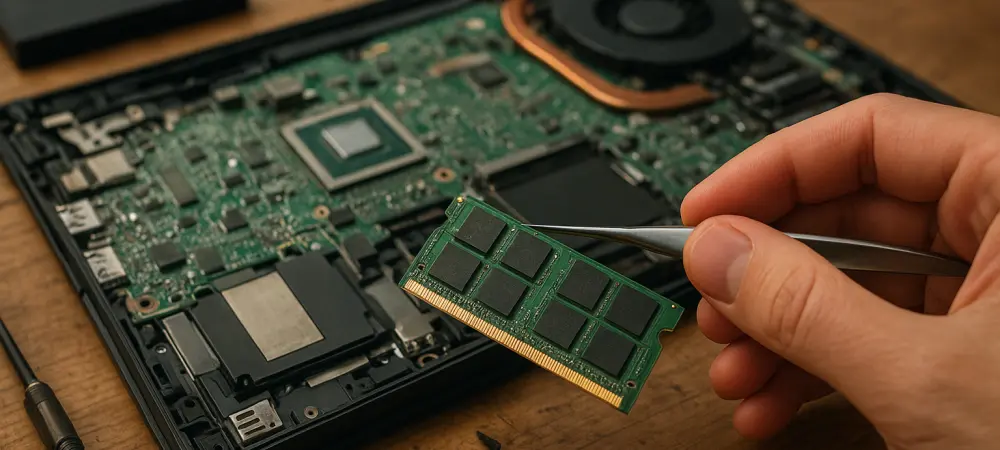
The rapid reallocation of silicon wafer capacity toward high-bandwidth memory for artificial intelligence is currently cannibalizing the supply chains for consumer electronics and PC components. As the global computing landscape in 2026 undergoes this profound structural transformation, the primary driver remains a critical shortage of memory components that has left manufacturers scrambling for scraps. This crisis, characterized by a severe lack of Dynamic Random-Access Memory and NAND flash storage, has moved beyond the typical cyclical nature of the semiconductor industry that analysts have observed for decades. Unlike past fluctuations, which were often sparked by short-term supply chain hiccups or localized natural disasters, the current imbalance is fundamentally reshaping the cost structure of everything from standard productivity laptops to high-end gaming desktops. The industry is witnessing a systemic shift where the logic of the market no longer favors the individual consumer but instead prioritizes the massive infrastructure requirements of the world’s most powerful data centers.
Experts from leading research firms, including Gartner and IDC, indicate that this is not a temporary glitch caused by isolated events but a permanent realignment of semiconductor priorities. The core of the issue lies in a phenomenon now described as AI-driven displacement, where the relentless pursuit of high-performance artificial intelligence infrastructure is effectively cannibalizing the production lines once reserved for consumer-grade hardware. This displacement occurs because the specialized memory required for AI training—specifically High-Bandwidth Memory—shares the same raw silicon foundations as the memory modules found in home computers. As global tech giants continue to pour billions into large language models and generative neural networks, the demand for high-performance silicon has reached a fever pitch, leaving the traditional PC market in a state of perpetual deficit. This has created a reality where the average user is now competing directly with the world’s most profitable corporations for a slice of the global memory supply.
Escalating Costs and Market Contraction
Analyzing Gartner’s Economic Projections: The Rising Bill of Materials
The financial implications of this shortage are staggering when viewed through the lens of recent market data, showing a dramatic departure from the price stability of previous years. Gartner projects that by the end of 2026, the combined prices of DRAM and Solid-State Drives will have surged by an incredible 130%, a figure that would have been unthinkable during the relative abundance of the mid-2020s. This massive increase in the cost of raw components is expected to push the retail price of an average PC up by approximately 17% compared to the previous year, placing a significant burden on both enterprise buyers and individual families. This price hike is not merely a reflection of corporate greed but a direct result of the skyrocketing costs involved in securing silicon wafers that are increasingly diverted to the highest bidder. Manufacturers are finding that the cost of memory is no longer a manageable expense but a volatile variable that can fluctuate wildly within a single production cycle, leading to unprecedented uncertainty in pricing strategies across the hardware industry.
Beyond just making hardware more expensive for the end-user, the shortage is actively preventing market expansion and stifling the growth that many hardware brands expected during this period. Forecasts suggest a 10.4% decline in global PC shipments for the year, a contraction that is not driven by a lack of consumer interest but by the sheer inability of manufacturers to build systems at a sustainable price point. Memory now accounts for nearly 23% of the total manufacturing cost of a computer, up from just 16% in the recent past, which forces brands to either accept razor-thin margins or pass significant price hikes onto their customers. This shift in the Bill of Materials has led to a stagnant retail environment where entry-level machines are disappearing, replaced by mid-range and premium models that can better absorb the increased costs. Consequently, many consumers are holding onto their aging devices for longer, further reducing the volume of new shipments and creating a feedback loop that harms the entire electronics ecosystem.
Impact on Gaming and Graphics Hardware: The Scramble for GDDR Silicon
The graphics processing unit sector is facing its own unique set of challenges as it competes for the same underlying GDDR memory technology that powers the world’s most advanced visual computing. Because these components are closely related to the DRAM used in system memory, they are highly susceptible to the same supply constraints that have plagued the broader market since the beginning of 2026. Industry insiders note that major players like AMD have already begun notifying their global partners of significant price increases for consumer-focused chipsets and motherboard components as they head into the final months of the year. The bottleneck in GDDR production has become so severe that several mid-range graphics cards have seen their production runs cut short or delayed indefinitely, as manufacturers prioritize the limited memory supply for high-end professional cards that command much higher premiums. This leaves the average gamer in a precarious position, facing inflated prices for hardware that was intended to be affordable.
Nvidia’s current strategy highlights the industry-wide trend of prioritizing the most profitable sectors over the traditional gaming audience that originally built the brand. The company has reportedly moved its silicon allocation away from flagship consumer cards like the RTX 5090 in favor of professional and data center products that serve the growing AI industry. Even when consumer cards receive memory upgrades to stay competitive, such as the rumored 24GB configuration for the RTX 5080, it often worsens the overall shortage by consuming more of the limited GDDR supply. This creates a double-jeopardy scenario for enthusiasts who face higher prices for the GPUs themselves and increased costs for the system RAM required to support modern software. The result is a gaming market that feels increasingly exclusionary, where the cost of entry for a modern high-fidelity experience has risen beyond the reach of the average hobbyist. As silicon continues to be funneled toward server farms, the local gaming machine is becoming an expensive luxury that requires careful financial planning.
Technical Bottlenecks and Historical Context
Production Limits and Stretched Lead Times: The Logistics of Scarcity
Data from technical analysts points to severe bottlenecks within the fabrication process that prevent any rapid resolution to the current crisis. Lead times for DRAM—the window between a manufacturer placing an order and actually receiving the product—have extended to roughly 20 weeks, making it nearly impossible for PC builders to respond to sudden shifts in demand. While global supply is growing at a rate of about 16%, this growth is nowhere near enough to keep pace with the triple-digit expansion in demand coming from the artificial intelligence sector. Every new AI training cluster that comes online requires thousands of memory modules, effectively vacuuming up the output of entire factory shifts before that silicon can even be considered for the consumer market. This logistical nightmare has forced many smaller hardware companies to halt production entirely, as they simply cannot wait five months for the components required to finish their products.
The situation is even more dire for specialized components like Single-Level Cell NAND, which is frequently used in high-end industrial systems and premium consumer goods. Prices for this specific storage type are expected to climb by as much as 170% in the latter half of the year, driven by the same capacity constraints affecting the broader semiconductor world. Because the construction of new semiconductor fabrication plants, or fabs, requires years of planning and billions of dollars in capital investment, there is no quick way to increase capacity to meet this sudden surge. Even with massive government subsidies and private investments, the physical reality of building these high-tech facilities means that relief is not expected until the next generation of plants finally comes online. This leaves the industry in a state of forced patience, where the only variable that can be controlled is the price, leading to the aggressive bidding wars that have come to define the 2026 market.
Why the 2026 Crisis Is Unique: A Structural Shift in Global Demand
To grasp the severity of the current situation, it is helpful to compare it to previous market shocks, such as the pandemic-era shortages that occurred several years ago. Those events were largely classified as bullwhip effects, caused by temporary surges in remote work requirements or speculative bubbles like crypto-mining. However, the 2026 crisis is considered structural rather than cyclical, meaning the fundamental drivers of demand have changed permanently. The world has moved from a period of computing abundance to an era of specialized scarcity, where the architectural requirements of modern software have outpaced the physical ability of the world to produce the necessary hardware components.
The entities driving the current demand are not speculative buyers looking for a quick profit, but global cloud providers building the essential infrastructure of the modern digital economy. By signing long-term, multi-year contracts that guarantee they will purchase every chip produced, these tech giants provide memory suppliers with a powerful incentive to permanently pivot their business models away from the consumer market. This shift risks leaving the average PC user in a permanent state of lower priority, essentially becoming a secondary customer for the major silicon foundries. Memory manufacturers now see the high-margin enterprise sector as their primary path to profitability, which means that innovation for consumer DRAM and NAND may slow down as resources are focused on the needs of AI clusters. This structural realignment suggests that the high prices seen today may not be a temporary spike, but the new baseline for a world that is increasingly powered by decentralized intelligence.
The Future Landscape of Personal Computing
Determining Winners and Losers: The New Hierarchy of Silicon
The current market environment has established a clear hierarchy within the tech industry, separating those who control the supply from those who are forced to pay for it. The primary winners are the major memory manufacturers—Samsung, SK hynix, and Micron—who hold a virtual oligopoly on the high-bandwidth memory market. These firms are enjoying record-breaking profit margins as they leverage the AI boom to dictate terms to the rest of the electronics world. For these companies, the crisis is not a problem to be solved but a highly profitable market condition to be managed, allowing them to reinvest in even more advanced fabrication techniques. This concentration of power has allowed the Big Three to exert unprecedented influence over global technology trends, deciding which sectors receive the necessary components to grow and which must wait for the leftovers.
In contrast, traditional PC manufacturers and end-users are finding themselves at a significant disadvantage in this new economic order. Large Original Equipment Manufacturers like Dell, HP, and Lenovo have very little leverage against the memory giants, as their orders are now dwarfed by the massive volume requirements of cloud infrastructure providers. This power imbalance has left these companies with few options but to raise prices and simplify their product lines to survive the squeeze. For the average consumer, 2026 has become a year of forced austerity, where the idea of upgrading a personal computer every two or three years is no longer a standard task but a significant financial burden. The digital divide is widening as high-performance computing becomes a tool reserved for corporations and the wealthy, while the average user is left with more expensive, less capable hardware options.
Long-Term Outlook and Consumer Advice: Adapting to the New Reality
For those looking to buy or build a computer in the current climate, the consensus among industry experts is one of immediate urgency. The traditional strategy of waiting for a better deal or holding out for the next seasonal sale is currently seen as ineffective, as contract prices are expected to continue their upward trajectory well into 2027. Most analysts believe that the shortage will persist until the new manufacturing plants currently under construction by TSMC, Intel, and the major memory providers finally reach high-volume production. Until those facilities are operational, the supply of silicon will remain fixed, while the demand for AI hardware shows no signs of slowing down. This creates a market where the best time to purchase necessary hardware was yesterday, and the second-best time is today, before another round of price hikes hits the retail shelves.
The 2026 memory shortage signaled the end of an era where high-speed storage and high-capacity memory were treated as cheap, abundant commodities. As artificial intelligence became the primary engine of the global economy, the consumer PC market had to learn to exist in a world where it was no longer the primary focus of the semiconductor industry. The industry eventually realized that the bottleneck of digital progress was no longer the raw speed of the processor, but the availability and cost of the memory that fed it. In response, savvy builders began prioritizing the most critical components first, securing memory and storage as soon as budget allowed to avoid being priced out of the market entirely. This transition of memory from a simple commodity to a major industrial bottleneck has fundamentally changed how the world thinks about hardware, making 2026 the year that digital scarcity became a permanent fixture of the modern computing landscape. Manufacturers and consumers alike were forced to adapt to a reality where silicon was the new gold, and every megabyte carried a premium that reflected its role in the artificial intelligence revolution.