

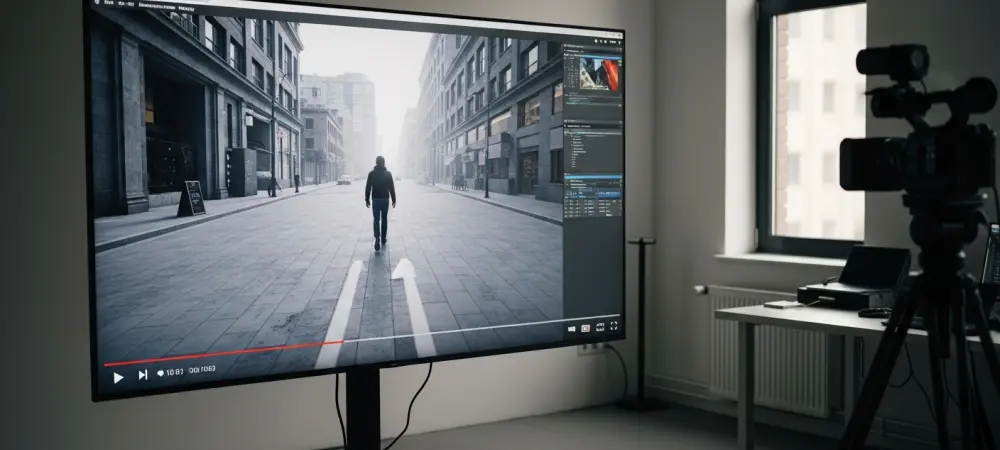
The transition from jerky, disjointed clips to fluid cinematic sequences marks a historic turning point in the evolution of generative digital media, moving us past the era of awkward visual transitions. For the first time, the industry is witnessing the arrival of tools capable of sustaining high-fidelity visual logic over extended durations, a feat that once seemed years away. At the center of this movement is ByteDance’s Seedance 2.5, a model designed to replace the patchwork nature of early AI creations with a sophisticated, unified approach to motion and sound.
This technological leap is not just an incremental improvement in resolution or frame rate; it represents a fundamental change in how artificial intelligence conceptualizes time and space. While previous iterations functioned primarily as high-speed image generators, the newest architecture treats video as a continuous narrative medium. This shift is critical for professional sectors, including advertising, film, and digital marketing, where the requirement for stability often outweighs the mere novelty of automated content creation. Seedance 2.5 attempts to bridge the gap between experimental software and a reliable production asset.
Moving Beyond the Fragmented Aesthetics of Stitched Video
While many AI video tools still struggle to produce more than a few seconds of coherent footage, the introduction of native 30-second generation marks a significant departure from the status quo. For several years, creators have navigated a fragmented landscape where the only way to produce longer content was through manual “stitching.” This process involved generating multiple short bursts of video and attempting to join them in post-production, a technique that frequently resulted in jarring shifts in lighting, texture, and character appearance. The loss of visual logic between these clips acted as a persistent barrier to professional adoption, as the resulting flicker often distracted the viewer from the intended message. Seedance 2.5 addresses this specific pain point by delivering half a minute of continuous, native generation in a single take. By eliminating the need for external joining, the model ensures that the scene’s environmental physics and aesthetic style remain uninterrupted from the opening frame to the final second. This seamless flow is particularly valuable for complex sequences where a camera must move through a detailed environment or where a character must perform a multi-stage action. The ability to generate such a long sequence without a break suggests that the underlying model can now hold much more complex data in its active memory than its predecessors.
The impact of this update extends beyond simple convenience for the editor. By removing the technical hurdles of post-production alignment, the tool allows for a more holistic creative process where the focus remains on the storytelling rather than the technical workaround. When a model can produce a 30-second block of footage that maintains its integrity, the potential for using AI in high-stakes commercials and episodic content increases exponentially. This move toward native duration effectively signals the end of the “stitched” era of AI video, promising a future where cinematic continuity is the baseline rather than a rare achievement.
Why Consistency Remains the Final Frontier for AI Creators
The primary hurdle in professional AI video production is not just image quality, but temporal consistency—the ability of a model to “remember” what a character or environment looks like over time. In a commercial setting, “drift” in lighting or facial features can render a project unusable, creating what experts call immersion breakage. If a character’s hair color changes slightly mid-stride or the shadows in a background begin to warp inconsistently, the audience’s suspension of disbelief is shattered. As the industry moves from experimental novelties to serious commercial applications, the need for a reliable tool that can handle brand-specific assets without losing focus is more critical than ever. Consistency is the metric by which professional utility is measured. For a creative agency, an AI tool is only useful if it can replicate a specific product or persona across various scenes without variation. When a brand’s intellectual property is at stake, the “hallucinations” common in early generative models become a liability rather than a quirk. Seedance 2.5 targets this instability by prioritizing the retention of spatial and temporal data. This means the model is specifically trained to track the coordinates of objects and the identity of subjects through every frame, ensuring that the visual narrative remains grounded in reality even as the motion becomes more complex.
Furthermore, maintaining this level of consistency allows for a more predictable production pipeline. Professionals no longer need to generate hundreds of iterations in the hope that one will remain stable enough for the final cut. Instead, the focus shifts toward refining the initial parameters and using the model’s inherent stability to lock in the desired look. By conquering the “final frontier” of temporal consistency, Seedance 2.5 enables creators to treat AI as a dependable digital actor or cinematographer, providing the level of precision required for modern enterprise-level video production.
The Technological Pillars of the Seedance 2.5 Architecture
Seedance 2.5 differentiates itself through four major technical advancements that set a new benchmark for the industry. First, the model utilizes spatial-temporal attention mechanisms to enable 30-second native generation, effectively doubling the current industry standard. This architecture allows the model to process relationships between pixels not only within a single frame but also across the entire timeline of the video. By understanding how a pixel at second one relates to a pixel at second thirty, the model avoids the random morphing that plagued earlier versions of generative video. Second, the model employs a unified joint audio-video architecture where sound and pixels are generated within the same latent space. Unlike traditional workflows where audio is an afterthought added in post-production, Seedance 2.5 generates the auditory landscape simultaneously with the visual one. This ensures that the crunch of footsteps or the rhythm of background music is perfectly synchronized with the movement on screen. This holistic approach to sensory data creates a more convincing and immersive experience, as the audio is born from the same creative logic as the imagery it accompanies. Third, the “reference budget” has been expanded to allow 50 multimodal inputs, such as images and audio clips, which is significantly higher than competing models. This allows users to feed the AI a comprehensive set of visual guides—such as a specific actor’s face from multiple angles or a product’s unique packaging—ensuring the output stays true to the source material. Finally, the introduction of localized region editing allows users to isolate and redraw specific parts of a frame. This means a creator can change a character’s clothing or remove a background object without needing to regenerate the entire 30-second sequence, providing a level of surgical control that was previously impossible.
Validating the Leap: Competitive Benchmarks and Industry Standards
The shift from version 2.0 to 2.5 is not merely about resolution, as 4K capabilities were already integrated into the previous iteration. Instead, the focus is on professional utility and competitive standing. Seedance 2.0 already holds a high Elo rating on the Artificial Analysis blind preference arena, trailing only slightly behind Google’s Gemini Omni Flash. However, by quintupling the reference capacity—moving from 12 items to 50—Seedance 2.5 positions itself as the superior choice for high-stakes advertising campaigns. In these environments, character and product packaging consistency are non-negotiable requirements that earlier models often failed to meet.
Comparing Seedance 2.5 to other market leaders reveals a clear divergence in philosophy. While some models prioritize rapid, short-form generation for social media, ByteDance has optimized this model for the heavy-duty needs of studio production. The sheer volume of reference material the model can process gives it an edge in projects that require a high degree of fidelity to real-world assets. In blind tests, users consistently prefer the output of models that demonstrate high temporal stability, and the jump to 30-second native generation provides a psychological sense of “professionalism” that shorter clips cannot match.
Furthermore, the integration of these features into the Volcano Engine platform provides an enterprise-grade infrastructure that few competitors can mirror. The ability to handle 10-bit color and 4K resolution at 60 frames per second ensures that the output is ready for broadcast or theatrical display. This validation from industry benchmarks confirms that Seedance 2.5 is not just an incremental update but a strategic play for dominance in the high-end creative market. By meeting and exceeding the standards set by established tech giants, the model has established itself as a cornerstone of the professional generative toolkit.
Practical Integration: Balancing High-Cost Renders With Precision Control
To successfully incorporate Seedance 2.5 into a professional workflow, creators must adopt a strategic approach to resource management. Given the token-based billing system, a 30-second 4K render can cost upwards of $23, making it essential to use the localized region editing feature to fix minor flaws rather than restarting full renders. This high cost of entry demands a shift from the “spray and pray” mentality of amateur AI use toward a more deliberate, pre-planned production style. Professionals must treat each render as a significant investment, utilizing the 50-reference slots to “lock in” brand assets and minimize the risk of a failed generation. Moreover, the precision control offered by localized editing allows teams to iterate on specific details without burning through their entire budget. If a 30-second sequence is perfect except for a single background element, the regional manipulation tool becomes the most valuable asset in the creator’s arsenal. This capability mimics the functionality of traditional non-linear editing software, allowing for surgical adjustments that preserve the successful parts of a clip. Adhering to the model’s ethical safeguards, such as invisible watermarking and likeness restrictions, is also vital for maintaining compliance in enterprise-level production environments.
Ultimately, the successful integration of Seedance 2.5 requires a balance between creative ambition and economic reality. By prioritizing the use of reference budgets to define the visual language of a project from the start, agencies can reduce the number of iterations required to reach a final cut. The model’s ability to generate high-fidelity audio alongside the video further streamlines the workflow, reducing the time spent in sound design and synchronization. In this high-cost, high-precision environment, the most successful creators were those who mastered the technical nuances of the architecture to produce flawless, brand-consistent content on the first try. The widespread implementation of Seedance 2.5 transformed the landscape of professional media by bridging the gap between imaginative potential and technical reliability. Agencies discovered that the massive reference capacity allowed for a level of brand precision that was previously unattainable with earlier generative technologies. The transition to native 30-second takes effectively minimized the time spent on tedious post-production adjustments, while the surgical precision of localized editing reduced the overall cost of high-resolution iterations. As professionals moved toward these advanced workflows, they recognized that the true value of the system lay in its ability to maintain consistent visual identities across complex narratives. This shift solidified the role of AI not just as a tool for creating imagery, but as a robust foundation for modern cinematic storytelling.