

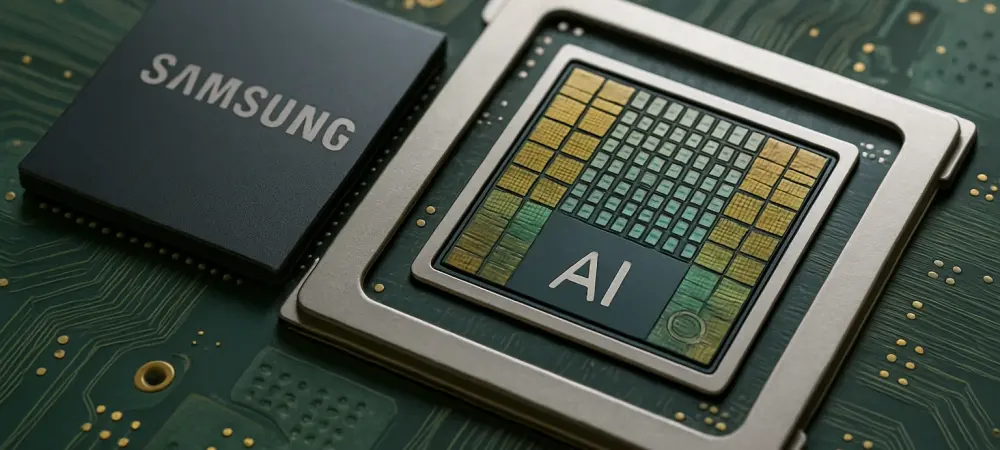
I’m thrilled to sit down with Dominic Jainy, a seasoned IT professional whose deep expertise in artificial intelligence, machine learning, and blockchain offers a unique perspective on cutting-edge technologies. Today, we’re diving into the recent groundbreaking partnership between Samsung and NVIDIA concerning HBM4 AI memory—a development poised to reshape the landscape of high-bandwidth memory and AI infrastructure. In our conversation, we explore the intricacies of this deal, the technical innovations behind Samsung’s HBM4, its significance for NVIDIA’s future AI endeavors, and the broader implications for the competitive HBM market and AI advancements.
Can you walk us through the recent partnership between Samsung and NVIDIA regarding HBM4 technology?
Absolutely. This partnership is a game-changer in the realm of high-bandwidth memory. Samsung has secured a pivotal supply deal with NVIDIA to provide HBM4, their next-generation memory solution tailored for AI applications. This collaboration not only highlights Samsung’s technological prowess but also positions them as a key player in NVIDIA’s supply chain for cutting-edge AI hardware. It’s a strategic alignment, focusing on leveraging HBM4’s capabilities to meet the intense demands of AI workloads, which require massive data throughput and efficiency.
What sets Samsung’s HBM4 apart from other memory solutions in the market?
Samsung’s HBM4 stands out primarily due to its incredible processing speed of 11 gigabits per second, which surpasses the industry standard set by JEDEC at 8 Gbps. This speed advantage translates to significantly higher bandwidth, allowing for faster data handling—a critical factor for AI systems. Additionally, the energy efficiency of HBM4 is a major plus, reducing power consumption while maintaining top-tier performance. These features give Samsung a competitive edge over other manufacturers who are still catching up in terms of raw speed and efficiency.
Could you explain the technical innovations behind Samsung’s HBM4 memory?
Certainly. At the core of Samsung’s HBM4 is their 6th-generation 10-nanometer-class DRAM, which allows for denser memory packing and improved performance over previous generations. Paired with a 4nm logic base die, this design enhances signal integrity and reduces latency, contributing to the overall speed and reliability of the memory. These advancements mean HBM4 can handle the enormous data demands of modern AI models without bottlenecks, making it a robust solution for next-gen computing needs.
How does HBM4 play a role in NVIDIA’s upcoming AI initiatives?
HBM4 is integral to NVIDIA’s future, particularly with their Rubin AI lineup on the horizon. This lineup is expected to push the boundaries of AI performance, and HBM4’s high bandwidth and efficiency are perfectly suited to support the massive computational requirements of these systems. With competitors like AMD rolling out their Instinct MI450 series, NVIDIA needs top-tier memory solutions to maintain a lead in the AI hardware space. Samsung’s HBM4 ensures they have the memory muscle to power their ambitious projects.
What does this deal mean for Samsung’s standing in the HBM market?
This deal is a significant boost for Samsung, especially after facing challenges with their HBM3 offerings in recent quarters. Struggling to keep pace earlier, Samsung has now taken an early lead with HBM4, which could help them regain lost ground against strong competitors like SK hynix and Micron. This success not only revitalizes their HBM business but also reinforces their reputation as an innovator in memory technology, potentially attracting more partnerships and market share in the AI-driven sector.
In what ways do you see HBM4 influencing the broader landscape of AI technology?
HBM4 is poised to accelerate AI development by providing the memory backbone needed for faster, more efficient processing of complex algorithms. Its high bandwidth enables quicker training and inference for AI models, which is crucial for applications ranging from autonomous vehicles to natural language processing. Moreover, as a foundation for AI manufacturing infrastructure, HBM4 supports the scalability of data centers and specialized hardware, paving the way for more robust and accessible AI solutions across industries.
How do you anticipate the HBM market competition will evolve following this announcement?
Samsung’s achievement with HBM4 is likely to intensify competition in the HBM segment. Rivals like SK hynix and Micron will feel the pressure to accelerate their own HBM4 development or innovate in other areas to match Samsung’s speed and efficiency benchmarks. We could see a flurry of advancements as these companies strive to capture market share in the AI memory space, ultimately benefiting consumers with better technology and potentially more competitive pricing.
What is your forecast for the future of high-bandwidth memory in AI applications?
Looking ahead, I believe high-bandwidth memory like HBM4 will become even more critical as AI applications grow in complexity and scale. We’re likely to see continuous improvements in speed, capacity, and energy efficiency as the demand for real-time processing in AI skyrockets. HBM will be at the heart of next-generation data centers and edge computing devices, driving innovations in everything from personalized AI assistants to large-scale industrial automation. The race to dominate this space will be fierce, but it’s an exciting time for breakthroughs that could redefine how we interact with technology.