

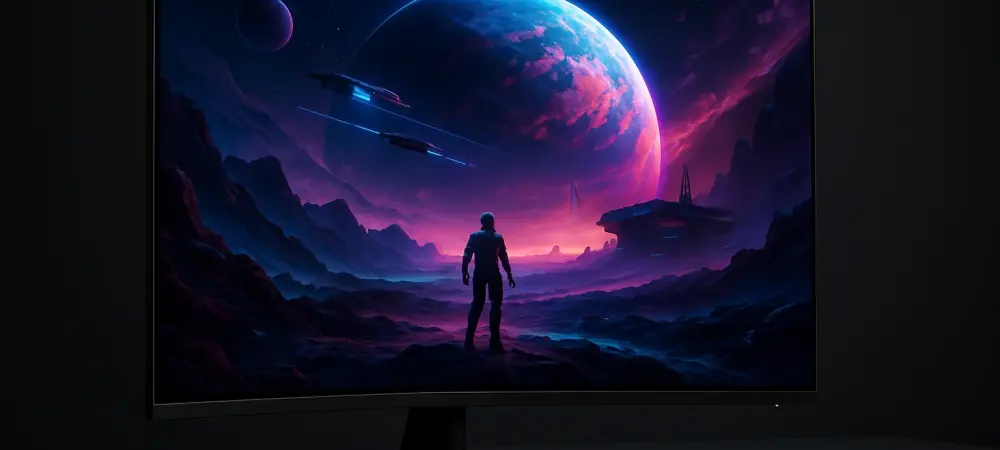
In the ever-evolving realm of gaming, a technological breakthrough is redefining how players experience their favorite titles, with QD-OLED technology emerging as a game-changer that delivers stunning clarity and lightning-fast performance. This cutting-edge display tech, once reserved for high-end markets, is now capturing the attention of gamers worldwide by offering visuals that rival reality itself. The significance of this trend lies in its potential to transform gaming into a more immersive and accessible experience for all, bridging the gap between premium quality and affordability. This analysis delves into the rise of QD-OLED in gaming monitors, spotlighting AOC’s latest innovations as a prime example, alongside expert perspectives, future possibilities, and the broader impact on the industry.
The Rise of QD-OLED in Gaming Monitors
Market Growth and Adoption Trends
The adoption of QD-OLED technology in gaming monitors has seen remarkable growth over recent years, driven by a surge in demand for high-quality displays that enhance gameplay. According to industry reports, the market for advanced display technologies, including QD-OLED, is projected to expand significantly from 2025 to 2027, with a growing number of manufacturers integrating these panels into their product lines. This trend reflects a broader consumer shift toward prioritizing visual fidelity and responsiveness in gaming setups, even among casual players who once viewed such features as luxuries.
Beyond raw numbers, consumer interest in affordable premium tech is reshaping market dynamics, as more gamers seek monitors that deliver top-tier performance without breaking the bank. Surveys indicate a notable uptick in demand for displays offering vibrant colors and fast refresh rates at mid-range price points. QD-OLED, with its ability to combine superior contrast and speed, is increasingly seen as a must-have feature, pushing brands to innovate and cater to diverse budget segments.
This growing appetite for accessible high-end displays underscores a pivotal moment in the gaming industry, where technological advancements are no longer confined to elite tiers. As adoption rates climb, the competitive landscape is heating up, with manufacturers racing to meet expectations for quality and value. The implications of this trend extend beyond individual purchases, hinting at a future where exceptional visuals become the standard for all gamers.
AOC’s Breakthrough with Affordable QD-OLED Models
AOC, a prominent name in monitor manufacturing, has taken a bold step by introducing QD-OLED technology into its mainstream AOC Gaming series, making premium visuals accessible to a wider audience. The recently unveiled 27-inch Q27G4ZDR and Q27G4SDR models stand out with their budget-friendly price tags of £399 (approximately $419 USD without VAT) and £469 (approximately $508 USD without VAT), respectively. This move marks a departure from the exclusivity of QD-OLED, previously limited to AOC’s high-end AGON Pro lineup, signaling a shift toward broader market inclusion.
Both monitors come equipped with impressive specifications that rival more expensive counterparts, including a 1440p resolution and true 10-bit color depth supporting over 1 billion colors for seamless gradients. They also boast a staggering 1.5M:1 contrast ratio, an ultra-fast 0.03ms response time, and expansive color coverage with 147.6% sRGB and 99% DCI-P3, ensuring vibrant and lifelike imagery. Additional features like wide viewing angles, connectivity options such as dual HDMI 2.1 and DisplayPort 1.4, and an ergonomic stand further enhance their appeal for extended gaming sessions.
Distinguishing the two models are their refresh rates and HDR capabilities, tailored to different gaming needs. The Q27G4ZDR offers a 240Hz refresh rate with HDR10 support and Adaptive Sync for smooth, tear-free gameplay, while the Q27G4SDR pushes boundaries with a 360Hz refresh rate, HDR400 support, and G-Sync compatibility for competitive players craving minimal lag. By blending such advanced features into affordable packages, AOC is setting a new benchmark for what mainstream gamers can expect from their displays.
Industry Voices on QD-OLED Accessibility
The push toward making QD-OLED technology widely available has sparked insightful commentary from industry leaders, shedding light on its transformative potential. César Acosta, Gaming Product Manager at AGON by AOC, emphasized the importance of integrating instant response times, exceptional contrast, and high refresh rates into monitors that don’t require a premium investment. According to Acosta, this balance ensures that more gamers can enjoy a competitive edge and immersive visuals, fundamentally changing how performance is perceived at accessible price points.
Broader industry perspectives highlight both the opportunities and challenges of this trend, with analysts noting that democratizing QD-OLED could redefine consumer expectations across the board. Experts suggest that while the reduced cost of such advanced panels opens doors for casual and semi-professional gamers, manufacturers face hurdles in maintaining quality while scaling production. The consensus points to a delicate balancing act, where innovation must align with affordability to sustain long-term growth in this space.
These voices collectively underscore a pivotal shift in the gaming monitor landscape, where accessibility is becoming as critical as technological prowess. As more brands follow suit, the dialogue around cost versus performance is likely to intensify, potentially spurring further advancements. This evolving conversation reflects an industry at a crossroads, eager to embrace inclusivity while navigating the complexities of market demands.
Future Prospects of QD-OLED in Gaming
Looking ahead, the trajectory of QD-OLED technology in gaming monitors appears poised for even greater advancements, with potential developments focusing on further reducing costs and enhancing capabilities. Innovations such as higher refresh rates beyond 360Hz or improved energy efficiency could become commonplace, making these displays not only more affordable but also more sustainable. Such progress would cater to an ever-growing audience seeking cutting-edge performance without environmental or financial trade-offs.
The benefits of these advancements are clear, with enhanced visual immersion standing out as a key driver for gamers who crave realism in every frame. However, challenges like high manufacturing costs and the risk of market saturation loom large, potentially slowing the pace of adoption if not addressed strategically. Overcoming these obstacles will require collaboration across the supply chain to optimize production and maintain competitive pricing, ensuring that QD-OLED remains a viable option for diverse consumers.
Beyond gaming, the widespread integration of QD-OLED could have ripple effects on related fields such as virtual reality and esports, where display quality is paramount. As standards for visual performance rise, industries reliant on high-fidelity screens may adopt similar technologies, further amplifying the trend’s influence. This interconnected growth suggests that QD-OLED’s impact might redefine not just gaming, but the broader landscape of digital interaction in the years to come.
The Path Ahead for Gaming Displays
Reflecting on this journey, AOC’s pioneering role in bringing QD-OLED to mainstream markets through models like the Q27G4ZDR and Q27G4SDR, released in mid-November, stands as a testament to the power of tech democratization. Their efforts highlight a critical turning point, where high-end display features became attainable for casual and competitive gamers alike. This shift marks a significant milestone in ensuring that breathtaking visuals and rapid responsiveness are no longer privileges of the few.
The lasting impact of accessible premium displays is evident in how they reshape gaming experiences, fostering inclusivity across varied audiences. Moving forward, stakeholders need to prioritize sustained innovation, focusing on lowering barriers to entry while pushing the boundaries of what monitors can achieve. A collaborative approach among manufacturers, developers, and gamers themselves could unlock new possibilities, ensuring that the evolution of gaming displays continues to inspire and captivate future generations.