

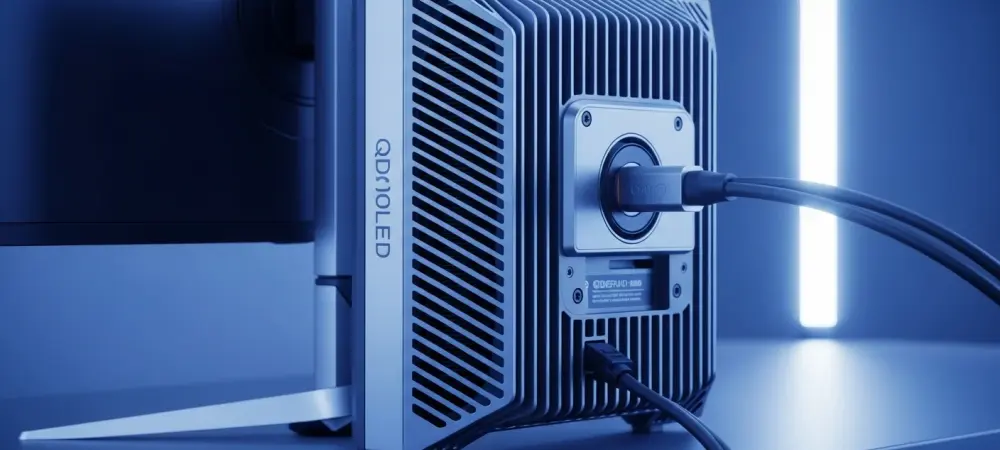
The visual landscape of modern gaming underwent a drastic transformation as enthusiasts demanded higher contrast ratios and faster response times, yet the persistent Achilles’ heel of OLED technology remained its struggle against ambient light interference. For years, users had to choose between the unmatched depth of organic light-emitting diodes in a pitch-black environment or a compromised, washed-out image during the day. MSI’s latest hardware intervention aims to dismantle these grievances, offering a display that maintains its integrity regardless of the lighting environment. This shift represents a broader movement toward making premium panel technology viable for every desk, not just those in windowless basements.
The End of the Compromise Between Contrast and Clarity
The persistent frustration for high-end gamers often boiled down to a single, lighting-dependent trade-off that forced a choice between perfect blacks and a usable daytime screen. Standard QD-OLED panels earned a reputation for losing their luster the moment a lamp was activated, frequently shifting toward a distracting reddish or purple hue. This visual degradation shattered the immersion that premium hardware was supposed to provide, leaving a gap between laboratory specifications and real-world utility.
By addressing the reflection issues inherent in the quantum dot layer, new manufacturing techniques have finally allowed for a consistent viewing experience. The goal was to ensure that “true black” remained truly black even when sunlight hit the screen. This technological leap means that the depth of a horror game or the vibrancy of a digital landscape remains intact at noon or midnight, effectively ending the era of the dark-room requirement for enthusiasts.
Why Current OLED Weaknesses Are Holding Gamers Back
Beyond the aesthetic concerns of color shifting, the adoption of OLED technology faced hurdles related to physical and mechanical durability. Users expressed skepticism regarding the long-term viability of their investments, citing the persistent threat of burn-in and the unpredictable behavior of aggressive Auto Brightness Limiters. These systems often caused the display to dim unexpectedly during high-action HDR sequences, while the panels themselves remained susceptible to micro-scratches that diminished the user experience over time.
Furthermore, the delicate nature of early organic materials meant that users had to treat their monitors with surgical care. The fear of permanent image retention during productivity tasks often outweighed the benefits of the technology for many professionals. To move forward, the industry needed to prove that these screens could handle the rigors of both competitive gaming and standard desktop use without degrading within a few years.
Engineering a Solution with Penta Tandem Architecture and DarkArmor Film
To navigate these technical bottlenecks, MSI implemented a Penta Tandem five-layer architecture powered by EL Gen 3 technology to maximize luminous efficiency. This design allowed the panels to achieve impressive brightness levels without placing excessive stress on the organic compounds, thereby extending the operational lifespan of the hardware. By distributing the electrical load across multiple layers, the system reduced the heat generation that typically contributes to pixel wear and eventual burn-in. Complementing this structural change, the introduction of DarkArmor Film served as a specialized absorption layer that virtually eliminated the purple tint common in bright rooms while boosting black levels by 40%. This protective layer also provided a surface that was 2.5 times more resistant to scratches than preceding generations. The result was a screen that felt physically robust and visually stable, maintaining its color accuracy under harsh overhead lighting.
Analyzing the MPG and MAG Series Performance Benchmarks
The release of the MPG and MAG series established two distinct pathways for consumers, both anchored by 4K resolution at a 240Hz refresh rate and the high bandwidth of DisplayPort 2.1. The MPG 322UR QD-OLED X24 emerged as the flagship offering, utilizing a dedicated NPU for its AI Care Sensor to monitor panel health and detect human presence for power conservation. It also integrated 98W USB-C Power Delivery, allowing users to simplify their workspace by charging high-performance laptops through a single cable.
In contrast, the MAG 321UP QD-OLED X24 prioritized streamlined performance for gamers seeking a straightforward 4K upgrade. Both models utilized the high-bandwidth capabilities of the UHBR20 standard, ensuring that the 240Hz refresh rate operated without the compression artifacts that often plagued previous generations of high-resolution displays. This model included MSI OLED Care 2.0 to minimize burn-in risks and provided basic connectivity for essential peripherals.
Practical Frameworks for Achieving a Stable HDR Experience
Ensuring a consistent visual experience required more than just raw hardware power, leading to the development of the Uniform Luminance feature to stabilize brightness across different window sizes. This software-driven approach effectively removed the jarring shifts that previously occurred when moving between dark gaming environments and bright system windows. By normalizing the output, the technology ensured that the screen did not distract the user with sudden flickers or dimming during mixed-use scenarios. Longevity was further reinforced through a suite of automated background tools, such as pixel shifting and static element detection. These protections worked silently to mitigate the risks associated with taskbars and in-game heads-up displays. By merging these software defenses with the physical resilience of the new film technology, the industry moved toward a future where OLED displays functioned with the same reliability as traditional liquid crystal screens. The arrival of these advanced QD-OLED monitors marked a significant departure from the era of hardware fragility and environmental sensitivity. By addressing the fundamental flaws of ambient light interference and panel wear, the design team demonstrated that high-end performance could coexist with daily practicality. This evolution ensured that the standard for future gaming setups emphasized both visual excellence and long-term durability, providing a clear roadmap for the next generation of display innovation.