

Introduction
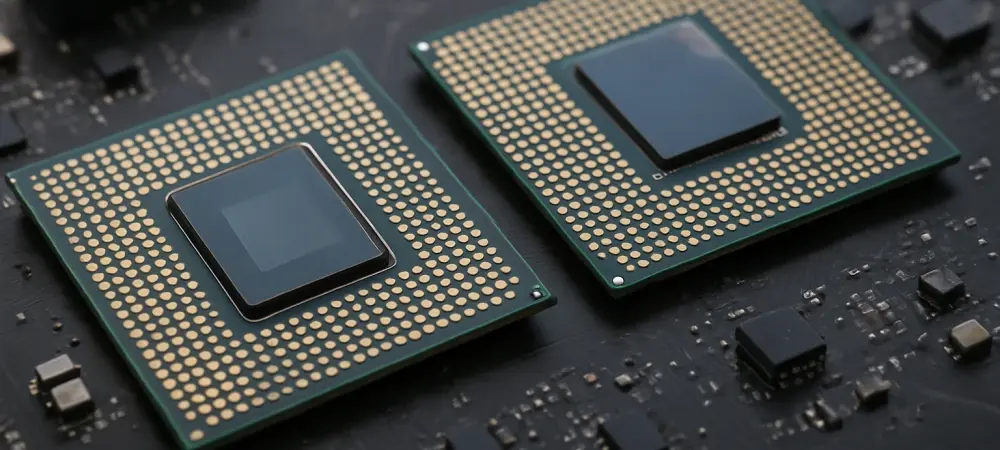
Welcome to an insightful conversation with Dominic Jainy, an IT professional renowned for his deep expertise in cutting-edge technologies like artificial intelligence, machine learning, and blockchain. Today, we’re diving into the world of processor technology, focusing on the latest budget laptop chips from Intel and AMD. Dominic brings a wealth of knowledge to break down the performance, design, and real-world implications of the Intel Core Ultra 5 225H and AMD Ryzen AI 7 350. In this interview, we’ll explore how these processors stack up in terms of raw power, gaming capabilities, thermal management, and architectural differences, shedding light on what these advancements mean for everyday users and tech enthusiasts alike.
How do the Intel Core Ultra 5 225H and AMD Ryzen AI 7 350 compare in terms of overall performance for budget laptops?
Both processors deliver impressive results for their price range, often trading blows in various tests. The Core Ultra 5 225H, with its 14-core setup, holds its own against the Ryzen AI 7 350’s 8-core, 16-thread design. In synthetic benchmarks, they’re neck-and-neck, with slight variations depending on the workload. I think what’s exciting here is how accessible high performance has become in the budget segment—both chips are fantastic for mini PCs or affordable laptops, proving you don’t need to break the bank for solid computing power.
What can you tell us about the specific tests used to evaluate these two processors and the key takeaways from those results?
A detailed review by a Chinese tech channel featured benchmarks like Cinebench R23, which stress-tests CPU performance. The results showed the Core Ultra 5 225H slightly ahead by about 2.5% in certain scenarios, particularly at higher power levels. However, the Ryzen AI 7 350 often pulled ahead in efficiency-focused tests at lower wattages. This tells us that while both chips are competitive, your choice might depend on whether you prioritize peak performance or power efficiency for tasks like multitasking or content creation.
How does power consumption impact the performance of these processors across different wattage ranges?
Power levels play a big role. In Cinebench R23, for instance, the Core Ultra 5 225H shines at higher wattages, between 60 and 80W, where it leverages its core count for better multi-threaded performance. At lower wattages, like 10 to 25W, the Ryzen AI 7 350 takes the lead, likely due to its architecture being more optimized for efficiency. This suggests that in ultraportable laptops with strict power limits, the AMD chip might offer a smoother experience, while the Intel chip could excel in systems with better cooling and power delivery.
Let’s dive into gaming performance—how do the integrated graphics of these chips stack up for budget gamers?
Gaming is where things get interesting. The Core Ultra 5 225H features the Arc 130T, based on Intel’s Xe2 architecture, while the Ryzen AI 7 350 has the Radeon 860M, built on RDNA 3.5. Across a variety of games, there’s no definitive winner when you average the frame rates. Both deliver playable performance for casual or esports titles, which is a win for budget gamers who don’t want to invest in a discrete GPU. It really comes down to specific game optimizations and driver support at this point.
Why do you think thermal management differs so significantly between these two processors under heavy workloads?
Thermals are a standout difference. The Core Ultra 5 225H consistently stays below 90 degrees Celsius even at peak loads in tests like Cinebench R23, while the Ryzen AI 7 350 can hit close to 100 degrees. Intel’s design seems to prioritize heat dissipation, possibly due to its hybrid architecture spreading workloads across efficient cores. High temperatures in the AMD chip could lead to thermal throttling over time or a hotter laptop chassis, which might affect user comfort during long sessions.
Can you break down the architectural differences between these processors and how they might influence performance?
Absolutely. The Core Ultra 5 225H uses a hybrid architecture with 14 cores, focusing on a mix of performance and efficient cores without hyperthreading. Meanwhile, the Ryzen AI 7 350 combines 4 Zen 5 and 4 Zen 5c cores with simultaneous multithreading, offering 16 threads across its 8 cores. Intel’s approach may benefit tasks that can utilize more physical cores, while AMD’s threading advantage could shine in heavily multi-threaded applications like video editing. It’s a classic trade-off between core count and thread efficiency.
What’s your forecast for the future of budget processors like these in emerging devices such as gaming handhelds or mini PCs?
I’m optimistic about where this is heading. Both Intel and AMD are pushing the envelope with powerful yet affordable chips, and I expect to see more adoption in compact devices like gaming handhelds and mini PCs over the next few years. The efficiency and integrated graphics performance we’re seeing could redefine portable gaming or small-form-factor workstations. My forecast is that as cooling solutions improve and software optimization catches up, these processors will become the backbone of next-gen budget-friendly tech, making high performance even more accessible.