

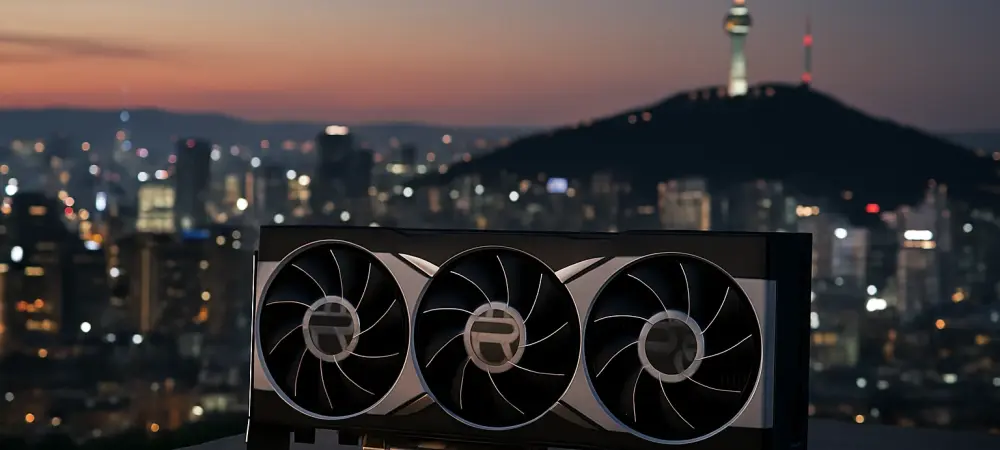
What happens when an underdog in the tech world starts to outpace expectations in one of the most competitive markets on the planet? In South Korea, a nation obsessed with gaming and cutting-edge hardware, AMD has surged to a decade-high 21% share of the DIY GPU market, signaling a shift that could redefine the balance of power in the graphics card industry. How did a company often overshadowed by a dominant rival achieve such a feat?
A Market Worth Watching
South Korea stands as a critical battleground for tech giants, with its passionate community of PC builders and gamers driving trends that ripple across Asia and beyond. The DIY segment, in particular, thrives on a demand for high-performance hardware at reasonable prices, making it a litmus test for any brand’s relevance. AMD’s jump from 15% to 21% market share in just a year highlights a growing consumer shift toward alternatives in a landscape long controlled by NVIDIA, which still holds a commanding 76%.
This rise isn’t just about numbers; it reflects a deeper change in how South Korean enthusiasts view value and innovation. With a culture steeped in esports and content creation, the preferences of this market often predict global movements. AMD’s foothold here suggests that affordability paired with solid performance can challenge even the most entrenched players.
The Power of the RDNA 4 Series
At the heart of AMD’s success lies the RDNA 4 series, a lineup that has captured the imagination of South Korea’s DIY builders. The Radeon RX 9070 XT and RX 9060 XT, each claiming roughly 7% of the market, have become go-to choices for those seeking a balance of power and price. These cards deliver impressive results for gaming at resolutions like 1440p, resonating with users who want top-tier experiences without premium costs.
Beyond the latest releases, AMD’s older models, such as the RX 7700 XT and the budget-friendly RX 7600, continue to draw in cost-conscious buyers. This broad appeal across price points has allowed the company to build a diverse user base. Unlike NVIDIA, which dominates with high-end offerings like the RTX 5080, AMD has focused on the mid-range and entry-level segments, a strategy that aligns perfectly with the needs of many South Korean consumers.
Evidence of this trend extends beyond borders. Reports indicate that the RX 9070 XT has outsold nearly all NVIDIA RTX 50 series cards combined at a major German retailer, though such results vary by region. This global echo underscores AMD’s growing reputation for delivering value, positioning it as a serious contender in multiple markets.
What the Experts and Users Say
Market data from South Korea’s leading tech platform confirms AMD’s 21% share in the DIY GPU sector for the first half of the year, a peak not seen in a decade. Industry analysts have pointed to pricing as a critical factor in this surge. One expert noted, “AMD offers high performance at a fraction of the cost, making it a natural pick for builders on a budget.”
Local voices echo this sentiment. On popular tech forums, South Korean enthusiasts frequently highlight the RX 9060 XT for its ability to handle demanding AAA titles without straining wallets. A user shared, “Switching to AMD was a no-brainer—great frames at 1440p for half the price of some other cards.” These firsthand accounts paint a picture of a brand gaining trust through real-world results.
This feedback isn’t just anecdotal; it aligns with broader market insights. Analysts suggest that AMD’s focus on accessibility has created a loyal following among younger demographics and hobbyists who prioritize performance over brand prestige. Such grassroots support could prove invaluable for long-term growth.
Strategies to Keep the Momentum
To sustain its newfound position in South Korea, AMD must double down on what’s working while addressing gaps in its lineup. Strengthening the RDNA 4 series with targeted campaigns that showcase real-world gaming and productivity benchmarks could further solidify its mid-range dominance. South Korean consumers value tangible proof of performance, and highlighting these metrics could deepen brand loyalty. Expanding into the high-end segment remains a crucial next step. Developing GPUs to rival NVIDIA’s RTX 50 series, particularly models like the RTX 5080, would allow AMD to compete across all tiers and attract a wider audience. Without a strong premium offering, the company risks being pigeonholed as a budget-only option, limiting its potential.
Local engagement also offers untapped opportunities. Collaborating with South Korean esports teams and influencers to demonstrate AMD GPUs in competitive settings could build cultural relevance. Additionally, upcoming releases like the Radeon RX 9060 (non-XT) should prioritize affordability while maintaining quality, ensuring accessibility for entry-level builders who form a significant portion of the DIY market.
Reflecting on a Historic Gain
Looking back, AMD’s achievement of a 21% GPU market share in South Korea marked a pivotal moment in its journey. The Radeon RX 9070 XT and RX 9060 XT stood as cornerstones of this success, proving that value-driven innovation could challenge even the toughest competition. Despite NVIDIA’s towering 76% dominance with popular RTX 50 series cards, AMD carved out a meaningful space by catering to mid-range and budget-conscious buyers. The path forward demanded bold moves—expanding into high-end offerings and deepening local connections were essential to maintain this hard-won ground. Continued focus on accessible yet powerful hardware could position AMD not just as an alternative, but as a leader in the eyes of South Korea’s discerning tech community. This chapter of growth offered a blueprint for how strategic focus and consumer alignment could shift the tides in a fiercely competitive industry.