

The explosive demand for generative artificial intelligence has fundamentally altered the global energy landscape, but the silent crisis of water consumption now threatens to stall progress unless immediate industrial innovations are implemented. As massive computing clusters generate unprecedented heat, the reliance on traditional evaporative cooling systems places a staggering burden on municipal water supplies and local ecosystems. This tension is particularly visible in regions where aging infrastructure struggles to keep pace with the rapid deployment of high-density server racks. In 2026, the industry is witnessing a pivot toward radical efficiency as hyperscalers recognize that computing power cannot exist without a reliable and sustainable fluid management strategy. The challenge lies in balancing the urgent need for expanded digital capacity with the non-negotiable requirement for environmental stewardship. Addressing this involves more than just optimizing existing pipes; it requires a complete architectural rethink that views water not as a consumable utility but as a vital, circular asset that must be recovered and reused within a closed-loop framework to ensure long-term operational resilience.
Advanced Infrastructure: Transforming Industrial Sites
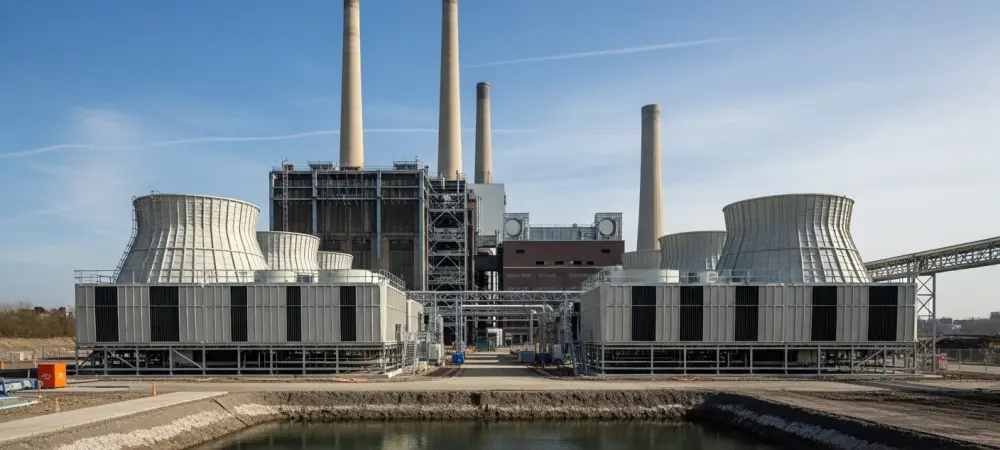
The recent partnership between Gradiant and a major hyperscale operator at the former Didcot A power station site in the United Kingdom serves as a primary example of how legacy industrial assets are being repurposed for the AI era. This specific project focuses on building a comprehensive water treatment facility designed to support cooling operations through the integration of zero liquid discharge technology. By utilizing a brownfield site that once produced 1,440MW of coal-fired electricity, the development breathes new life into existing industrial zones while strictly adhering to modern sustainability standards. The implementation of advanced recycling systems allows the data center to minimize its overall water footprint, ensuring that the facility does not deplete the resources of South Oxfordshire. These systems are engineered to handle high thermal loads while maintaining a circular flow that reduces wastewater. This localized expertise is essential as regulatory frameworks tighten around resource usage, forcing developers to provide a robust water backbone for continuous computing.
Strategic Management: Moving Toward Circular Systems
Beyond the technical specifications of individual cooling units, the industry moved toward an integrated performance model where water was managed with the same precision as electricity or data packets. This shift represented a significant evolution from treating water as a standalone utility to seeing it as a critical infrastructure component that required sophisticated filtration and recovery loops. Looking toward the horizon of 2027 and 2028, the success of these facilities depended on the ability to scale modular treatment solutions that could be deployed rapidly alongside server expansions. Stakeholders prioritized the acquisition of specialized expertise to navigate the complex intersection of chemical engineering and digital architecture. The focus transitioned to establishing localized circular economies where data centers acted as stewards of the water they utilized. By adopting these holistic management strategies, operators ensured that the expansion of artificial intelligence remained compatible with global environmental goals and maintained the public trust.