

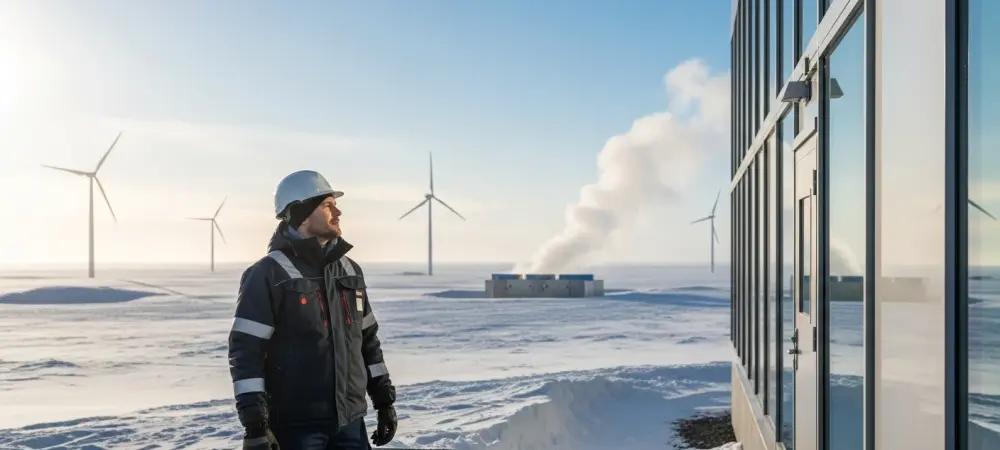
The Strategic Shift Toward Polar Infrastructure
The modern digital economy operates on a paradox where the ethereal world of cloud computing requires an increasingly massive and heat-intensive physical footprint on Earth. As global data consumption skyrockets, the energy required to cool the massive server farms powering our lives has become a significant environmental and financial burden. Traditional data centers in temperate zones spend nearly as much energy on cooling as they do on actual computing, leading to a desperate search for more efficient geographical solutions. This quest has led architects and engineers toward the frigid latitudes of the North, where the environment itself serves as a high-performance heat sink.
The transition to Arctic and sub-Arctic regions represents a fundamental change in how the industry approaches sustainability. Instead of fighting against the ambient heat of Virginia or Texas, operators are now moving to places like Iceland, Norway, and Finland to harness “free cooling.” This article explores the economic, environmental, and technical questions surrounding the rise of these cold-climate facilities. By examining the current landscape of polar computing, readers will gain a comprehensive understanding of why the world’s most powerful servers are migrating to the coldest corners of the planet.
Key Questions: Navigating the Cold-Climate Data Frontier
What Defines a Cold-Climate Data Center and How Does It Function?
A cold-climate data center is a facility specifically situated in high-latitude regions where the natural environment stays consistently cold enough to eliminate the need for traditional mechanical refrigeration. In a standard data center, massive air conditioning units and chillers work around the clock to prevent servers from melting down, a process that consumes vast amounts of electricity. In contrast, a facility located near or within the Arctic Circle utilizes a design centered on indoor-outdoor air circulation. By drawing in the naturally chilled outside air or using cold seawater from nearby fjords, these centers maintain optimal temperatures with minimal mechanical intervention.
This operational shift is not just about seasonal cold but about year-round reliability. For a facility to be truly effective, the local climate must remain cold enough to support 24/7 operations without the safety net of heavy cooling infrastructure. When done correctly, this method allows the facility to achieve a near-perfect Power Usage Effectiveness (PUE) ratio. Because the cooling is provided by the atmosphere, the energy that would have been wasted on fans and compressors can be redirected toward actual processing power, making the entire operation significantly more sustainable.
Which Industry Leaders Are Already Utilizing Arctic Computing?
The concept of polar data storage has moved beyond the theoretical stage and is currently a vibrant part of the global tech infrastructure. Major players have already validated this model with massive investments in the Nordic regions. For instance, Google transformed a former paper mill in Hamina, Finland, into a flagship facility that uses cold seawater from the Gulf of Finland for its cooling needs. Similarly, Meta established a major hub in Luleå, Sweden, right on the edge of the Arctic Circle, proving that even the world’s largest social media platforms can run efficiently on Arctic air.
Beyond the household names, specialized operators like atNorth and Green Mountain have pioneered even more radical designs. In Norway, some data centers are built inside former NATO ammunition bunkers carved into mountains, using deep-water fjord cooling to keep servers at the right temperature. These companies have turned the harsh northern climate into a competitive advantage, attracting global clients who are looking for both lower operational costs and a smaller carbon footprint. The success of these projects has turned the Arctic from a remote wilderness into a high-tech corridor for the global cloud.
What Are the Primary Economic and Environmental Benefits?
The most immediate benefit of moving data centers to the North is the drastic reduction in water and energy consumption. Traditional facilities are notorious for using millions of gallons of water in cooling towers to dissipate heat through evaporation, a practice that is increasingly criticized in a world facing water scarcity. Cold-climate centers, however, can operate with near-zero water consumption by using air-to-air heat exchange or closed-loop water systems cooled by the environment. This makes them a preferred choice for companies aiming to meet strict corporate social responsibility goals and environmental regulations.
From a financial perspective, the savings associated with naturally cold environments are substantial. Moving a large-scale data plant from a warm region like Texas to a cold region like Alaska can save an operator over a hundred million dollars annually in electricity and capital expenses. These savings stem from the reduced need for expensive cooling hardware and the lower cost of the electricity required to run it. Moreover, many of these northern regions offer an abundance of renewable energy from hydroelectric and geothermal sources, providing a double-win for companies looking to decouple their growth from fossil fuel consumption.
What Challenges Prevent a Universal Move to the Arctic?
Despite the clear advantages, several logistical and technical hurdles prevent every data center from relocating to the poles. The most significant issue is latency, or the time it takes for data to travel from the server to the end-user. Because the Arctic is sparsely populated and far from major urban centers, there is a physical delay in data transmission that makes these locations less ideal for activities like high-frequency trading or real-time gaming. While polar centers are perfect for training artificial intelligence or archiving massive amounts of “cold” data, they cannot yet replace the “edge” data centers that need to be close to large populations.
Furthermore, the physical environment of the North presents its own set of risks. Building and maintaining multi-million dollar facilities in sub-zero temperatures requires specialized engineering and a resilient supply chain. Heavy snow and ice can complicate the delivery of sensitive hardware, and finding skilled technicians willing to work in remote, harsh environments remains a significant recruitment challenge. Additionally, while the air is free, the fiber optic and power infrastructure required to support these hubs must often be built from scratch, requiring massive upfront investments in regions that previously lacked high-capacity connectivity.
Summary: The Evolution of Digital Sustainability
The rise of cold-climate data centers has fundamentally changed the conversation around sustainable technology infrastructure. By leveraging natural “free cooling,” these facilities have demonstrated that it is possible to significantly reduce the environmental impact of the digital age while simultaneously cutting costs. The industry has moved beyond testing the waters and has fully embraced the Nordic and Arctic regions as essential hubs for the global cloud. While challenges regarding latency and infrastructure remain, the push for more powerful artificial intelligence and more sustainable business practices has made the “cold” one of the most valuable resources in the tech world.
The strategic importance of these regions was underscored by the successful integration of seawater cooling and mountain-shielded facilities, which have set new standards for efficiency. As we look toward the future of data management, the focus has shifted from merely housing servers to doing so in harmony with the environment. The success of early adopters has paved the way for a more decentralized and geographically diverse network of data centers that prioritizes resource conservation.
Final Thoughts on the Future of Polar Computing
Moving forward, the industry must address the remaining gaps in fiber connectivity and grid resilience to fully unlock the potential of high-latitude computing. The next phase of development will likely involve more sophisticated “heat reuse” projects, where the waste heat generated by Arctic data centers is diverted to warm local greenhouses or residential heating systems, turning a byproduct into a community asset. This circular approach to energy management will be crucial as global regulations on carbon emissions become even more stringent. Organizations should evaluate their specific data needs to determine if a transition to cold-climate hubs aligns with their long-term sustainability goals. While not every application requires the low latency of a city-based server, almost every large-scale AI project or storage archive can benefit from the cooling efficiency of the North. Engaging with specialized Nordic operators and investing in high-latitude infrastructure could be the most effective way for the tech industry to balance its growing appetite for power with the urgent need for environmental stewardship.