

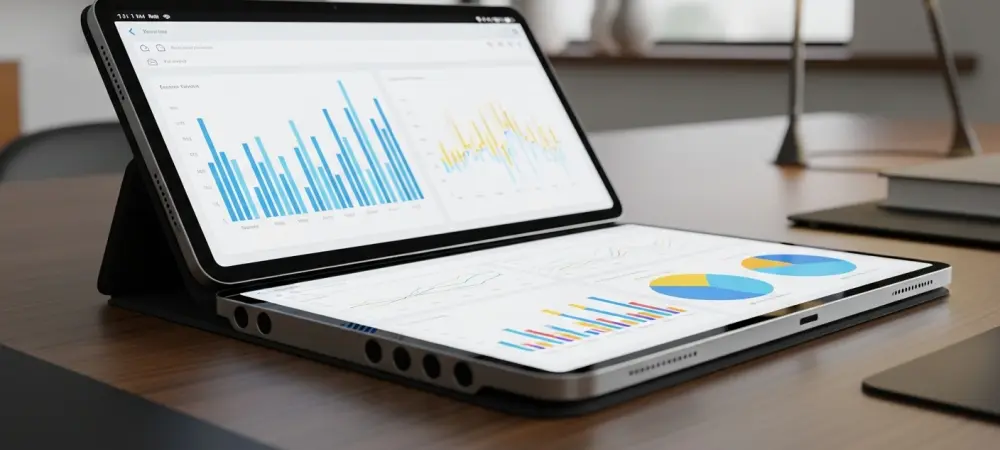
Motorola has shattered the long-standing industry assumption that high-end productivity tools and extreme environmental durability must exist in separate hardware categories. By merging a precision stylus with a chassis rated for both immersion and high-pressure jets, the company has created a unique value proposition for professionals who refuse to choose between sophistication and survival.
Evolution of Motorola’s Productivity and Durability Philosophy
The current mobile landscape has shifted toward specialized hardware that can withstand more than just a light rain shower. Motorola has leaned into this change by adopting an architecture that prioritizes structural integrity without sacrificing the tactile elegance required for creative work. This philosophy centers on the idea that a tool is only as good as its availability; if a device cannot function in a dusty workshop or a humid field site, its processing power becomes irrelevant.
This strategic pivot differentiates the brand from competitors who often relegate rugged features to bulky, unattractive “active” variants. Instead, the 2026 lineup integrates protection into the primary design language. By normalizing IP69 ratings alongside sleek, stylus-driven interfaces, the company is targeting a growing demographic of users who require seamless transitions from the office to demanding outdoor environments.
Technical Analysis of the 2026 Product Suite
The Moto G Stylus (2026): A New Standard for Mid-Range Power
The flagship smartphone entry redefines the input experience by utilizing a stylus that tracks both pressure and tilt, effectively mimicking the friction and feedback of traditional graphite. This technical achievement relies on a refreshed digitizer layer that minimizes latency, making digital sketching feel instantaneous. While other mid-range competitors offer basic capacitive pens, this implementation provides a level of nuance usually reserved for expensive professional tablets. Visual performance is equally prioritized through a 1.5K AMOLED panel that reaches a staggering 5,000-nit peak brightness. This is not merely a vanity metric; it ensures that the screen remains perfectly legible under direct, high-altitude sunlight, solving a primary pain point for field workers. The 120Hz refresh rate further smooths the interaction, ensuring that the interface remains responsive even when the system is under heavy multitasking loads.
The Moto Pad (2026): Integrated Connectivity and Media Consumption
The 11-inch tablet offers a specialized take on mobile computing by focusing on persistent connectivity via the MediaTek Dimensity 6300 chipset. By including native 5G at a lower price point, the device bridges the gap between Wi-Fi-dependent home tablets and premium cellular models. This allows for uninterrupted data flow during travel or in remote areas where tethering to a phone would be inefficient and battery-draining.
Audio and visual fidelity remain the core of the media experience, supported by a quad-speaker array that leverages Dolby Atmos tuning. The hardware is designed to create a wider soundstage, which is particularly effective for immersive video or high-fidelity audio playback. While the 2.5K resolution is sharp, the real value lies in how the hardware handles HDR content, providing deep contrast that complements the spatial audio characteristics.
Current Industry Trends and Market Shifts
The industry is currently witnessing a push toward “military-grade” toughness as a baseline expectation for consumer electronics. Motorola’s adoption of IP69 protection reflects a trend where users expect their hardware to survive accidental encounters with pressurized water or extreme temperatures. This move forces other manufacturers to reconsider their reliance on fragile glass builds that require bulky protective cases to survive daily use.
Furthermore, there is a significant move toward long-term hardware sustainability. The introduction of battery cells capable of maintaining health through 1,600 charging cycles indicates a shift away from planned obsolescence. By shipping with Android 16 as the baseline, these devices are positioned to remain relevant for years, aligning with consumer desires for hardware that lasts as long as the internal components remain functional.
Real-World Applications and Sector Deployment
In the field service sector, the combination of a high-cycle battery and a Sony Lytia 700C sensor allows technicians to document complex repairs with professional clarity while maintaining uptime throughout long shifts. The OIS-enabled 50MP camera ensures that even in low-light industrial settings, images are sharp enough for remote diagnostic verification. This level of optical precision was previously difficult to find in devices that could also survive a drop onto a concrete floor.
Educational and creative sectors have also found a niche for these tools. Digital artists are utilizing the pressure-sensitive stylus for mobile drafting, while students benefit from a tablet that offers high-speed 5G without the premium cost. The versatility of these devices means they are being deployed in fleet management scenarios where longevity and reliability are the primary metrics for success, proving that durability has a direct correlation with return on investment.
Technical Challenges and Market Obstacles
Maintaining a slim profile while achieving such high durability ratings remains a significant engineering hurdle. The internal sealing required for IP69 protection often takes up valuable space that could otherwise be used for larger cooling solutions or expanded battery volume. Motorola has managed this balance well, but the $250–$500 price bracket is notoriously crowded. Competing with brands that focus purely on raw processor benchmarks over specialized features like the stylus is a persistent marketing challenge.
Software optimization for Android 16 also presents a hurdle, as the new operating system introduces complex background tasks that can strain mid-range silicon. Ensuring that the MediaTek and Sony components work in perfect harmony requires meticulous firmware tuning. If the software experience stutters, the hardware’s durability becomes a secondary concern for users who prioritize smooth daily performance above all else.
Future Outlook and Technological Trajectory
The engineering trajectory suggests a future where stylus precision and AI-driven productivity will become inseparable. We are likely to see the current stylus technology evolve into an even more proactive tool, perhaps incorporating haptic motors that can simulate different drawing surfaces. As solid-state battery technology matures, the ruggedized frames of future generations will likely become thinner while offering even greater energy density and faster thermal dissipation. There is also potential for these durability standards to migrate into the foldable market. If Motorola can apply its current sealing techniques to flexible displays, it would solve the primary durability concern that has kept foldables from mainstream professional adoption. The current generation serves as a foundation for a more resilient ecosystem where the fragility of high-tech screens is no longer a limiting factor for active users.
Conclusion and Final Assessment
The 2026 lineup demonstrated that Motorola successfully identified a gap in the market for hardware that is both functional and resilient. By prioritizing ultra-bright displays and extreme environmental protection, the company provided a viable alternative to the fragile flagships of its competitors. The integration of high-cycle batteries and professional-grade sensors suggested a commitment to long-term value that resonated with both individual consumers and enterprise clients. Moving forward, the industry will likely look toward these engineering choices as a blueprint for balancing aesthetic appeal with the practical realities of modern, mobile work environments. This evolution effectively shifted the conversation from how much power a device has to how reliably that power can be accessed in any situation.