

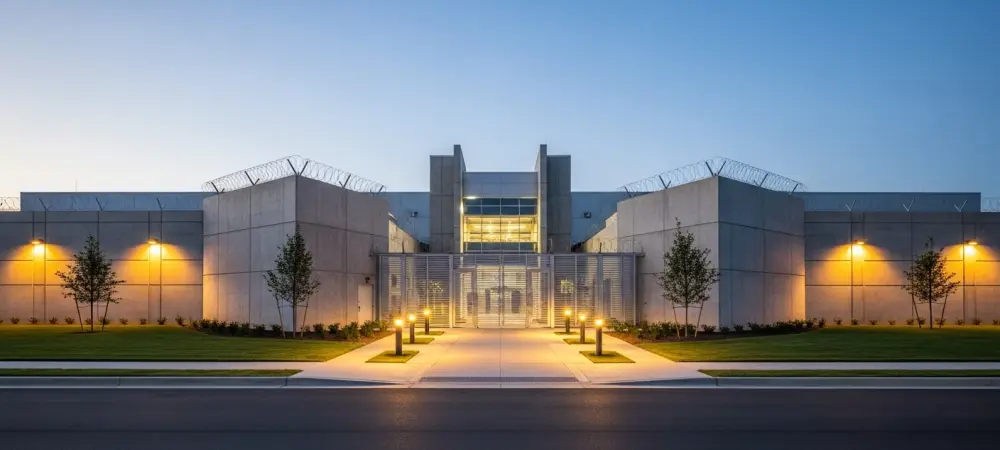
The convergence of national security mandates and a global surge in computational demand has forced a radical realignment within the federal data center landscape. As of 2026, the federal information technology environment is navigating a period of intense transformation, steered by a combination of rigorous legislative mandates and the escalating complexity of modern government workloads. Central to this structural shift is the long-standing influence of the U.S. Office of Management & Budget’s Data Center Optimization Initiative (DCOI), which has transitioned from an efficiency mandate into a comprehensive framework for infrastructure modernization. For years, government entities have been under pressure to move away from legacy, on-site hardware in favor of specialized commercial facilities and cloud-based services. This transition, however, is far from a simple relocation; it represents a fundamental change in how data is secured and managed at the physical layer. Meeting these requirements involves more than providing basic rack space; it demands a radical reimagining of physical security, mechanical systems, and operational governance. Successful operators must now find ways to bridge the gap between standard commercial offerings and the uncompromising, mission-critical standards demanded by the federal government.
The Evolution of Federal Infrastructure and Historical Policy Shifts
To fully grasp the current state of federal data requirements, one must examine the historical push for infrastructure efficiency and enhanced cybersecurity. Since the midpoint of the last decade, the federal government has prioritized the closure of redundant facilities in favor of modern, centralized hubs. This movement was born out of a dual necessity: the need to reduce the massive energy footprint of federal IT and the urgent requirement to address sophisticated cybersecurity threats. These background factors are essential because they established a precedent where the federal government is no longer just a tenant but a high-stakes partner requiring deep transparency and specialized operational models to fulfill its mission.
The historical trajectory of federal IT has moved steadily from simple on-site server rooms to highly regulated, external environments where every aspect of the facility is scrutinized under a microscope. This evolution has created a marketplace where standard colocation is no longer sufficient for agencies handling sensitive information. Instead, a new class of “federal-grade” facilities has emerged, designed specifically to satisfy the strictures of the Federal Information Security Modernization Act (FISMA) and other high-level security directives. Understanding this history is vital for operators who wish to participate in the market, as it underscores that compliance is not a static checkbox but a continuous commitment to operational excellence.
Strategies: Building Specialized Organizational Foundations
Entering the federal market is not a lateral move for traditional colocation providers; it is a fundamental shift in the business model. The federal sector is defined by intense regulatory scrutiny and a high volume of reporting requirements that do not exist in the traditional enterprise world. To navigate this complexity, providers must establish and maintain dedicated teams of specialized IT and security professionals who focus exclusively on government deployment solutions. These teams act as the primary interface between the data center and the agency, ensuring that all unique operational protocols are met without compromise.
A critical trend in the current market is the designation of “federal-only” facilities. While multi-tenant buildings can isolate specific halls or cages, a dedicated facility offers superior control over security protocols and ensures that federal workloads never compete for resources or maintenance priority with commercial tenants. This specialized organizational structure allows for a more focused approach to compliance, where the entire lifecycle of the data center—from site selection to daily operations—is aligned with government needs. By specializing in this manner, providers can offer a level of reliability and exclusivity that is becoming increasingly rare in the standard hyperscale market.
The Framework: Navigating Certification and Authorization
Hosting federal data requires a sophisticated, two-pronged approach that separates the facility’s physical reliability from the systems’ digital authorization. Facility certification involves proving the robustness of the physical infrastructure through rigorous audits. Standard benchmarks include ISO/IEC 27001 for information security management and SOC 2 Type II reports, which provide documented evidence that operational controls are functioning effectively over time. Many operators also align with Uptime Institute Tier III or IV classifications to ensure concurrent maintainability and fault tolerance, which are prerequisites for agencies requiring 24/7 mission availability.
However, a common misunderstanding persists that a building itself receives a universal “government approval.” In reality, the government grants an Authority to Operate (ATO) to specific systems hosted within a facility. Agencies utilize the NIST Risk Management Framework (RMF) and FedRAMP standards to categorize cloud services by impact levels. This distinction is vital because it places the burden of proof on the organization’s holistic security posture rather than just its physical walls. A data center operator must therefore provide the necessary documentation and physical environment that allows the tenant to achieve and maintain their ATO, creating a shared responsibility model between the facility and the government agency.
Architecture: Structural Resilience and Defense-in-Depth Models
Site selection for federal facilities is often dictated by mission proximity and the inherent structural “bones” of the building. Beyond low latency, a facility must be evaluated for its resistance to natural hazards, such as seismic activity and floods. The interior architecture must support a “defense-in-depth” model, which begins with reinforced facades and anti-ram fencing at the perimeter. For highly sensitive operations, construction must align with ICD 705 standards for Sensitive Compartmented Information Facilities (SCIFs). This specialized construction involves using high Sound Transmission Class (STC) rated walls to prevent acoustic eavesdropping and electromagnetic shielding to block electronic signal leaks.
Furthermore, operational compartmentalization is an essential architectural feature. This ensures that mechanical, electrical, and plumbing (MEP) infrastructure can be serviced without technicians ever entering the secure halls housing federal hardware. By isolating critical infrastructure, data center operators can maintain the integrity of the secure environment even during routine maintenance or equipment upgrades. This architectural separation is a hallmark of federal-grade design, providing a physical layer of security that complements digital encryption and access controls.
Future Trends: High-Performance Computing and AI Integration
Looking ahead, the demand for High-Performance Computing (HPC) and Artificial Intelligence (AI) is fundamentally reshaping federal infrastructure requirements. Modern AI training clusters can demand over 100 kW per rack, a density that far exceeds the capabilities of older, air-cooled facilities. Consequently, there is a visible shift toward liquid cooling technologies, such as direct-to-chip or immersion cooling, to handle these extreme heat loads efficiently. These innovations are no longer optional for facilities that aim to host the next generation of federal research and defense applications.
Moreover, there is a growing trend of relocating critical MEP infrastructure—such as generators and cooling plants—into hardened, indoor environments to protect against extreme weather and physical threats. Experts in the field predict that the future of federal data management will be defined by “clean-sheet” designs where high-security and high-density power are integrated from the initial planning stages. These facilities are built with the foresight to accommodate evolving hardware architectures, ensuring that the federal government can leverage the latest technological advancements without being hindered by outdated cooling or power distribution systems.
Practical Implementation: Assessing Bones and Human Capital
To meet these stringent requirements, operators must focus on several key best practices that bridge the gap between theory and execution. First, a thorough assessment of an existing building’s structural integrity is necessary to determine if it can support the weight and cooling needs of modern federal hardware. If the “bones” of a structure are insufficient, new construction often proves more cost-effective than a complex retrofit. Second, prioritizing the human element is paramount. Recruiting personnel with military or law enforcement backgrounds ensures a workforce that already possesses necessary security clearances and understands the high-stakes discipline required in sensitive environments.
Third, establishing resilience through redundant power arrangements and priority fuel contracts is essential for long-term viability. The federal government requires a level of reliability that exceeds standard commercial Service Level Agreements (SLAs). By securing long-term contracts for fuel delivery and maintaining diverse utility feeds, providers can guarantee the uptime required for mission-critical functions. These actionable strategies allow providers to build the trust necessary to host the most sensitive government missions, turning compliance into a competitive advantage in an increasingly crowded market.
Strategic Insights: Establishing a Foundation of Trust
The process of transforming a commercial data center into a federal-grade facility proved to be a complex and capital-intensive endeavor that required a deep commitment to regulatory adherence. Success in this specialized market was achieved by those who viewed federal requirements not as a series of obstacles, but as a blueprint for creating the most resilient infrastructure possible. Operators who prioritized physical security and advanced mechanical engineering were the ones who ultimately secured the most valuable government contracts. This market analysis indicated that the demand for secure, high-density, and compliant data centers remained on a steady upward trajectory as government agencies continued their modernization efforts.
Looking toward the next phase of infrastructure development, the most successful providers were those who moved beyond mere compliance and embraced a culture of total transparency. Actionable strategies for the future should include the implementation of automated compliance monitoring and the integration of sustainable power sources to meet federal green energy mandates. Organizations must also focus on expanding their workforce’s technical certifications to keep pace with the rapid adoption of AI and quantum computing. Ultimately, the facilities that flourished were those that served as true partners to the federal government, providing a secure and scalable foundation for the nation’s most critical data assets. This strategic alignment ensured that the infrastructure was prepared for any technological or geopolitical shift that occurred in the subsequent years.