

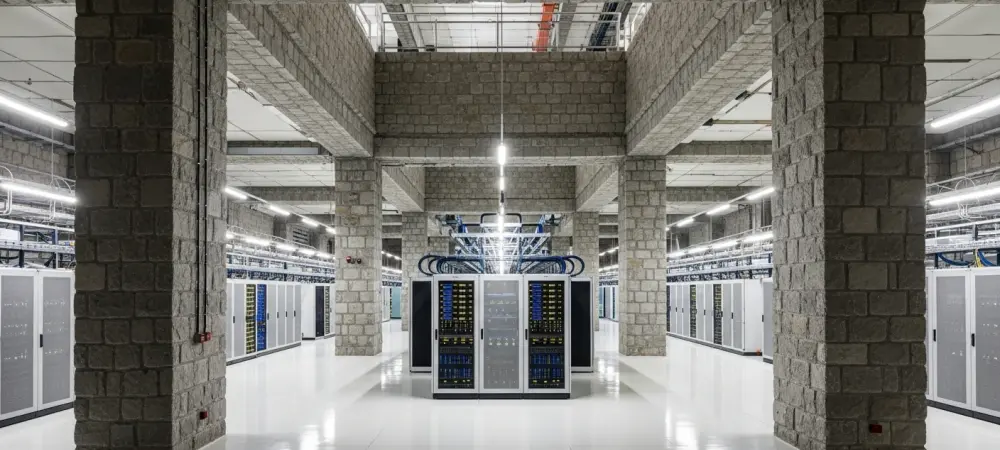
The relentless expansion of the global digital economy has finally outpaced the availability of traditional surface-level real estate, driving a radical architectural migration into the crust of the planet. While the tech industry historically looked toward massive glass and steel warehouses to house its server racks, the modern paradigm shifted toward subterranean environments. This transition marks a fundamental departure from conventional construction, as developers move away from erecting new structures and toward the adaptive reuse of existing geological voids. By repurposing Cold War-era bunkers, limestone mines, and deep-rock caverns, the industry has discovered a way to meet the escalating demands of data sovereignty and physical hardening. This review analyzes the evolution of these facilities, assessing whether the inherent benefits of the underground outweigh the significant engineering hurdles of operating in a lightless, enclosed environment.
The Evolution of Subterranean Infrastructure
The journey into the earth began as a pursuit of ultimate security, initially fueled by the geopolitical anxieties of the mid-twentieth century. These facilities were not originally intended for silicon chips but for the preservation of government continuity and high-value physical assets. However, as the digital age matured, the transition from traditional above-ground facilities became a matter of practical necessity rather than just security. Adaptive reuse strategies emerged as a sophisticated solution for modern digital requirements, turning massive limestone mines and granite caverns into ready-made shells for hyperscale deployments. This approach bypassed the long lead times associated with traditional masonry and steel construction, offering a faster route to operational status.
Modern underground hosting has moved far beyond the concept of a simple basement server room. It now represents a specialized tier of digital infrastructure where data sovereignty is reinforced by hundreds of feet of natural rock. This emergence as a sophisticated solution reflects a growing need for “hardened” infrastructure that can survive not only digital attacks but also physical catastrophes. In the broader technological landscape, these facilities serve as the ultimate insurance policy for mission-critical data. The shift toward the subterranean signifies a recognition that the most valuable commodity of the current era requires a level of protection that surface-level buildings simply cannot provide against evolving environmental and man-made threats.
Architectural and Operational Foundations
Fortified Physical Security and Resilience
The inherent physical protection provided by hundreds of feet of natural rock creates a security profile that is virtually impossible to replicate above ground. While a standard data center relies on reinforced concrete and perimeter fencing, a subterranean facility utilizes the mountain itself as its primary barrier. This natural shielding effectively isolates mission-critical workloads from extreme weather events that have become increasingly common and destructive. Tornadoes, hurricanes, and even seismic activity are mitigated by the mass of the surrounding geology, ensuring that the hardware remains undisturbed while surface infrastructure might be completely compromised.
Performance metrics for these facilities often exceed the most stringent security requirements for the government, finance, and healthcare sectors. The limited points of entry and exit make unauthorized physical access a logistical nightmare for any intruder, while the depth of the facility provides a natural defense against electromagnetic interference and other signal-based threats. For institutions handling sensitive personal data or high-frequency financial transactions, the peace of mind offered by a rock-shielded environment is a primary driver of adoption. This resilience is not just about surviving a disaster; it is about maintaining absolute continuity in an increasingly volatile world.
Thermodynamic Stability and Cooling Efficiencies
Technically, the most fascinating aspect of subterranean facilities is the role of stable ambient temperatures in reducing energy consumption. Unlike surface buildings that must battle the fluctuating heat of the sun and seasonal changes, deep-rock environments maintain a consistent, cool temperature year-round. This geological “thermal mass” acts as a natural heat sink, allowing operators to significantly lower the power required for traditional air conditioning. The examination of natural heat sinks has led to innovative engineering feats, such as the use of underground lakes and fjord water for optimized Power Usage Effectiveness (PUE). These natural water sources provide a constant, low-temperature medium for heat exchange, removing the need for energy-intensive mechanical chillers.
The significance of passive cooling is particularly pronounced in the realm of long-term archival “cold storage.” When data does not need to be accessed at millisecond speeds, the energy requirements can be stripped down to the bare essentials, allowing the natural coolness of the mine or bunker to maintain the equipment. This alignment with sustainability goals is a critical differentiator in an industry under constant pressure to reduce its carbon footprint. By leveraging the earth’s natural thermodynamics, underground data centers offer a pathway to high-density computing that does not come at the expense of the environment, proving that efficiency and performance can indeed go hand in hand.
Current Market Trends and Industry Drivers
The “NIMBY” (Not In My Backyard) phenomenon has become a significant obstacle for traditional data center development, as local communities often resist the noise, aesthetics, and land use of massive industrial campuses. Underground centers effectively mitigate this resistance by remaining invisible to the public. There are no sprawling warehouses or massive cooling towers to disrupt the local skyline, allowing operators to expand their footprint without the social friction that plagues surface-level projects. This invisibility has turned decommissioned industrial sites into highly valuable real estate, as the “time-to-power” metric becomes the most important factor in site selection. The speed of deployment allowed by existing structural shells cannot be overstated. In an era where the demand for data is skyrocketing, the ability to move into a pre-excavated space and begin installing racks within months rather than years provides a massive competitive advantage. Furthermore, the shift toward sustainability is driving a reduction in the use of raw materials like steel and concrete, as the primary structure is already provided by nature. The valuation of decommissioned industrial sites has subsequently reached new heights, as these relics of the mining and military past are recognized as the ideal foundation for the future of the digital economy.
Global Implementations and Real-World Applications
European Innovations: Lefdal Mine and Bahnhof Pionen
The Lefdal Mine in Norway serves as a premier case study in how hydroelectric power and fjord cooling can be harnessed for hyperscale clients. By repurposing a former olivine mine, the facility provides an enormous amount of space that is naturally cooled by the adjacent Nordfjord. This setup allows for an incredibly low PUE, making it one of the most sustainable facilities in the world. Its modular design allows for rapid scaling, proving that underground facilities can handle the same volume of data as the largest surface-level campuses while maintaining a much smaller environmental impact.
In contrast, Sweden’s Bahnhof Pionen facility represents a triumph of urban underground innovation. Located in a former Cold War civil defense bunker beneath the streets of Stockholm, it serves as a symbol of how historical infrastructure can be transformed into a high-tech fortress. While it may not have the vast acreage of a mine, Pionen utilizes district cooling and creative architectural design to maximize its limited footprint. It demonstrates that subterranean solutions are not just for remote rural areas but are also viable in the heart of major metropolitan hubs where land is at a premium and security is paramount.
North American Benchmarks: Iron Mountain and SubTropolis
In the United States, the Iron Mountain Boyers campus in Pennsylvania has set the global compliance standard for secure data storage. Spanning over two hundred acres inside a former limestone mine, this facility houses some of the most sensitive data for both government agencies and Fortune 500 companies. Its role in the industry is defined by its rigorous adherence to safety protocols and its ability to provide a “city beneath the earth” that includes its own fire department and water treatment systems. The scale of the Boyers campus illustrates that underground facilities are not just niche outposts but can function as massive, self-contained ecosystems.
Similarly, the SubTropolis Technology Center in Missouri leverages the pre-built structural integrity of a massive limestone mine complex in Kansas City. The facility benefits from the “room and pillar” mining method, which leaves behind a grid of massive stone pillars that support the roof and provide a natural organization for server rows. This existing geometry allows for highly efficient airflow management and easy expansion. SubTropolis highlights the commercial logic of underground data centers: by utilizing what the mining industry left behind, tech companies can achieve a level of structural reliability and cost-efficiency that is simply unattainable in traditional construction.
Technical Constraints and Engineering Hurdles
The logistical challenge of transporting hardware into deep-rock environments is a significant hurdle that requires meticulous planning. Unlike a surface warehouse with loading docks and wide hallways, a mine may have restricted entry points and uneven terrain. Site-specific geological constraints often dictate the layout of the facility, forcing engineers to work within the existing rock geometry rather than designing a space from scratch. This can lead to difficulties in optimizing the flow of equipment and personnel, necessitating specialized machinery and custom-built transportation solutions to move heavy server racks into their final positions deep underground. Addressing the challenge of heat rejection in insulated rock environments is perhaps the most difficult technical task. While the rock is cool, it also acts as a massive thermal insulator, meaning that without active intervention, the heat generated by thousands of servers would quickly turn the cavern into an oven. This necessitates advanced ventilation systems or sophisticated liquid cooling loops that can efficiently transport thermal energy to the surface or into a natural water heat sink. Furthermore, the physical constraints of existing rock geometry limit vertical scalability. For high-density AI workloads that require massive amounts of power and cooling in a concentrated area, the fixed height of a mine ceiling can be a major limitation compared to the flexible, multi-story designs of modern surface campuses.
Future Projections and Emerging Regional Hubs
As land becomes even scarcer in global hubs like Singapore and Switzerland, the outlook on geographic expansion into the underground is increasingly positive. Singapore has already begun exploring multi-use underground master plans to free up surface space for housing and green areas, making data centers a prime candidate for subterranean relocation. Breakthroughs in modular underground design are expected to address many of the current scalability issues, while the integration of liquid cooling will allow for even higher rack densities within confined spaces. This evolution will likely see the development of purpose-built underground facilities, rather than just the repurposing of old mines, as the industry seeks to optimize every cubic inch for performance.
The long-term impact of subterranean infrastructure on global carbon neutrality and disaster recovery planning will be profound. As companies face increasing pressure to report on their environmental impact, the natural efficiency of underground cooling will become an irresistible draw. Predictions for the role of these centers also include a significant contribution to edge computing and secure sovereign clouds. By placing data centers deep underground near urban centers, providers can offer low-latency services that are physically protected from any surface-level disruption. This suggests that the subterranean model will move from being a specialized alternative to a core component of the global digital backbone.
Concluding Assessment of Underground Data Solutions
The exploration of subterranean data infrastructure revealed that these facilities successfully bridged the gap between historical industrial relics and the requirements of the high-speed digital age. It was determined that the transition from a niche concept to a commercial standard was driven primarily by the dual pressures of physical security and energy efficiency. The natural protection offered by the earth’s crust provided a level of resilience that no surface-level construction could match, while the thermodynamic properties of deep-rock environments offered a sustainable solution to the cooling crisis. Engineers managed to overcome the logistical and thermal challenges of the underground, proving that the benefits of adaptive reuse far outweighed the initial complexities of site development.
The long-term viability of repurposing industrial sites was confirmed by the continued expansion of major hubs across Europe and North America. These facilities demonstrated that the future of the global digital economy could be built on the foundations of the past, utilizing the permanence of stone to protect the ephemeral nature of digital data. As the industry moved toward 2026 and beyond, the focus shifted toward optimizing these spaces for the next generation of artificial intelligence and edge computing. The final verdict on the subterranean industry was that it offered a unique, indispensable asset for modern society, ensuring that the most critical information remained safe, cool, and accessible regardless of what occurred on the surface. To further this progress, future investments should prioritize the development of standardized modular cooling units specifically designed for high-density subterranean environments to maximize the utility of existing geological structures.