

The global semiconductor landscape has shifted irrevocably as Advanced Micro Devices successfully pivoted its entire corporate strategy toward high-performance computing and massive artificial intelligence infrastructure. This structural evolution is most visible in the latest financial results, which demonstrate that the data center segment has effectively supplanted the client personal computer business as the organization’s primary economic engine. Total revenue reached a staggering $10.3 billion, representing a significant 38% increase from previous benchmarks, while the data center division itself achieved a massive 57% surge to hit $5.8 billion in revenue. This transformation is not merely a temporary reaction to market hype but a permanent realignment that reflects the industry’s desperate need for specialized silicon capable of handling trillion-parameter models. By moving away from its historical reliance on the cyclical consumer electronics market, the company has secured a position of dominance in the enterprise sector. The results underscore a fundamental reality where high-performance compute is no longer a luxury but the essential backbone of the modern digital economy.
Overcoming Software Barriers: The Shift to Inference
The current narrative of market success is deeply centered on the rapid expansion of artificial intelligence capacity among hyperscalers and large-scale enterprise operators worldwide. While the established EPYC processor line remains a cornerstone of the data center franchise, the strategic focus is increasingly migrating toward the Instinct GPU portfolio to meet the intense demands of generative modeling. Analysts suggest that the organization is uniquely positioned to benefit from the industry’s collective desire for a viable second source to challenge existing hardware monopolies. This demand is further bolstered by a market-wide pivot from raw training power toward inference and agentic AI workloads, areas where specific hardware strengths in memory bandwidth and performance-per-dollar are most effective. As organizations move from experimental phases to production deployments, the efficiency of inference hardware has become the primary metric for determining long-term infrastructure viability and return on investment.
As the industry matures, the traditional software barriers that once protected established competitors are starting to fade, allowing for a more competitive and open development environment. The ROCm software framework, combined with an expanding ecosystem of community support, is providing the necessary tools for developers to migrate their complex workloads with significantly greater ease than in previous hardware cycles. This transition allows token economics and cost-efficiency to dictate purchasing decisions rather than proprietary software lock-ins that previously stifled innovation. By focusing on the total cost of ownership and ease of integration, the company is capturing a larger share of the inference market, which is expected to become the dominant workload for data centers through 2028 and beyond. The erosion of the software moat represents a critical turning point, enabling a more meritocratic hardware landscape where architectural performance and power efficiency serve as the primary differentiators for enterprise buyers.
Orchestration Logic: The Growing Importance of CPU Performance
A key takeaway from recent performance metrics is the evolving and increasingly complex relationship between central processors and graphics accelerators within the modern data center. While GPUs often dominate the headlines due to their massive parallel processing capabilities, high-performance CPUs are becoming indispensable for orchestration and real-time inference logic. This structural shift has prompted the organization to double its long-term server processor market outlook, projecting it to exceed $120 billion by 2030. High-performance processors, such as the upcoming 6th-gen EPYC Venice line, act as the foundation for the complex logic required to manage autonomous agents and intricate data processing pipelines. These processors ensure that the massive data throughput required by GPUs is managed efficiently, preventing bottlenecks that can lead to wasted compute cycles. The integration of advanced logic handling with high-speed interconnects has redefined the role of the server processor in the AI era.
The focus on orchestration logic highlights a broader trend where the efficiency of the entire system rack is prioritized over the performance of any single component. As AI models become more “agentic”—meaning they can perform multi-step tasks and make autonomous decisions—the demand for serial processing power and sophisticated branch prediction has skyrocketed. This shift plays directly into the strengths of the EPYC architecture, which has been optimized for the high-density, multi-tenant environments common in modern cloud infrastructures. Furthermore, the ability to balance heavy computational loads with low-latency data retrieval has made these processors the preferred choice for real-time applications like financial modeling and live language translation. By positioning the CPU as the vital conductor of the AI orchestra, the company has ensured that its traditional core business remains relevant and essential even as the industry moves toward an accelerator-heavy future, creating a more resilient product portfolio.
Strategic Global Footprints: Partnerships and Sovereign AI
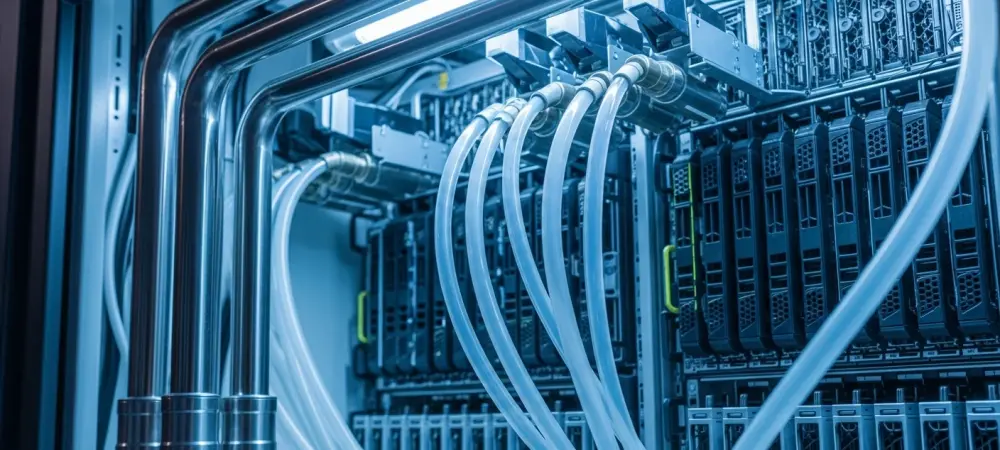
The organization’s growth is further solidified by massive infrastructure commitments from major technology giants and several international sovereign initiatives aimed at digital independence. A landmark partnership involves the deployment of up to 6 GW of GPU infrastructure, utilizing the upcoming MI450 platform and advanced liquid cooling solutions to manage extreme power densities. These multi-year, co-engineered projects demonstrate that the world’s largest technology companies are now viewing this specific architecture as a primary component of their long-term infrastructure roadmaps. This deep integration into the planning cycles of hyperscalers provides a level of revenue predictability that was previously unattainable in the volatile chip market. By co-developing hardware that addresses specific thermal and power constraints, the company has effectively embedded itself into the physical design of the next generation of global data centers, securing a long-term competitive advantage.
Beyond individual hyperscale wins, the company is diversifying its reach through sovereign AI projects in nations like India and South Korea that are wary of data centralization. By partnering with global firms like Tata Consultancy Services, the organization is targeting countries that seek to maintain domestic control over their compute resources and sensitive data models. These sovereign deployments represent a durable and diversified revenue stream, reducing the company’s dependence on a handful of North American technology giants and ensuring a stable global presence. This strategy also aligns with the global trend of digital nationalism, where governments invest heavily in localized compute power to foster domestic innovation and secure national security interests. By providing the underlying hardware for these national initiatives, the company has positioned itself as a neutral and reliable partner in the global race for AI supremacy, expanding its influence far beyond traditional commercial markets.
Future Roadmaps: Navigating Operational Scaling and Bottlenecks
Despite stellar growth, scaling to meet the demands of a burgeoning market presented inherent challenges that required careful navigation and significant capital expenditure. Recent results showed some margin pressure and a slight decline in operating income, which was largely attributed to the costs of ramping up new production lines and investing heavily in research and development. However, the leadership team correctly identified these as necessary investments to secure the future of the product portfolio and maintain technical leadership. With a secondary-quarter revenue guidance of approximately $11.2 billion, the organization has successfully repositioned itself as a comprehensive architect of the modern data center. The focus remained on solving structural bottlenecks, such as memory bandwidth and interconnect speed, to sustain the global AI ecosystem. These strategic moves ensured that the company did not just provide parts, but rather holistic solutions that addressed the most pressing limitations of current computational models.
Future considerations were centered on the development of the MI450 series, which aimed to redefine the limits of chiplet architecture and energy efficiency. Industry leaders recognized that the path to sustainable growth involved moving past raw compute power and addressing the massive energy requirements of modern facilities. To facilitate this, the organization prioritized the integration of advanced cooling technologies and power management software that allowed data center operators to maximize their output per watt. Actionable steps were taken to broaden the developer base by further simplifying the migration from legacy proprietary platforms to open-source alternatives. By focusing on these logistical and architectural hurdles, the company established a blueprint for long-term dominance that relied on systemic efficiency rather than just hardware specifications. These initiatives ensured that the organization remained at the center of the technological conversation, providing the essential infrastructure for a world increasingly defined by autonomous intelligence.