

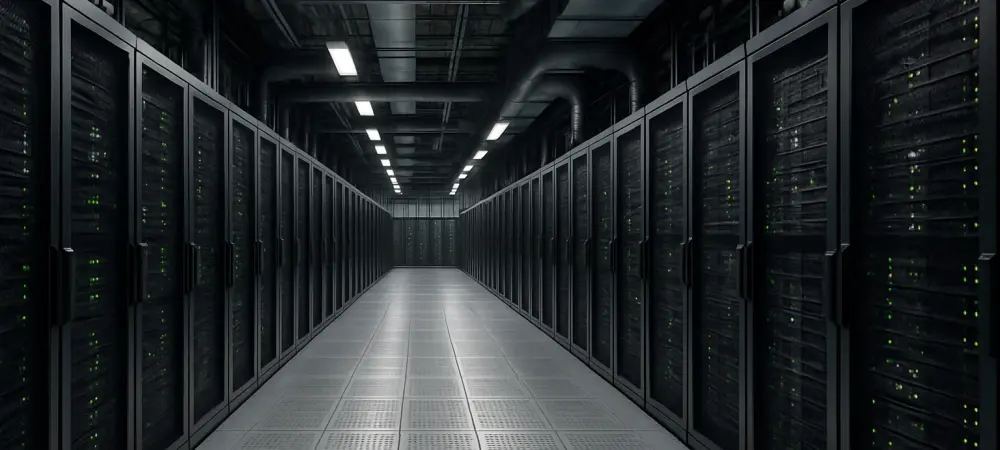
What happens when the backbone of artificial intelligence—data centers—can’t keep up with the technology’s explosive growth? As AI reshapes industries with generative models and real-time analytics, a staggering 60% of companies report delays in deployment due to infrastructure shortages, according to recent industry surveys. This crisis of capacity has set the stage for a bold new player: Greenlight Data Centers, launched by Digital Power Optimization, Inc. (DPO), to tackle the urgent need for AI-ready facilities. This isn’t just about building server farms; it’s about fueling the future of innovation at a breakneck pace.
The Critical Gap in AI Infrastructure
The significance of this launch lies in the gaping hole it aims to fill. AI workloads demand unprecedented power density and cooling capabilities, far beyond what traditional data centers can provide. With global AI adoption projected to grow by 37% annually through the next decade, per market research, the shortage of specialized infrastructure risks stalling progress in everything from healthcare diagnostics to autonomous systems. Greenlight Data Centers steps into this high-stakes challenge, spun off from DPO’s expertise in renewable energy and cryptomining, to deliver solutions tailored for AI’s unique needs.
A Race Against Time for Specialized Facilities
The urgency couldn’t be clearer. Businesses and hyperscalers are scrambling for rack space today, not tomorrow, as AI applications multiply. Traditional data center models often buckle under the strain of these intensive workloads, with power consumption for AI tasks sometimes doubling that of standard computing, based on energy studies. Greenlight’s mission is to bridge this divide by focusing on scalable, high-density environments in regions where demand is soaring but supply lags. This initiative represents a pivotal response to a bottleneck that could define the trajectory of technological advancement.
Greenlight’s Blueprint for Rapid Deployment
Delving into Greenlight’s strategy reveals a calculated approach to outpace conventional timelines. The company targets mid-sized facilities of 20 to 100 megawatts, with plans to bring sites online by 2027 across the central United States, eyeing locations near Oklahoma City, Kansas City, and Memphis. Their modular construction method aims to slash development time, targeting shovel-ready sites within six months from now. This speed is a game-changer in an industry where projects often drag on for years due to grid connection delays and permitting hurdles.
A cornerstone of their plan is the innovative “power-first model.” By zeroing in on areas with surplus power, fiber connectivity, and minimal red tape, Greenlight transforms underused substations into operational hubs. This approach sidesteps the bottlenecks that plague larger competitors, enabling rapid deployment of critical infrastructure. It’s a strategy rooted in practicality, leveraging existing resources to meet immediate AI demands.
Moreover, Greenlight carves a niche by focusing on fragmented, often overlooked regions. While hyperscalers dominate major grid footprints, this agility allows the company to address urgent needs where others can’t pivot quickly. Building on DPO’s proven track record since its founding, Greenlight positions itself as a responsive partner for businesses racing to integrate AI technologies.
Leadership Insights Driving the Vision
Leadership voices add depth to Greenlight’s ambitions. Alex Stoewer, CEO of Greenlight Data Centers and co-founder of DPO, cuts to the core of their ethos: “Execution is everything. AI builders need rack space now, not in five years, and we’re built to deliver fast.” This focus on action over promises underscores the company’s commitment to tangible results in a high-pressure market.
Andrew Webber, CEO of DPO and chairman of Greenlight, points to a strategic edge: “There’s untapped potential in regions beyond the usual hubs. Our experience lets us turn these into wins for AI infrastructure.” This perspective aligns with DPO’s history of innovative projects, such as a $200 million, 20-megawatt high-performance computing center in Wisconsin, set for launch next year. Such achievements lend credibility to Greenlight’s ability to adapt energy-integrated solutions for AI’s specific demands.
Lessons for Navigating AI Infrastructure Challenges
For companies and innovators grappling with AI integration, Greenlight’s approach offers practical insights. First, exploring partnerships in non-traditional regions can unlock faster access to capacity. Central US locations with surplus power, as targeted by Greenlight, could mean quicker project timelines compared to oversaturated tech hubs.
Second, scalability should be a priority when selecting infrastructure partners. Modular designs, like those Greenlight employs, allow for incremental growth without the long lead times of traditional builds. This flexibility is crucial as AI workloads often spike unpredictably, requiring adaptable solutions to keep pace.
Finally, speed-to-market can make or break AI initiatives. Engaging with developers who prioritize a power-first strategy, such as Greenlight’s NextSight process, helps bypass delays in permitting and grid access. This streamlined path to construction readiness, often achieved in months, could serve as a model for cutting through bureaucratic obstacles in planning AI deployments.
Reflecting on a Bold Step Forward
Looking back, the launch of Greenlight Data Centers by DPO stood as a defining moment in addressing the critical shortage of AI-ready infrastructure. Their power-first, rapid-deployment model carved a path through the industry’s toughest challenges, targeting strategic locations and scalable designs. As the dust settled, it became evident that their focus on overlooked regions and swift execution offered a lifeline to businesses hungry for capacity. Moving forward, the industry was poised to learn from this approach, prioritizing agility and innovation to ensure AI’s potential wasn’t bottlenecked by yesterday’s limitations. The next steps demanded collaboration—between developers, businesses, and policymakers—to sustain this momentum and build a foundation for tomorrow’s breakthroughs.