

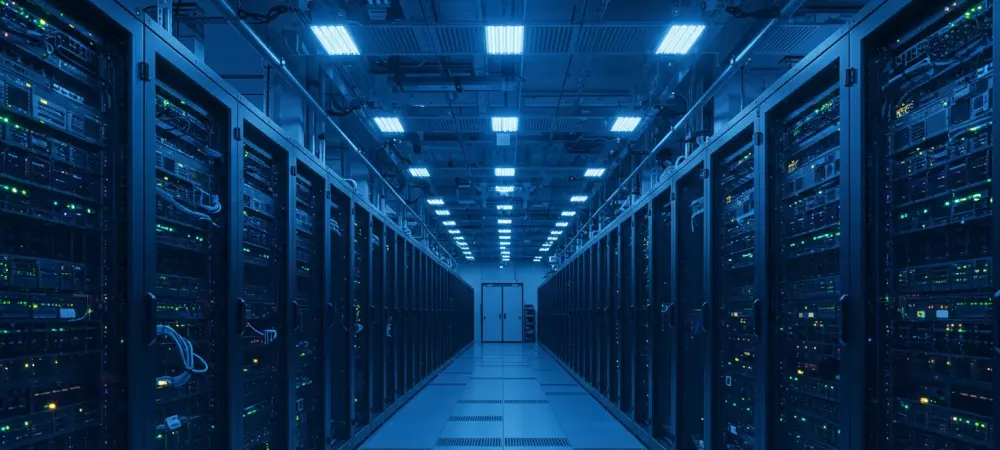
What happens when the digital world’s hunger for data outpaces the infrastructure meant to support it? Picture this: every app, every AI algorithm, every cloud-based service teetering on the edge of capacity, with sprawling facilities racing to keep up. In September 2025, the data center industry is not just thriving—it’s in the midst of a historic surge. This isn’t a quiet evolution but a loud, urgent transformation, as these critical hubs become the linchpin of modern life. From powering streaming platforms to enabling groundbreaking AI models, data centers are the invisible force driving technology forward, and their rapid expansion signals both opportunity and challenge.
The significance of this boom cannot be overstated. As businesses, governments, and individuals lean harder into digital tools, the demand for storage and processing power has skyrocketed. This isn’t merely about building more facilities; it’s about reshaping energy grids, rethinking sustainability, and redefining global connectivity. With billions of dollars in investments and projects spanning continents, the data center surge is a story of innovation under pressure. The stakes are high—failure to keep pace could stall technological progress, while unchecked growth risks environmental strain. This narrative unfolds through regional developments, industry voices, and strategic solutions that are shaping the backbone of the digital era.
Unpacking the Data Center Dominance in Tech
Data centers have emerged as the cornerstone of the technological landscape, underpinning virtually every digital interaction. Their dominance stems from an unrelenting need for computing power to support everything from social media platforms to complex machine learning systems. In September 2025, the scale of this reliance is staggering, with global internet traffic projected to double over the next two years, according to industry estimates. These facilities are no longer just warehouses of servers; they are the engines of a connected world facing unprecedented demand.
This centrality comes with immense responsibility. As the digital economy grows, so does the pressure on data centers to deliver speed, reliability, and security. The rise of real-time applications and data-intensive technologies has pushed operators to expand capacity at a breakneck pace. Yet, this growth isn’t without hurdles—energy consumption and infrastructure limits loom large, forcing the industry to adapt or risk becoming a bottleneck in technological advancement.
Forces Fueling the Explosive Growth
Several powerful trends are driving the data center surge in 2025. At the forefront is the meteoric rise of artificial intelligence, which demands vast computational resources for training and deployment. Alongside AI, the shift to cloud computing continues unabated, with businesses of all sizes migrating operations online. This dual force, combined with digital transformation in sectors like healthcare and finance, has created a perfect storm of need for more robust infrastructure.
Beyond technology, external factors are accelerating the push. Global energy constraints and environmental regulations are compelling operators to rethink how facilities are powered and cooled. The urgency to balance growth with sustainability is evident in new projects that prioritize renewable energy sources. Meanwhile, societal dependence on digital tools—evident in remote work and online education—underscores why this expansion isn’t a luxury but a necessity for maintaining modern life.
Mapping the Global Hotspots of Expansion
The data center boom is a worldwide phenomenon, but its impact varies across regions, each with distinct priorities and challenges. In North America, scale is the name of the game, with massive projects like Meta’s 5 GW Hyperion campus in Louisiana and Vantage Data Centers’ $25 billion, 1.4 GW facility in Texas leading the charge. Latin America is carving out its place as an emerging powerhouse, with initiatives like ODATA’s 24 MW hyperscale center in Mexico and Oracle’s ambitious ‘Rio AI City’ in Brazil, targeting 1.5 GW by 2027. Europe, meanwhile, pairs growth with green goals, as seen in Maincubes’ 400 MW campus near Berlin and Blackstone’s $10 billion project in the UK, both emphasizing sustainable design. The Asia-Pacific region is racing ahead with digital economy demands, highlighted by STACK Infrastructure’s $1.66 billion project in Malaysia and CDC Australia’s 200 MW campus featuring water-efficient cooling. Each area reflects a unique blend of local needs and global trends, painting a diverse picture of infrastructure growth.
Industry Leaders Weigh In on the Trends
Behind the numbers and projects are voices that bring the data center boom to life. A representative from Equinix emphasized the non-negotiable nature of sustainability, stating, == “With power demands soaring, green solutions aren’t a choice—they’re the only path forward.”== This sentiment echoes across the sector, where the race to meet capacity needs is matched by a push for environmental accountability. Analysts at leading tech publications also note that investments, such as Apollo Global Management’s stake in Stream Data Centers, reflect unwavering belief in the industry’s long-term value.
On the ground, the urgency is palpable. Engineers at Vantage’s Texas campus describe relentless construction schedules to accommodate AI-driven timelines, offering a glimpse into the human effort behind these megaprojects. These perspectives—from executives to workers—reveal an industry stretched thin yet determined to deliver. The consensus is clear: data centers must evolve rapidly to support society’s digital appetite, or risk falling behind in a hyper-connected world.
Charting a Sustainable Path Forward
As the data center surge continues, the focus shifts to strategies that ensure growth doesn’t come at an unsustainable cost. Energy innovation tops the list, with operators adopting nuclear, fuel cell, and renewable solutions, as demonstrated by Equinix and Caterpillar’s 4 GW deal in Utah. Efficient design is equally critical, with advanced cooling systems like those at CDC Australia reducing environmental footprints. These approaches signal a shift toward facilities that prioritize resource conservation alongside expansion.
Strategic partnerships offer another avenue for success, with companies like Oracle in Brazil collaborating with local entities to navigate market complexities. Planning for scalability is also vital, as seen in Vantage’s expandable campuses in Texas and Wales, ensuring readiness for future demand spikes. These tactics provide a blueprint for stakeholders to sustain momentum while addressing energy, regulatory, and cost challenges, positioning data centers as reliable pillars of the digital age.
Looking back, the data center boom of September 2025 stood as a defining moment in the tech landscape. It revealed an industry grappling with immense demand while striving for innovation under pressure. The path ahead demanded bold action—stakeholders needed to invest in cutting-edge energy solutions, forge impactful collaborations, and design with tomorrow in mind. As challenges like grid capacity and environmental impact persisted, the lessons learned pointed to a future where data centers could balance growth with responsibility, ensuring they remained the unseen yet indispensable foundation of a digital society.